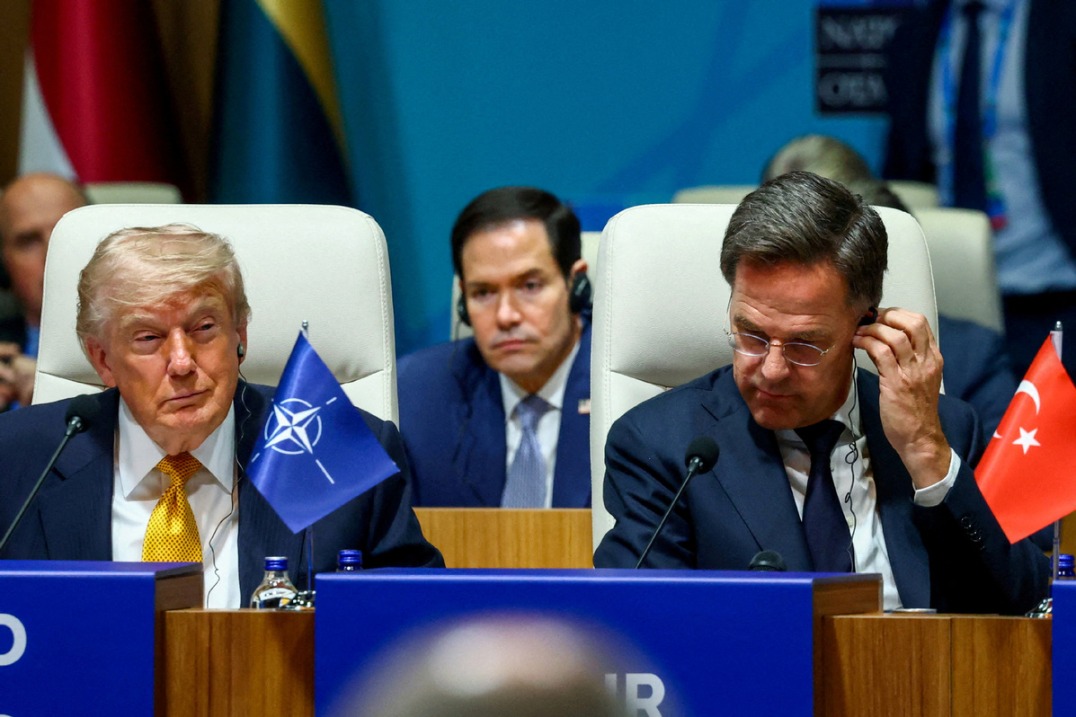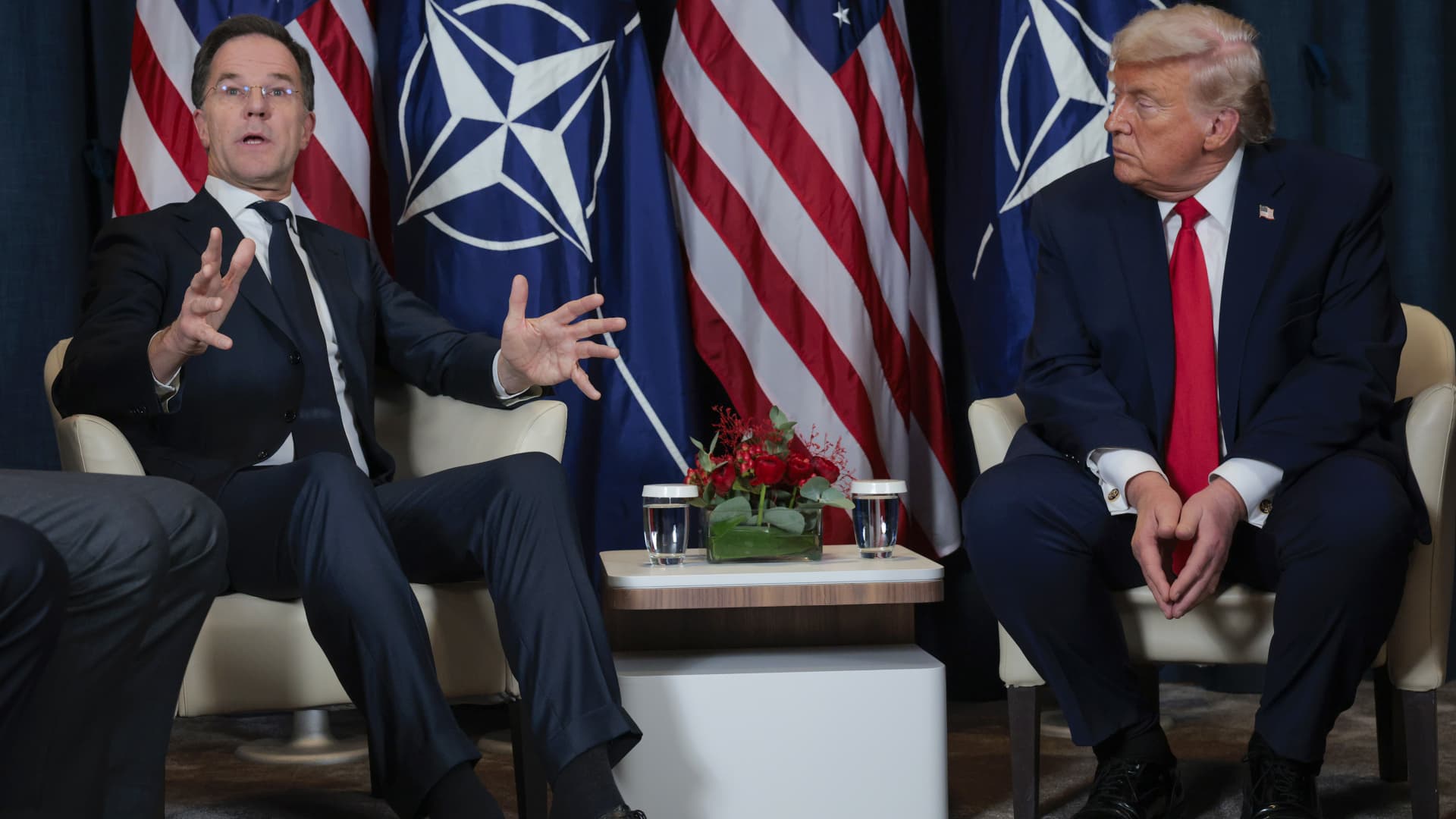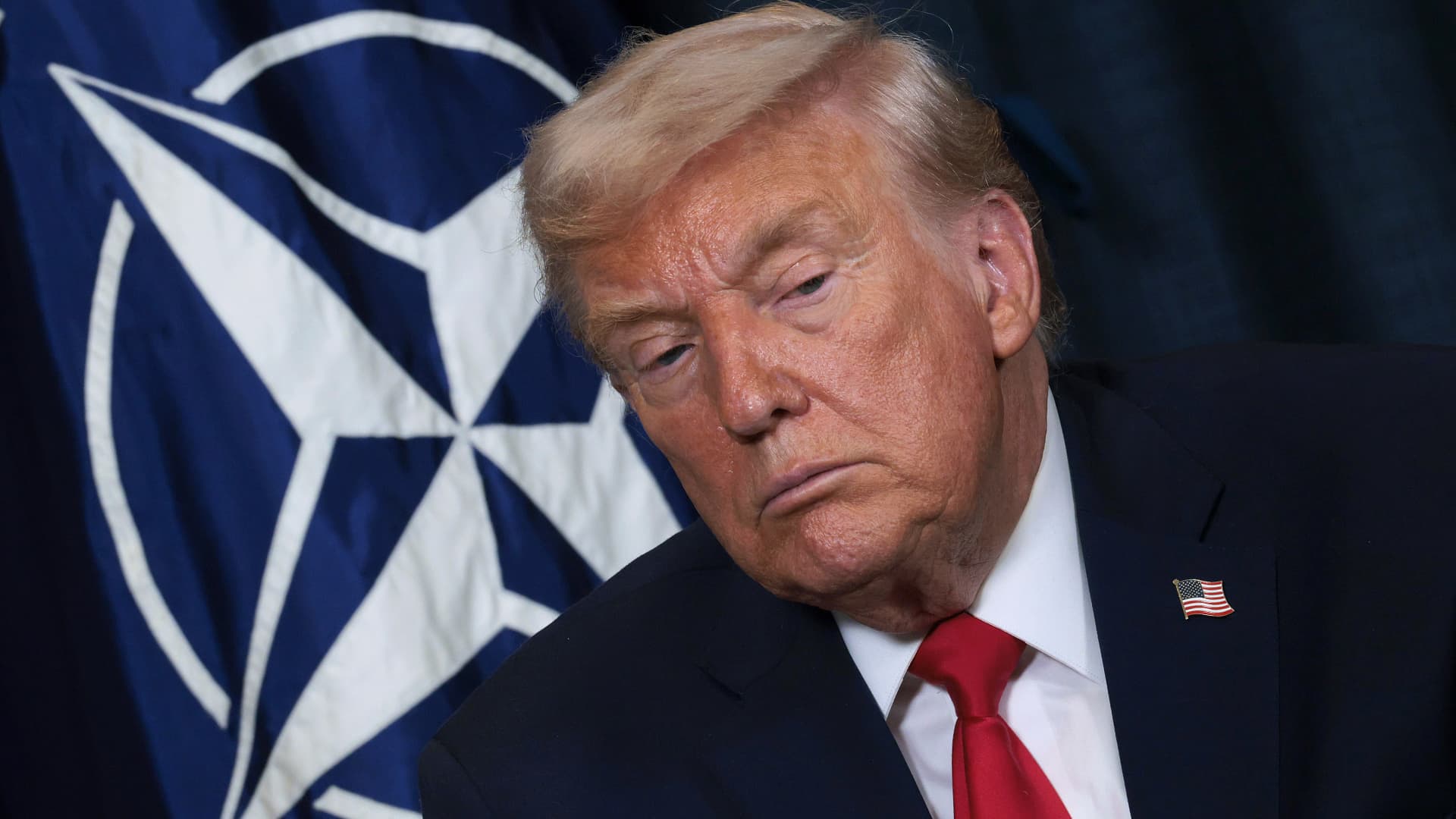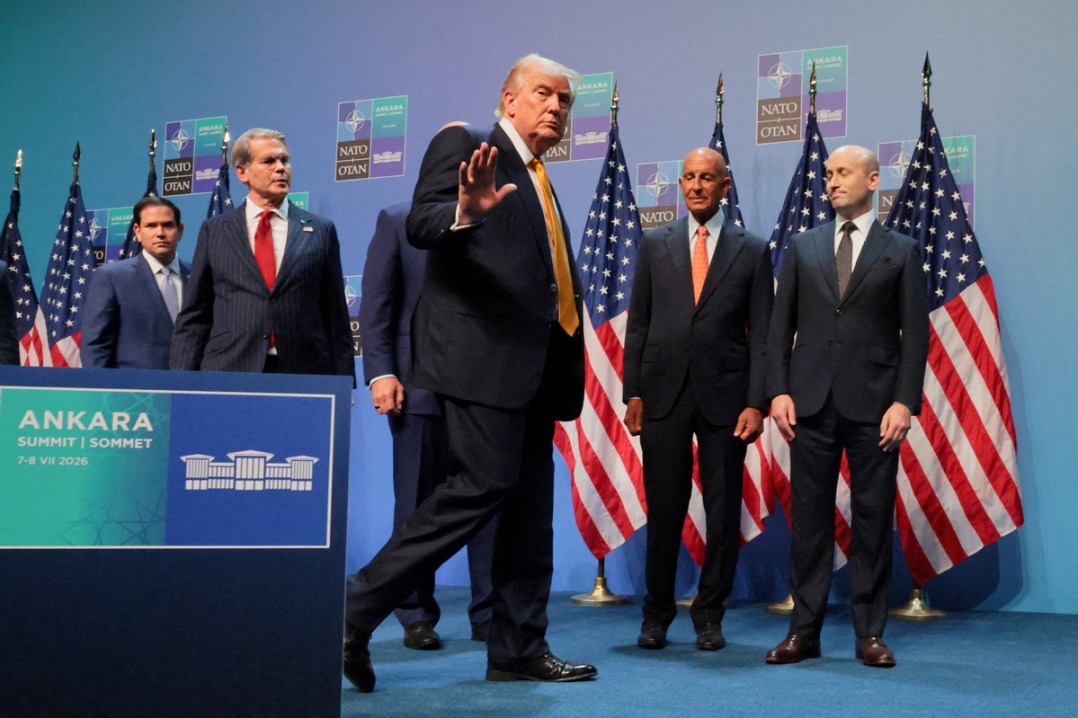
US President Donald Trump leaves after a press conference at the end of his participation in the NATO leaders summit at the Bestepe Presidential Compound in Ankara, Turkey, July 8, 2026. [Photo/Agencies]
Editor's note: Amid shifting global geopolitics in recent decades, the trans-Atlantic bond is being reshaped. China Daily will present a special series to examine these shifts and their long-term implications.
Economic friction is emerging as a primary battlefield for the trans-Atlantic alliance, testing a partnership already strained by strategic divergence. Experts warn that, compared with previous clashes, the current round of trans-Atlantic trade tensions carries deeper strategic and security implications, making its impact far broader.
This persistent economic sparring, experts suggest, is steadily eroding political trust between Washington and Brussels. As the fallout spreads to technology, security, and diplomacy, the trans-Atlantic partnership looks set to shift toward a more transactional dynamic, they say.
The second term of the Trump administration has seen Europe and the US clash repeatedly over technology rules, tariffs on metals, automobiles, and pharmaceuticals. The latest flashpoint of the trans-Atlantic trade tensions came in July, when the European Union fined Google 890 million euros ($1 billion) for violating its Digital Markets Act. Earlier that month, Europe's top court upheld a separate 4.1 billion-euro judgment against the California-based internet giant.