CARE WITH CAVEATS. Cancer insurance often falls short, forcing patients into disputes over the fine print
| Photo Credit:
FatCamera
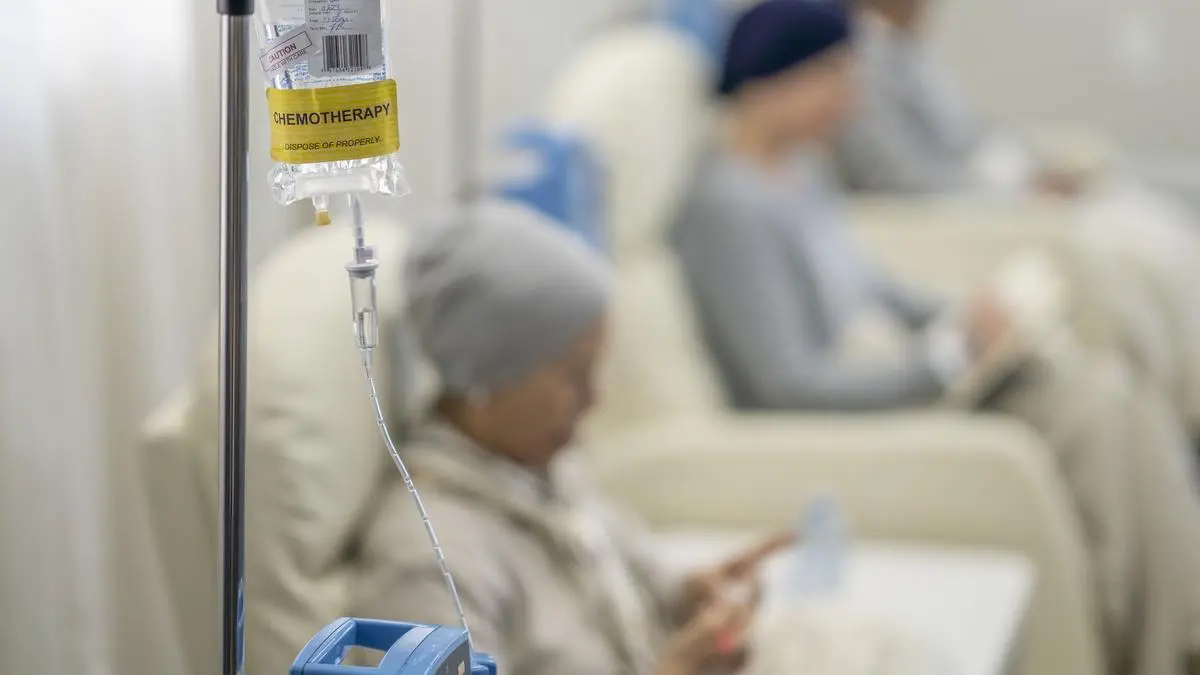
When Kanchan Pande (64) was diagnosed with breast cancer, her family believed their health insurance policy would cushion the financial blow. Instead, they found themselves paying nearly three-fourth of the treatment cost.Kanchan said the treatment lasted over five years at a Delhi private hospital and involved chemotherapy, radiation and hospitalisation. Her husband Balaji says the first cycle of breast cancer treatment cost approximately ₹6.2 lakh, of which around ₹5 lakh was covered by insurance. While the policy was for ₹5 lakh, Kanchan needed another round of treatment costing ₹2.9–3.2 lakh.In all, she was admitted 78 times, each stay costing about ₹24,000, over five years. “There were nine doses of chemo that we bought ourselves, costing ₹2.5 lakh per dose, but these were also not covered by the health insurance (₹5 lakh) policy,” Balaji says, adding that the policy does not cover radiation therapy. He estimates that 70–75 per cent of the treatment cost was met out of pocket by his family. “We had insurance, but it did not help as expected,” Balaji says.Further, he alleges that the insurance company changed its policy, without informing him, from the second year. It also limited coverage to around ₹55,000 per year for the cancer treatment, and even that was not fully reimbursed, he adds. The coverage has dropped from ₹5 lakh to ₹50,000 per year for chemotherapy.Balaji filed petitions and consulted experts to challenge the decision, but nothing came of it, he says, as apparently that was the norm. He still annually renews his ₹5 lakh health policy.A Delhi-based insurance agent explains that when patients do not read the minute details of an insurance policy, the “ombudsman then resolves such cases, but most patients are unable to fight their case due to their poor health”. The health insurance company remains unnamed on the request of the patient’s family, which still holds the policy.The couple’s financial strain was compounded by the absence of a pension. Kanchan says they relied on their savings to continue the treatment.Policy exclusionsDoctors say the Pandes’ experience reflects a broader problem faced by cancer patients.Even for insured patients, policy exclusions, reimbursement caps, costly next-generation medicines and delays in claim settlement can translate into significant out-of-pocket expenditure at a time when families are already grappling with a life-threatening illness.Dr Atul Sharma, Vice-Chairman, Medical Oncology, Max Super Speciality Hospital, Saket, says insurance coverage for cancer treatment varies widely across companies, with patients frequently forced into disputes over policy exclusions and technical interpretations.“Every insurance company has a different policy. Often patients face challenges because insurers look for loopholes to deny or limit claims,” he alleges.He observes that insurers sometimes question claims on the basis of a patient’s family history of cancer or classify newer therapies such as targeted therapy, oral chemotherapy and immunotherapy differently under policy terms, resulting in disputes or delays. Another common hurdle, he says, is that patients are often asked to pay for the treatment first and then seek reimbursement later, instead of being granted cashless facility.Calling for reforms, Dr Sharma says insurers should adopt clearer guidelines and a patient-centric approach. “Patients need a more humane approach. Insurance should support them during serious illnesses rather than forcing them to fight over technicalities and the fine print,” he says.Dr Abhik Chattopadhyay of Axiomax Oncology Private Limited, Kolkata, says the gap between insurance coverage and the actual cost of cancer treatment has widened as oncology has shifted towards expensive, targeted therapies and immunotherapy.He says cancer patients generally depend either on government-funded schemes such as Ayushman Bharat PM-JAY and State health insurance programmes or on private insurance, but all of them have limitations.While PM-JAY provides health cover up to ₹5 lakh annually, Chattopadhyay says the amount is inadequate for advanced cancer treatment. “Many next-generation therapies cost ₹1.3–1.5 lakh per dose,” he points out. He cites drugs such as Osimertinib for lung cancer and immunotherapy medicines such as Pembrolizumab and Nivolumab, which have significantly improved survival rates but remain unaffordable to many despite insurance.Chattopadhyay adds that oral targeted therapies are often not covered because they do not require hospitalisation, while private insurers impose sub-limits on room rent and other expenses, reducing the final reimbursement. Expressing concern over the high cost of cancer medicines, he says the dispute over prices between insurers and hospitals leaves patients shouldering the burden of the treatment cost.Published on August 10, 2026