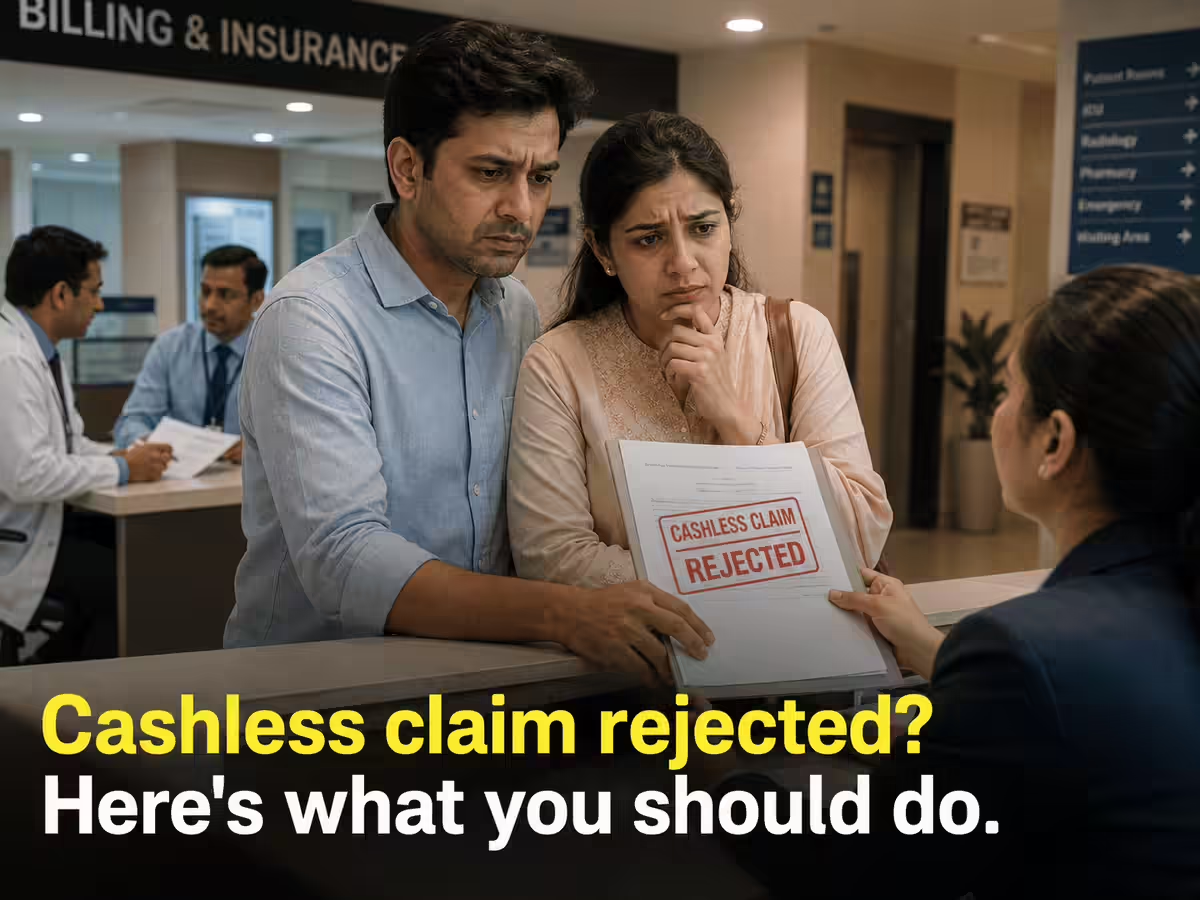
INSURE TRUST. Consumer groups urge empowering policyholders to contest reasons for claims rejection
| Photo Credit:
AndreyPopov
About a week ago, a Mumbai-based heart surgeon flagged the case of a senior citizen who was allegedly denied cashless payment for his angiograph, despite paying a health insurance premium of over ₹1 lakh for about threeyears.Raising an issue that resonated with several policy holders, Dr Prashant Mishra, cardiac surgeon with Thunga Hospital, posted on a public online platform: “A patient ported his policy in 2023 and fully declared his diabetes during the process (before that he was having (a) Policy since 2021) He has been paying an annual premium of around ₹1.3 lakh. However, when he recently needed cashless treatment, Care Health Insurance denied his claim. Their reason? The patient did not specifically declare that he takes insulin... If a patient is diabetic and has already disclosed the condition, why should it matter whether they treat it with tablets or insulin Infact patient was on Insulin intermittently only ( majority times tablets ) So after paying premium for 5 yrs , his claim is rejected (sic).”Mishra told Pulse that the 75-year-old person and his wife (68) were retired and their daughter was abroad. The man had come to the hospital after he felt a discomfort in his chest and underwent an angiogram. But the cashless insurance facility would not pay for this medical investigation, the doctor alleged. After paying nearly ₹4 lakh towards medical insurance, he was denied about ₹20,000 cashless treatment, the doctor said. The elderly couple would have to pursue the paperwork for reimbursement, he said, despite having paid for a cashless facility.“He has to have a bypass (surgery),” Mishra said, adding that in addition to the trauma and risk of surgery, there is a financial trauma too. Calling for a middle path in handling these matters, he asks, “When you are going for a surgery, who is thinking about calling a call centre.” He says he has seen other elderly patients, too, in similar situations. “Maybe IRDA (Insurance Regulatory and Development Authority of India) needs to look into it,” the doctor says, pointing to the pain of patients falling between the cracks trying to get their claims, despite apparently making their health insurance premium payments and disclosing medical conditions.Responding to the doctor’s post, a spokesperson at Care Health Insurance said in a statement, “The cashless request could not be processed based on the records and information available at the time of assessment. The insured has been advised to submit a reimbursement claim, which will be reviewed on priority upon receipt, in accordance with the policy terms and conditions.”Instances of patients struggling to access cashless health insurance come at a time when the Centre is promoting the concept of “cashless everywhere”, and hospitals and health insurance companies are engaging with each other to iron out issues between them — through their representatives on the Association of Healthcare Providers of India and the General Insurance Council (representing 32 companies), among others. Attempts were made by Pulse to contact multiple representatives in the insurance industry, but a spokesperson on their behalf indicated they were not available to take the discussion ahead. ‘Level playing field’Bejon Kumar Misra, an IRDAI nominee on the executive committee of the GI Council, says, “If I paid my premium in advance, why should I be made to pay when I get admitted for care?”A consumer policy expert, Misra says insurance is a business, not charity, and is based on strong fundamentals emerging out of actuarial studies and so on. Pointing to instances of patients being directed to take the reimbursement route to cover their hospital payments, despite having paid health insurance premiums, he says, “There is nothing called reimbursement... Either you outright reject (the claim)… but don’t tell me to come back… for reimbursement... Be very clear and give me justifications why you are rejecting my claim.”Further, he says, policyholders need to be empowered to technically rebut the reasons for rejection given by insurance companies. “There should be a neutral body of experts accessible to policyholders to counter the arguments the insurance companies make in terms of rejections,” he says, outlining methods to facilitate resolution, audit final settlements, and call out claim frauds — without adding to the burden on the policyholder.“There should be a level playing field,” says Misra calling for experts to handhold policyholders and, in turn, help “build trust in the system, which is today highly opaque”.Published on June 29, 2026