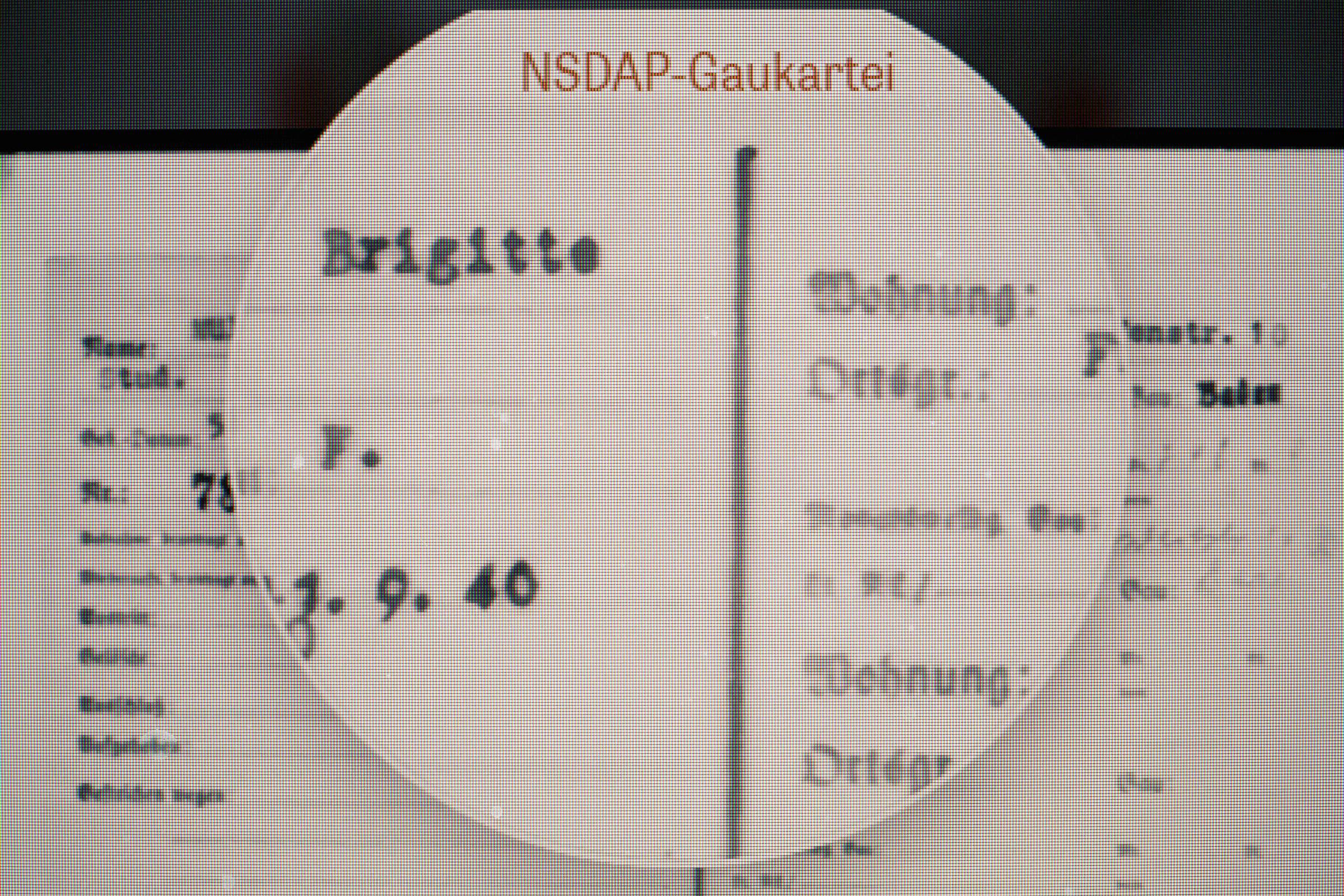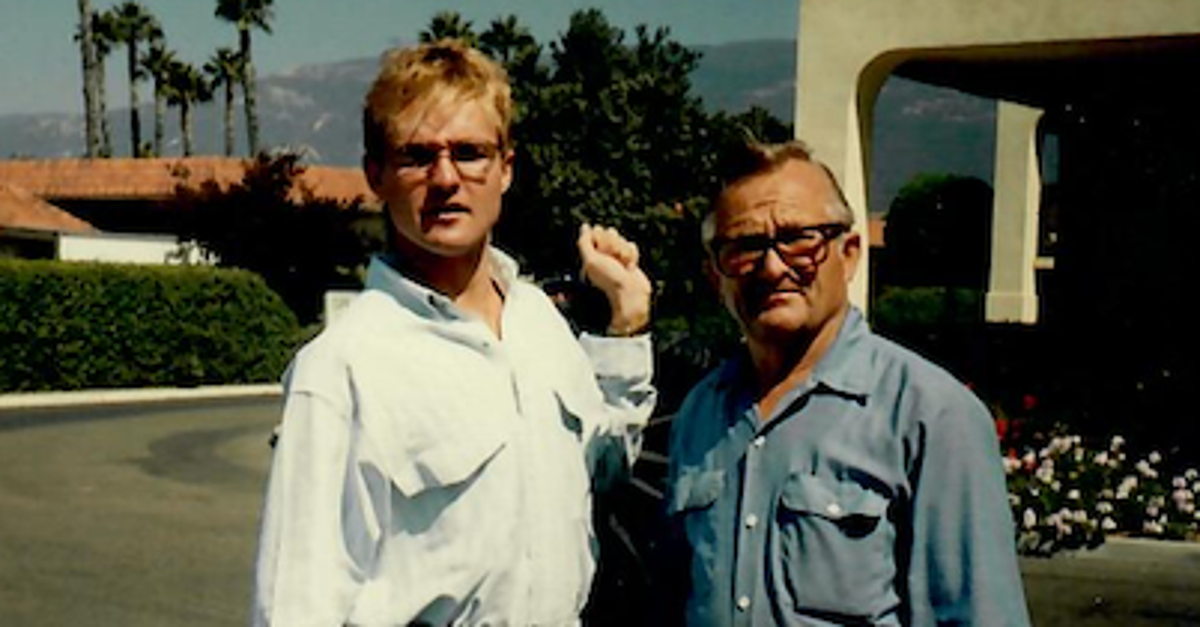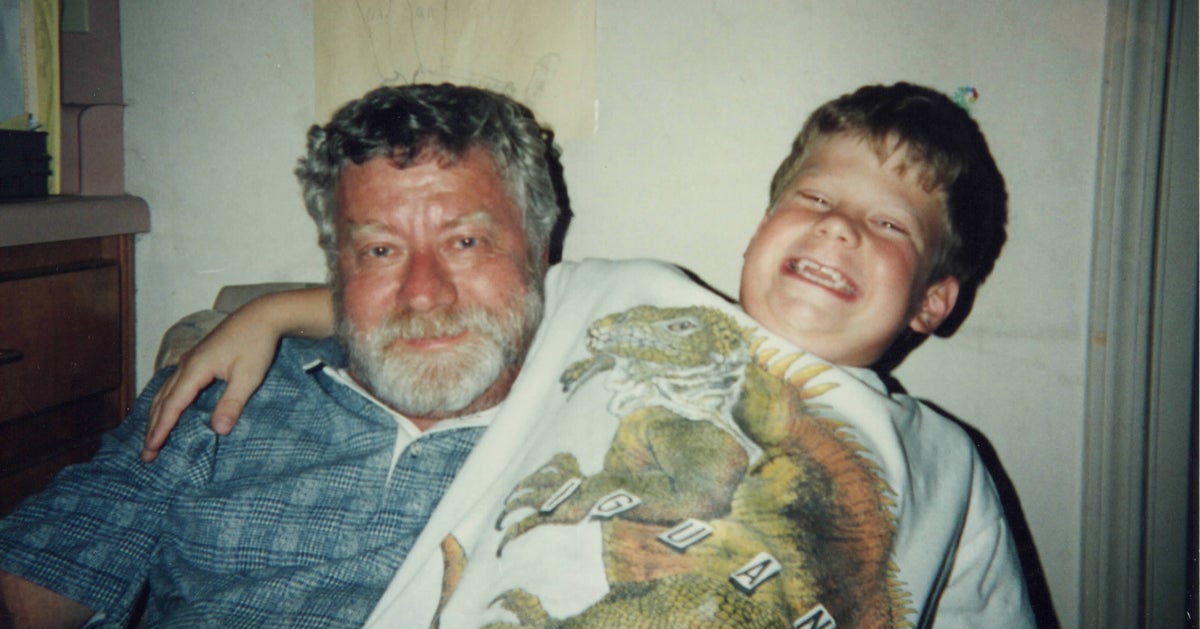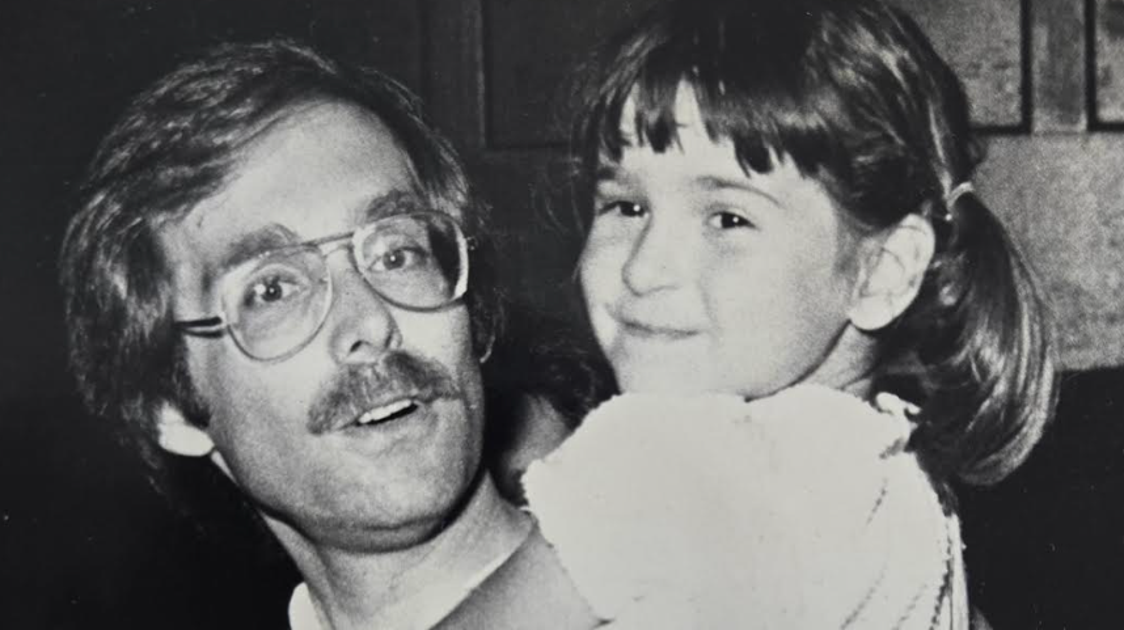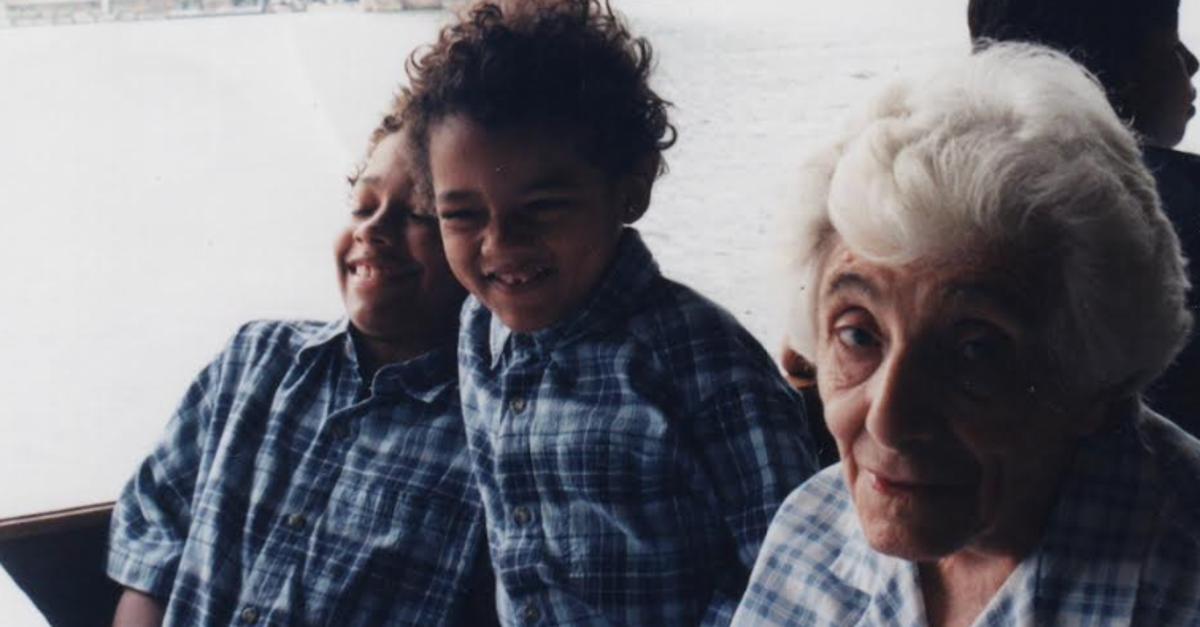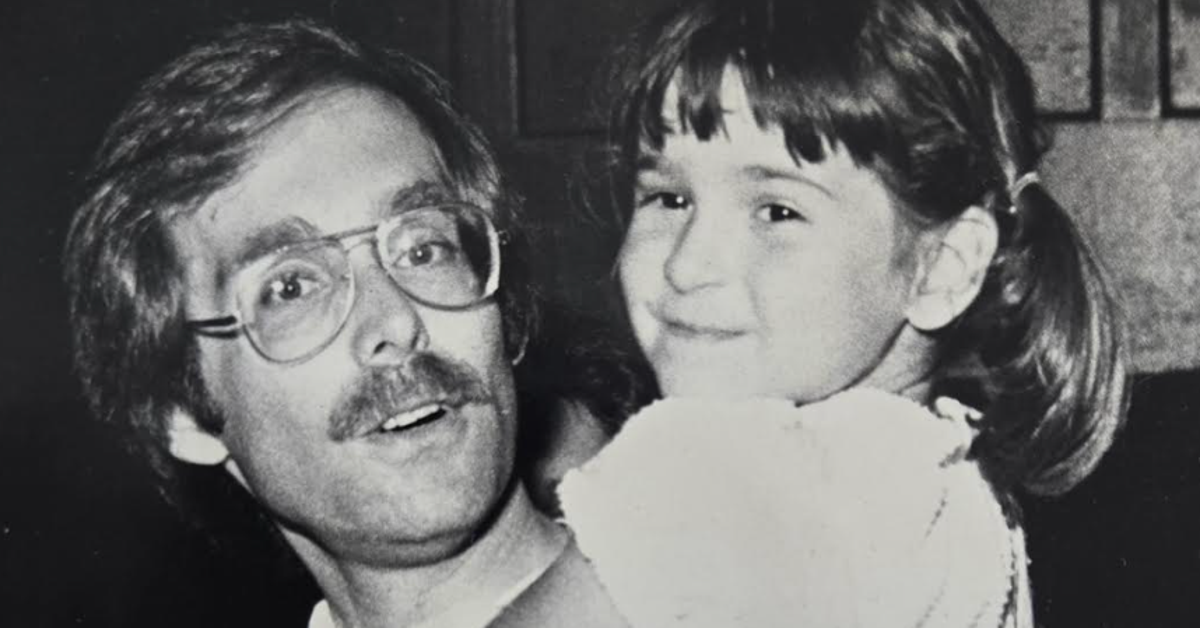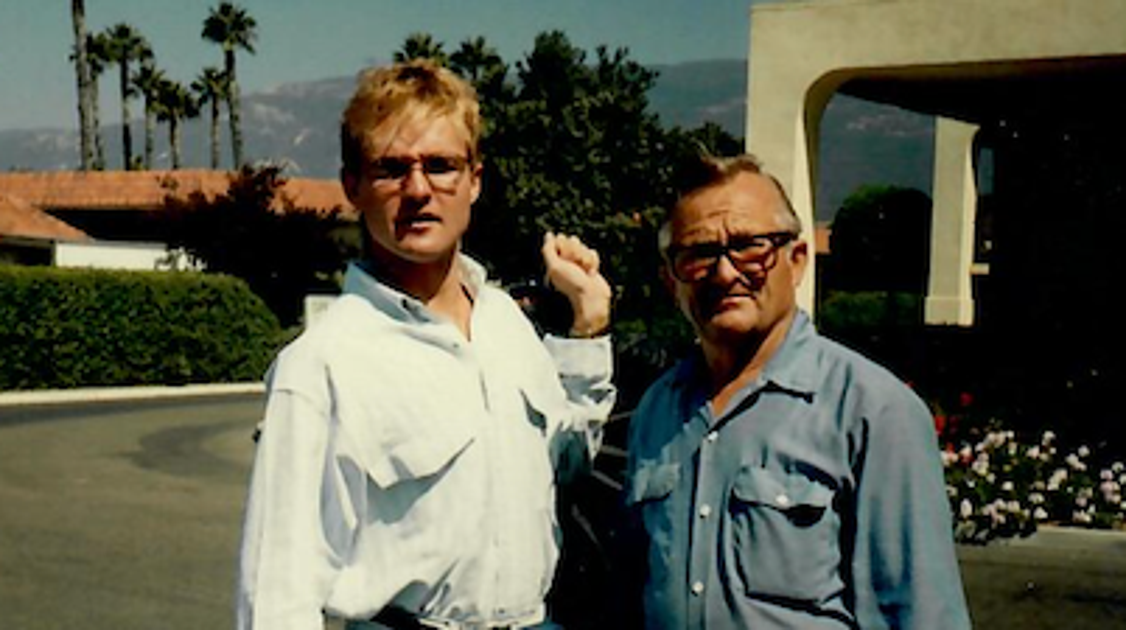
I worked in Hollywood for many years as a publicist, helping shape other people’s stories. The most important story of my own life, though, has remained untold. It was a family secret I had carried since I was about 8 years old, but I’ve never spoken about it until now.My father was a German Nazi.He wasn’t a reluctant conscript, or a man swept along by circumstance. He was a true believer. During World War II, he served under the command of the Schutzstaffel, or SS, a Nazi paramilitary organization, and ultimately became part of the Gestapo, Hitler’s most feared instrument of terror.The atrocities my father committed are more than historical abstractions to me. They are part of my bloodline — a legacy.I am his only son, and we share the same name: Henry Penner.That name has connected my father and me all my life, but it has never defined us in the same way.The author's father and mother at their 50th wedding anniversary party in 1997.Courtesy of Henry PennerMy father — ”Pop” — was born in the early 1920s in the German settlement of Orloff, Ukraine, which was then part of the Soviet Union, in the heart of the Mennonite colonies. His childhood was shaped by fear, poverty, and brutality. While he was still a young boy, Soviet authorities came into his family’s home, arrested my grandfather under false accusations, tortured him, and ultimately killed him in prison.My father grew up with this loss as his foundation, fear as his inheritance, and hatred as his compass.When the Nazis invaded my father’s town, many Ukrainians welcomed the German forces as liberators from the brutal, oppressive rule of Joseph Stalin and the Soviet regime. My father, who was a teen at the time, felt deep hatred for the Soviets and it became the doorway through which Nazism first entered his life.The Nazis saw my father as an ideal recruit: he was an ethnic German youth whose family had been traumatized and marginalized, and he longed for revenge.He willingly became part of the local SS-led militia, eventually integrating into a frontline Waffen-SS unit where he served as an interpreter, translating interrogations of soldier and civilian partisan prisoners. Not long after, my father ascended into the Gestapo. His actions were not distant acts of war. They were personal, deliberate, and ideologically fueled.When the war ended, my father’s ethnic German Mennonite identity became the means by which he survived its aftermath. As hundreds of thousands of refugees poured into the American Occupation Zone around Erlangen, Germany, he shed his uniform, discarded the remaining military identifiers that connected him to the Nazis, and disappeared into the displaced civilian population. Through the assistance of the Mennonite Central Committee, he entered the refugee system as a “Displaced Person.”A questionnaire filled out by the author’s father. “The Allied Forces used this to systematically root out Nazism in Germany after the war,” the author writes. “He used it to hide his Nazi past and helped create a new identity for him into the refugee system as a displaced person.”Courtesy of Henry PennerThe documents I inherited when my father died help explain what happened next. His records didn’t indicate that he had been a soldier or interpreter. Instead, his occupation was listed as farmworker. His post-war transformation spared him from ever being identified and prosecuted for his role in the atrocities the Nazis committed.Now living under his newly constructed identity, my father met my mother Natalie in a small village in southern Germany, where she was living with her parents and two younger siblings. They got married, welcomed their first child in 1949, and moved to a Mennonite refugee camp in Gronau, Germany, while waiting for passage to Canada. They spent about 15 years in Canada before eventually settling in California, where I became the first American-born child in our family.I was born and raised in Santa Barbara, a world away from the regime my father once chose to serve. The contrast between his new life with our family and the ideology that had consumed him could not have been starker.The author’s father’s International Refugee Organization (IRO) eligibility certificate dated Nov. 4, 1948. “This was one of several documents that allowed him to immigrate to Canada, and perhaps avoid Soviet repatriation and/or return to Germany later and face charges as a war criminal,” he writes.Courtesy of Henry PennerOne day when I was about 8 years old, my father called me into his bedroom closet. Against one wall stood a wooden gun case he had built himself. Two old rifles were visible through the glass door of the case. What I remember most, though, was when he moved to unlock the bottom drawer.We both knelt on the floor in front of the cabinet. He was just behind me, slightly to my left. Inside that drawer were a few things I had never seen before, including a small paperback book and a red swastika armband.My father took the armband in his hands and told me he had been a German soldier during the war. Then he opened the book and pointed to a photo of a young Nazi soldier in uniform. The bright red swastika wrapped around his left arm was impossible to miss. My father’s large index finger tapped the picture once, then again, with unmistakable pride.“That’s it,” said my father. “That’s what I was, my boy.”Even now, more than 50 years later, I can still see his hand moving. There was self-assurance in that gesture. Confidence. Conviction. He wasn’t angry or dramatic. He was matter-of-fact, like he was introducing me to an important part of himself he believed I was finally old enough to see.At 8 years old, I didn’t understand what I was looking at. I didn’t know what the swastika truly represented. I didn’t comprehend the history my father was placing before me.As he pointed to that picture with that unmistakable pride, I recognized a strength in him that I longed to have in myself. I felt proud that my father had chosen to share this secret with me and, for one brief moment, I was proud to be my father’s son; it was one of only a handful of times in my 60 years on this planet that I felt that way.He closed the drawer and told me that what I had just seen was between me and him — and without him even saying it, I knew it was a secret never to be discussed outside our home. “When you grow older, I’ll tell you more,” he said, promising that I would understand better in the years to come. I never did.The author fishing with his father in Canada in 1974.Courtesy of Henry PennerThe thing I understood the most while growing up was that I feared my father. I longed for his love and approval, but more often than not, I encountered anger, emotional distance, and the unpredictability that accompanied his regular drinking. Love and fear existed side by side, and I learned to read his moods before I learned to understand them. Despite my father framing what he told me as our secret, his wartime stories became a regular part of my childhood. He told them often. He spoke openly about the Soviets murdering his father, about fleeing Ukraine, about the war, and about revenge. He proudly referred to himself only as a German soldier. The other truths about what he had done remained hidden. It took me years to realize that he wasn’t necessarily telling people lies, he was carefully editing out much of what he had done.He also insisted that he had no choice but to do what he did during the war. That belief became the moral shield behind every story he told. As a boy, I believed him. Why wouldn’t I? He was my father. I accepted the version of the past he wanted me to believe because it was the only version I knew. I think he hoped his only son would one day accept not only what he had done, but why he believed it had been necessary.He was wrong.The man who sat beside me on that bedroom floor that day was not the same man the world saw. Outside our home, my father was known to be hardworking, generous, dependable — someone who often helped out anyone who needed an extra hand. He made friends easily, and he took genuine pride in becoming an American. Neighbors respected him — though for some, it was because they feared his periodic rage. "My father is holding me here, alongside four of my five sisters in Santa Barbara in1966," the author writes.Courtesy of Henry PennerDespite his deeply conservative values, he was more accepting than one might imagine — even progressive in some respects. Although he initially disapproved when my sister told him I was gay, by the time I moved to San Francisco’s Castro District in 1989, something had changed. He seemed to accept me. He welcomed my gay friends into our family home. He embraced my sister’s Black husband and loved his biracial grandchildren with genuine affection and without reservation.For years I have struggled to reconcile those two men: the open-hearted father admired by neighbors and friends, and the father whose stories of war and revenge echoed through our home. The contradiction of those memories is part of what has made telling this story so difficult.My mother, also an ethnic German, was born in Honorine, Ukraine. She experienced the war very differently than my father did, yet she endured suffering every bit as profound as his. Her family was forcibly evacuated by the Nazis when she was just a young teenager — packed into an overcrowded freight train and shipped off to German-occupied Poland, where they were processed and granted German citizenship. They evaded another Soviet invasion and fled Poland for Germany, but my mother lived in fear of Soviet capture until the war ended. Still, though she experienced so much trauma, she emerged from those experiences with a gentleness that never left her, and lived her entire life in service to others. My father carried his suffering as anger. My mother carried hers as compassion. Both had lived through extraordinary hardship. Both had every reason to become bitter. Only one did. The author (left) with his father in 1990. "My mother and father were dropping me off at bus station in Santa Barbara," the author writes.Courtesy of Henry PennerI learned one of the most important lessons of my life by watching them move through the world: Suffering does not determine who we become. They were teaching me two very different ways to live life after trauma; I just didn’t realize it at that time.After my mother died in 2008, something changed in my father. I saw a quiet stillness in him that I had never seen before. He appeared to be trapped in his own head, struggling, almost defeated. Most people assumed he was grappling with the grief of losing my mother, but I knew better. My father had often talked about writing what he called his “life story.” He never did, though. Instead, as my father was nearing the end of his own life, the family pastor invited him to sit and share everything he’d been through. He obliged and met with the pastor on several occasions, which resulted in hours of recorded conversations.A year or so after my father’s death in 2009, those recordings were delivered to me.I had hoped time had softened my father. I wanted to believe that the man I had known later in life — the father who seemed to have accepted me, welcomed my friends into our home, and embraced my sister’s family — had finally made peace with his past. I hoped that somewhere beneath decades of silence was the guilt I so desperately wanted him to feel.Instead, when I finally played the tapes, I heard something entirely different.At the beginning of the first recording, the pastor asked him a simple question.“Why are you doing this now, Henry?”My father’s answer was immediate.“Because I want my children to know the truth.”As I continued to listen, the version of my father I had carried since childhood began to unravel. The man who had always described himself only as a German soldier was now finally describing the parts of his past he had spent a lifetime leaving out. He didn’t speak in vague generalities. He described interrogations, arrests, executions, and brutalities in chilling detail — events he had not only witnessed, but horrific crimes he committed himself. With every passing minute, I understood more clearly the full extent of what he had done. What stunned me most was not only what he described, but how he described it. Yes, the rage in his voice was familiar — I expected to hear that. But there was no anguish in his voice. No pausing. No shame.He wasn’t searching for forgiveness.He was explaining.Justifying.Trying to make sure his children believed what he believed.Then the pastor asked if he had any regrets.“No,” he said. “I’d do it all over again.”I have replayed those words in my mind more times than I can count. In that moment, the guilt I had hoped he carried — but never once saw — vanished forever. He was not a different man. No, he was exactly the same man, but now, he was speaking without apology. It was a realization that changed everything.The author (right) with his parents in Santa Barbara in 1992.Courtesy of Henry PennerMy mother never spoke to me about my father’s past. If she knew, she never let on. “Henry, did you ever tell Natalie?” the pastor asked.His answer came without hesitation.“No,” he said. “If she ever knew, she would have left me.”Whether my father was right, I will never know, but when I heard my father’s certainty that she would have left, I realized he knew the moral weight of what he had done and he understood it well enough to believe the person closest to him would not have accepted it.It took a long time for me to listen to all of the recordings. Afterward, I told almost no one what I heard. I carried what I learned the same way I had carried my father’s secret since I was a boy: silently. My first instinct was not to expose him, it was to protect what remained of my family, and perhaps to protect myself. People remembered the hardworking, generous man they had known in California. Only I had heard the voice on those recordings. Only I knew that the hope I had carried for so many years — that somewhere, somehow, my father had finally come to regret what he had done — had died the moment I heard him say he would do it all over again.Silence, however, has its own weight. Eventually, it became heavier than the secret itself.I’ve lived with the burden of my father’s truth for nearly six decades, but his legacy is only one part of my story.I am a proud gay man — the only son of a Nazi who would have targeted someone like me in his time. I am an addict turned sober professional. I survived childhood sexual abuse and exploitation, an HIV diagnosis in the early days of the AIDS crisis, and a heart attack in my 40s. I continue to live with purpose. My life, unlike my father’s, is defined not by obedience to evil, but by defiance of it. None of those experiences defined me any more than my father’s past did. If anything, they forced me to decide, repeatedly, how I would let them shape me. Looking back, I realize I have been answering the same question my parents answered in very different ways: What do we do with our suffering?My father answered it with anger, revenge, and the belief that violence could be justified. My mother answered it with compassion. Every challenge in my own life presented me with that same choice. I have not always chosen perfectly, but I have tried to build my life on empathy rather than resentment, on honesty rather than silence, and on hope rather than fear.That is the legacy I want to leave behind.The author (left), Tante Luise (the author’s father’s youngest sister), and the author’s father in Germany in 1993. “My dad and my aunt were separated about the time the Nazi’s invaded Ukraine,” the author writes. “The photo was taken only a short time after they were reunited for the first time nearly 50 years later.”Courtesy of Henry PennerI always believed my father’s story belonged only to our family, but I no longer feel that way. What finally compelled me to speak was not simply what I learned about my father, it was what I began recognizing around me: my father’s world creeping back into our own.I found myself hearing the same arguments — appeals to fear, claims that urgent threats demanded radical responses, and the insistence that certain groups of people had to be treated differently for the “greater good” of our nation.Those ideas did not sound new to me. They were painfully familiar.My father spent much of his life explaining why he believed he had “no choice.” He believed necessity excused what followed. Listening to similar assertions in our current political landscape forced me to confront a question I had spent decades trying to avoid.How does a society begin convincing ordinary people that extraordinary cruelty is acceptable — or even ideal?History has taught me that authoritarianism rarely announces itself all at once. It advances one justification at a time. It asks people to fear before they think. To obey before they question. To accept before they object. My family has already lived through what can happen when those justifications go unchallenged. That is why I am telling this story now.It isn’t to merely condemn my father or disregard the complicated man he became after the war. I am telling it now because one thing, tragically, never changed. Until the very end of his life, my father still believed that what he had done was justified — that he was right — and he wanted his children to understand his truth.Instead, I came to understand something else. I may share my father’s name, but I will not share in the inheritance he left behind. I will not stay silent about what he did, the ideology he embraced, or my fear that it is taking root in this country. We must speak out when we see persecution, inhumanity, and terror — even if we see it in our own bloodline. Even if it’s our own father.Perhaps especially then.The name Henry Penner was given to me at birth, but what I do with the legacy attached to it is now mine to choose.Henry Penner is a Los Angeles-based writer, former Hollywood publicist, and REALTOR®. Born and raised in Santa Barbara, California, he writes about family legacy, history, survival, and the choices that define us. His work draws from his own life to explore the lasting impact of inherited trauma and the responsibility to confront it with honesty. This is his first essay published by HuffPost.Do you have a compelling personal story you’d like to see published on HuffPost? Find out what we’re looking for here and send us a pitch at pitch@huffpost.com.
I Kept My Father's Horrific Secret Since I Was 8. His Final Confession Before He Died Was Far Worse Than I Imagined.
“The atrocities my father committed are more than historical abstractions to me. They are part of my bloodline — a legacy.”
3,223 words~15 min read