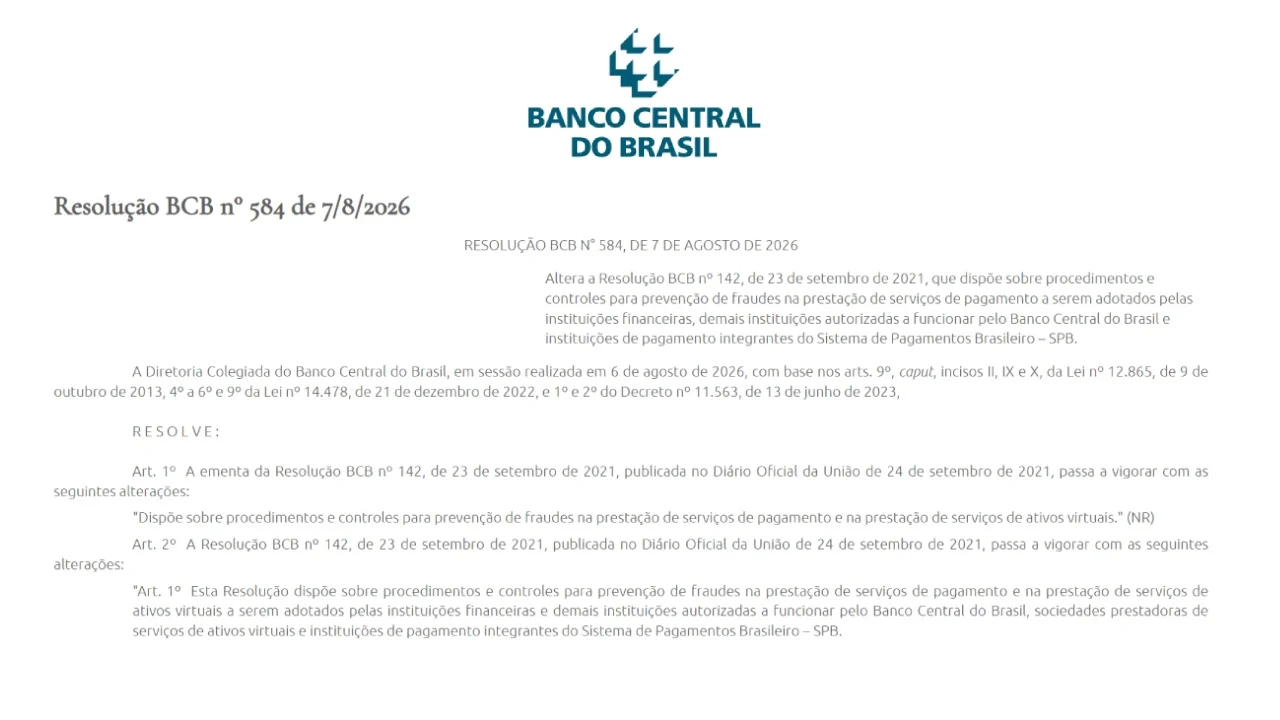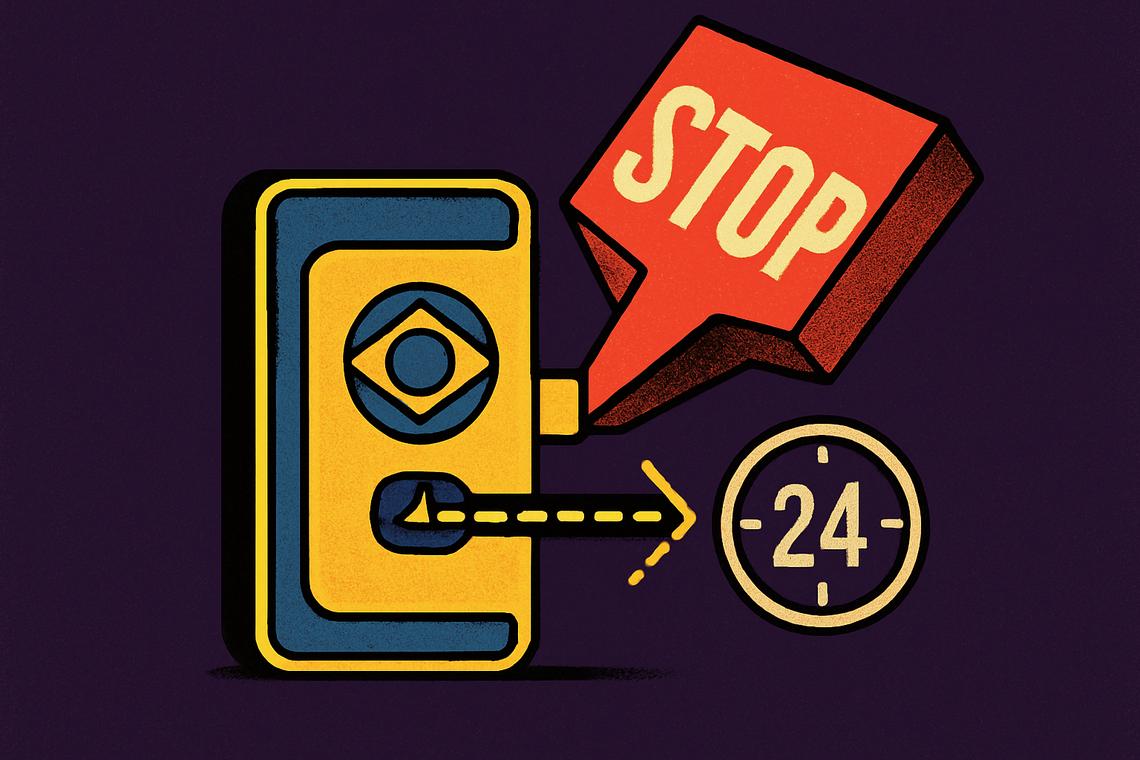
Starting January 1, 2027, anyone trying to move more than $10,000 in crypto out of a Brazilian exchange will have to wait 24 hours before the transaction clears. Brazil’s Central Bank published Resolution BCB No. 584/2026 on August 7, 2026, creating what amounts to a regulatory speed bump for large outbound transfers headed to self-custody wallets or foreign virtual asset service providers (VASPs).
The rule gives authorities a window to run risk analyses on flagged transactions, with the explicit goal of curbing financial fraud.
What the rule actually does
The $10,000 threshold is the automatic trigger, but it’s not the only one. Smaller transactions can also be subjected to the 24-hour hold if a VASP’s internal systems flag them as risky. So the regulation isn’t purely about size; it’s about suspicion.
VASPs operating in Brazil are required to document every decision they make regarding these holds. They also have to notify customers when a transfer is being delayed. There is one release valve built into the system: if a VASP completes its review and identifies no risk, it can release the funds before the full 24 hours elapse.