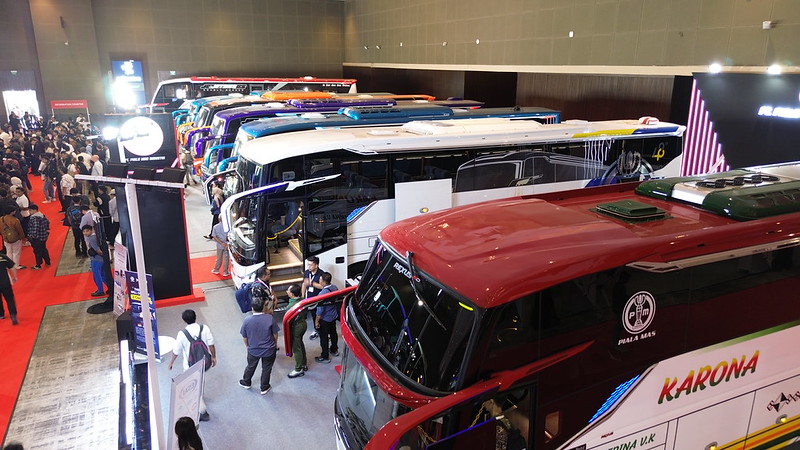
At Busworld Jakarta earlier this May. (Busworld photo)
Support CleanTechnica's work through a Substack subscription, on Patreon, or on Stripe. Help us produce all of the high-quality, original content we publish week after week despite the challenges of content-scraping AI, antisocial media, inflation, and other hurdles.
This story came two months and a half late. It was buried under the many stories propped up in the content management system. But the article remains relevant. I adjusted the tone and the tenses to catch up.
The hype surrounding Jakarta’s transit transition was already building well before the doors opened at the Jakarta International Expo in Kemayoran. Early commitments from local officials pointed to a turning point: getting Indonesian-built battery-electric buses out of the testing phase and onto the high-capacity corridors of Transjakarta. By the time Busworld Southeast Asia wrapped up, that promise had turned into a tangible working model, cementing Indonesia’s position at the front of the region’s commercial EV shift.
Towards the end of 2025 Transjakarta integrated an initial batch of 15 locally built electric buses into active service. Instead of shipping fully built units directly from Chinese factories, these vehicles came out of a partnership between local coachbuilder Karoseri Laksana and VKTR, the EV subsidiary of Bakrie & Brothers. That started a momentum picked up traction in early 2026.