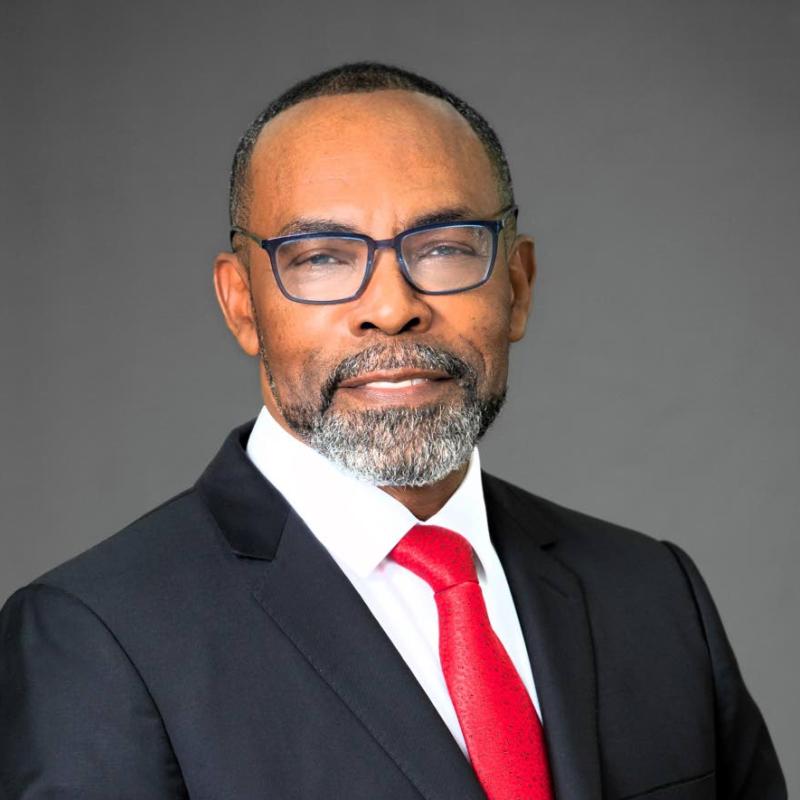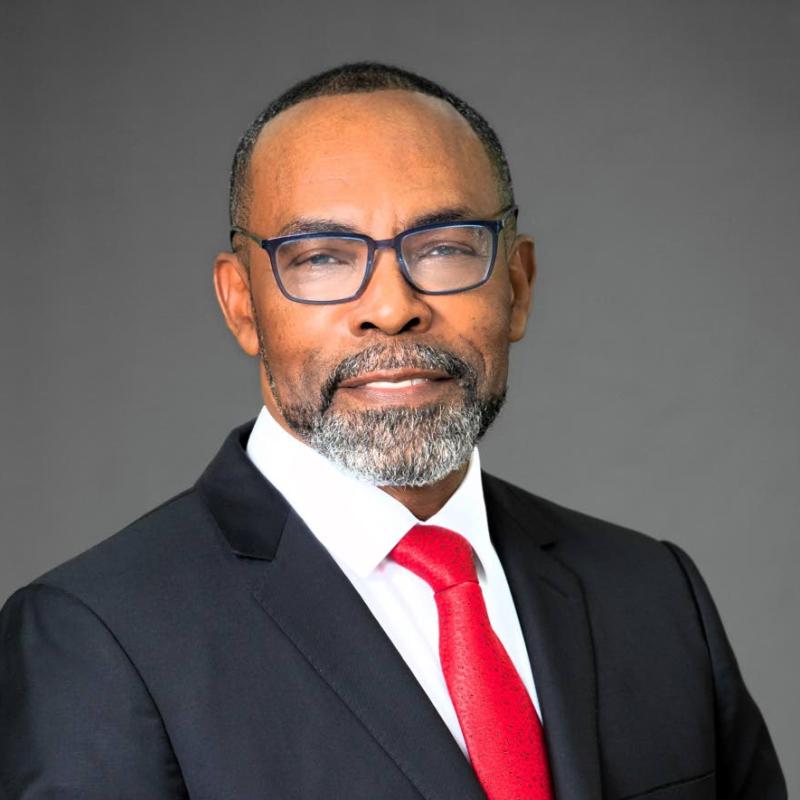
The removal of Justice Chile Eboe-Osuji from the Caribbean Court of Justice (CCJ) panel hearing D’Almada v TT, Jamaica and Caricom by CCJ president Justice Winston Anderson has triggered criticism and confusion among fellow judges.The directive was delivered without explanation by Justice Anderson in an e-mail dated June 26, 2026, to Justices Chile Eboe-Osuji and Arif Bulkan, advising that he had “determined that a change in the panel” to hear the D’Almada v TT, Jamaica and Caricom case was “desirable”.Justice Anderson instead named Justices Denys Barrow, Maureen Rajnauth-Lee, Chantal Ononaiwu, Arif Bulkan and himself to hear the matter.
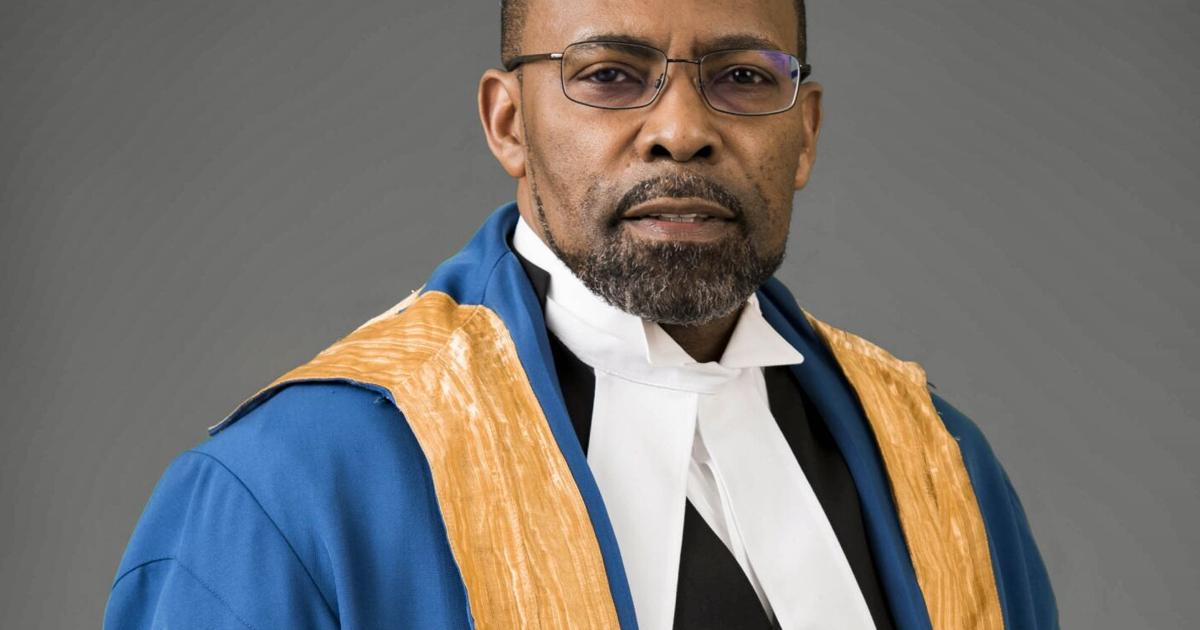
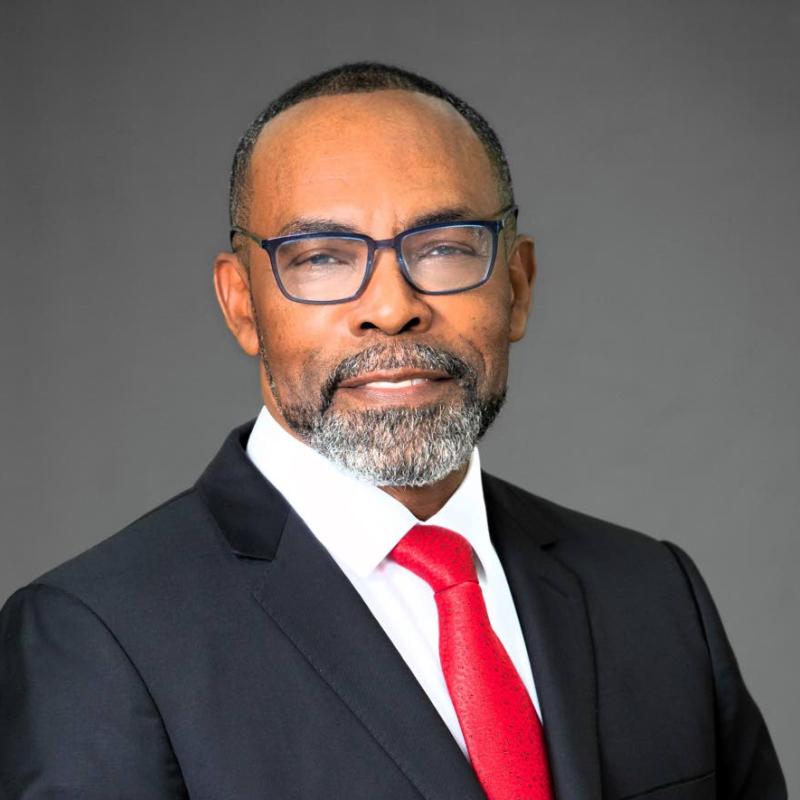
Row over robes: Justice Chile Eboe-Osuji in traditional attire.
Justice Eboe-Osuji had previously sat on the panel.Even before his detailed July 2 letter, Justice Eboe-Osuji had pushed back against his removal. On June 26—the very day Justice Anderson issued the e-mail removing him from the panel for the D’Almada v TT, Jamaica, and Caricom case—Eboe-Osuji responded, saying, “There is a more substantive concern here. As you know, we are engaged in deliberations in Barrow Referral matter. In that case, counsel put in issue the import of Bhagwansingh as entailing a rule that a national cannot sue his state.“Since experienced counsel had taken a view, a view that you had also expressed in the course of the post-hearing deliberation in Barrow Referral, I insisted that it was necessary to explain—through Barrow Referral ruling—that Bhagwansingh was not intended to detract from TCL (which had held that a national cannot sue his State). You said that that question need not be addressed in Barrow Referral because it was most directly engaged in the upcoming case of D’Almada. According to you, that discussion about the import of Bhagwansingh is better done in D’Almada.“As part of an effort to resolve the impasse, Peter (J) suggested that it is only right that I should be in the D’Almada panel to engage in that discussion. Knowing that I was already listed in the D’Almada panel, I agreed to let go of my insistence on clearing up the import of Bhagwansingh through the Barrow Referral ruling. With D’Almada scheduled for a hearing next week, I’m sure you see difficulty with determining—with no reason indicated—that it is desirable to remove me from D’Almada.”Clarification soughtFour days later, on June 30, Justice Peter Jamadar sought “understanding and clarification” on the removal of Justice Eboe-Osuji.In an e-mail to Justice Anderson, copied to the fellow judges named on the panel, he asked, “...is it your decision (and/or that of the RJLSC) that Chile will also be ‘removed’ from all panels and also cannot sit in/on any future hearings which are ‘not one of those occasions where the CCJ robe must be worn’? (Presumably, and in your opinion, ‘to preserve the tradition and dignity of the court when exercising its judicial power;’ and/or until some form of enforceable dress code is formalised for the judges of the CCJ as per proposals that you have placed before the RJLSC.) Or is this decision limited to the D’Almada vs Trinidad and Tobago hearing, which is listed, I understand, for Thursday, July 2, 2026?”He continued, “In either instance, it is, I believe my responsibility to draw to your attention the decision in Khan v Mc Nicholls TT 2012.”Justice Jamadar sought “urgent clarification” because he was scheduled to appear with Justice Eboe-Osuji “in matters which are “ not one of those occasions where the CCJ robe must be worn—such as this morning in Robateau v Robateau”.Justice Eboe-Osuji issued his detailed letter on July 2 to Justice Anderson, copying his fellow judges. In it, he accused the CCJ president of “abuse of power” and of undermining judicial independence, alleging that “immediately upon coming into office as president, you unilaterally set about on a single-minded project suppressing judicial independence—insisting that CCJ judges must no longer write separate opinions in CCJ cases, let alone separate and dissenting opinions in CCAT cases.“Your inclination to suppress separate and dissenting opinions under your leadership was a surprising development to many colleagues, because of our renown for writing many such opinions before you became president.”Inescapable conclusionJustice Eboe-Osuji laid out what he believed were the real reasons behind Justice Anderson’s decision to remove him from the D’Almada panel, framing the move as both personal and damaging to the integrity of the court.Referencing Justice Jamadar’s e-mail the previous week, Justice Eboe-Osuji said Justice Anderson had failed to answer Jamadar’s question as it pertained to Eboe-Osuji’s Nigerian attire.“Let me spell it out. I was listed, as you know, on the panels for both Robateau and D’Almada, scheduled for hearing the same week. Robateau was scheduled for hearing Tuesday, June 30, 2026. D’Almada was scheduled for hearing two days later, on Thursday, July 2, 2026. How does your concern about my dressing like a Nigerian explain our removing me from D’Almada but not from Robateau, which was scheduled for hearing two days earlier?” wrote Justice Oboe-Osuji.He continued, “The conclusion is inescapable that you removed me from D’Almada because you and I disagree on a point of law that foreseeably defines the fundamental question in that case. You have been itching to reverse or chisel down the decision that all seven judges of the CCJ rendered in TCL vs Guyana 2009, when you were not yet at the court.“You told me that, as an academic, you had considered TCL vs Guyana to have been wrongly decided. Not long ago you also expressed that view to CCJ judges. I have disagreed with your view that TCL v Guyana was wrongly decided. That question, according to you, was expected to be centrally engaged in D’Almada—as indeed it was at the D’Almada leave hearing of July 2, 2026.”Justice Eboe-Osuji further argued that since arriving at the CCJ, he had participated in more than 30 formal hearings, most of which were conducted online, and that they were not “robed”.He also reminded Justice Anderson that in the modern era, as opposed to the colonial era, it was normal at most state functions for national attire or European-style business attire to be worn.“It is thus entirely proper for me to wear formal Nigerian attire on any occasion where formal European attire. My position will be guided by the collective decision of all CCJ judges. But this matter is too fundamental to be claimed unilaterally by a CCJ president as a decision within his prerogative. The CCJ agreement confers no such power to the president alone.”Justice Eboe-Osuji said he was making no apologies for wearing his Nigerian attire, but indicated that he had worn his formal attire on only about two occasions—“one of them a status conference, the other on the delivery of a judgment by another judge. On neither occasion did any other judge express concern”.In concluding his seven-page letter, Justice Eboe-Osuji told Justice Anderson he was surprised when he was called to discuss a “very sensitive matter”. Justice Eboe-Osuji said Justice Anderson was not troubled by his attire or had received any concerns from external parties or counsel representing a party in the case.“You said, instead, that one of the CCJ’s junior lawyers, whom we call ‘judicial counsel,’ had expressed to you an opinion that it was not appropriate for me to wear Nigerian attire to court sittings...I was most surprised that a junior lawyer in the court—not a judge, let alone a majority of judges—had now got you to see an issue about your fellow judge’s dressing.”