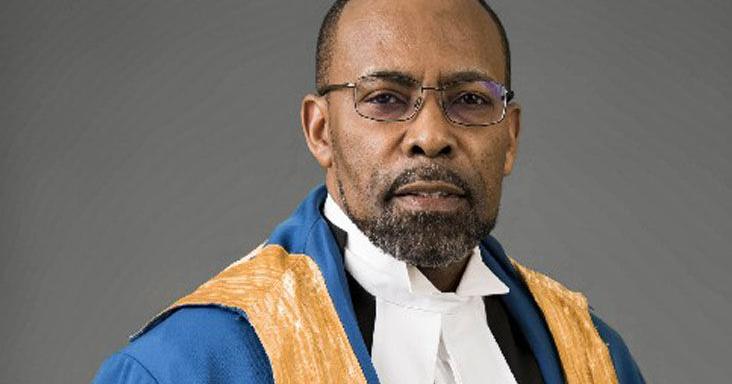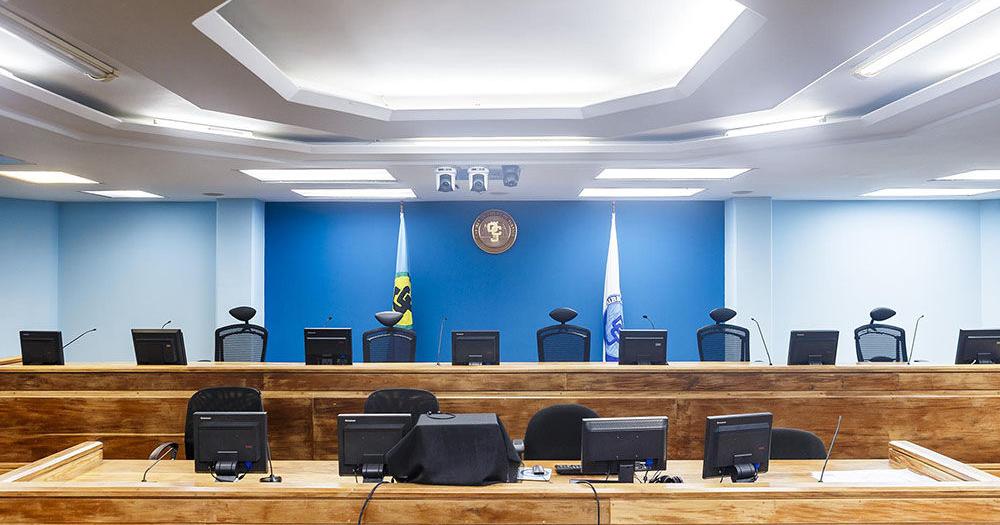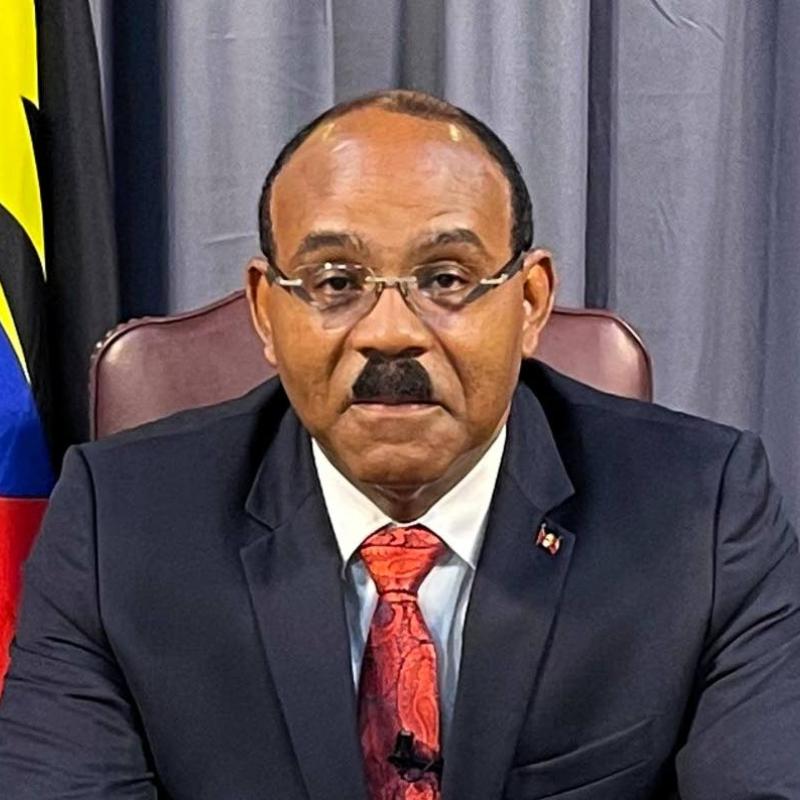
It is unfortunate that Gaston Browne’s attempted walk-back of his assault on the judiciary this week did not include an unambiguous apology for his threat to deport and declare persona non grata a judge whom he believes is too soft on criminals. Moreover, any retraction of the threat should be formally communicated, in writing, to the Eastern Caribbean Supreme Court (ECSC) and the Judicial and Legal Services Commission, which is responsible for appointments to the court and the disciplining of its judges and judicial staff. The distinguished Caribbean jurists whom the Antigua and Barbuda prime minister has asked to review sentencing outcomes for violent crimes should make their acceptance contingent on Mr Browne’s full-throated and written apology. To proceed otherwise would be to leave the door ajar for the prime minister, at a whim, to rehang his Damocles sword over the heads of their brother judges and over the rule of law. If Mr Browne were to succeed in Antigua and Barbuda, the cancer he has unleashed could quickly metastasise across the region, especially given that Antigua and Barbuda is part of the Eastern Caribbean court system. Perhaps emboldened by the fallout from the leaked emails detailing tensions between the president and judges of the Caribbean Court of Justice (CCJ), Mr Browne’s regrettable performance came during a seemingly staged and filmed segment of a meeting of his National Security Council, at which he launched a screed against an unnamed judge for his approach to sentencing, especially in firearm offences. Two years ago, Antigua and Barbuda increased the maximum sentence for serious firearm offences, including the illegal possession of an unlicensed gun, from 10 to 15 years. There was no minimum sentence, for fear of trespassing on judges’ discretion and blurring the separation of powers, a fact that Mr Browne clearly appreciated, given the preface to his National Security Council comments about “whoever wants to say we are interfering with the independence of the judiciary”. He said: “So, this particular judge, who has a propensity to give criminals a break, brother man, if you can’t follow the lead of the Parliament to give criminals longer sentences, leave our country voluntarily, or we are going to deport you and make you persona non grata. You know who you are. This is the prime minister of the country saying this.” BACKLASH Rightly, Mr Browne has faced a region-wide backlash, including from the heads of Commonwealth judiciaries, who warned of the potential of the prime minister’s statement “to erode and weaken the efficacy of the doctrine of separation of powers, which is the bedrock upon which democracy rests”. They advised Mr Browne that, if he was dissatisfied with judges’ sentences, he could legislate the Crown’s right to appeal, which is what Jamaica did in certain circumstances. The Gleaner’s Editorial Board would also remind readers that judiciaries are not immune from societal sentiments. They periodically engage in internal discussions on sentencing guidelines based on the law. In the face of the backlash, the prime minister acknowledged that “judicial independence is essential to democratic government”, but said that this did not place judicial decisions or the administration of justice beyond reasoned public criticism. “Nor does it require an elected government to remain silent when sentencing outcomes raise serious and recurring questions about public safety, legislative policy and public confidence,” he added. Indeed, that sentiment is in keeping with Lord Atkin’s dictum that justice is not a “cloistered virtue”, but must be “allowed to suffer the scrutiny and respectful, even though outspoken, comments of ordinary men”. Mr Browne’s remarks went beyond inviting scrutiny. He issued a threat that he has the power to carry out. In attempting to soften the initial impact of, and regional outrage over, his tirade, he announced that he had proposed to Chief Justice Margaret Price Findlay of the Eastern Caribbean Supreme Court “the immediate establishment of an independent committee to review sentencing for firearm and other serious violent offences, repeat offending and the operation of the wider criminal justice system in Antigua and Barbuda”. He suggested that the committee should be chaired by Adrian Saunders, the recently retired president of the CCJ. He had already consulted two other highly distinguished Caribbean jurists, Sir Dennis Byron and Justice Godfrey Smith. NO OBJECTION The Editorial Board has no objection to either the review or the persons whom Prime Minister Browne proposes to undertake the exercise. The board, however, is perturbed by the prime minister’s contortions and semantic parsing in an effort to show that “there has never been any request or action by my government to remove, reassign or deport any member of the judiciary”. At the same time, he stressed that “questions concerning the tenure, assignment or conduct of a judicial officer are governed by the Constitution and the law, and those arrangements will be respected”. “That clarification neither withdraws nor dilutes my criticism of sentencing outcomes and institutional performance; it makes clear that my criticism is not directed at the constitutional security or personal independence of any judge,” he said. In his dance with semantics, Mr Browne seems to assume that all the people who were astounded by his remarks somehow took leave of their cognitive capabilities. They did not. They correctly apprehended a threat to the independence of the judiciary and the rule of law. That raises an issue of trust and deserves an unvarnished apology.
Editorial | PM Gaston Browne must apologise
It is unfortunate that Gaston Browne’s attempted walk-back of his assault on the judiciary this week did not include an unambiguous apology for his threat to deport and declare persona non grata a judge whom he believes is too soft on criminals. Moreover, any retraction of the threat should be formally communicated, in writing, to the Eastern Caribbean Supreme Court (ECSC) and the Judicial and Legal Services Commission, which is responsible for appointments to the court and the disciplining of its judges and judicial staff.
895 words~4 min read