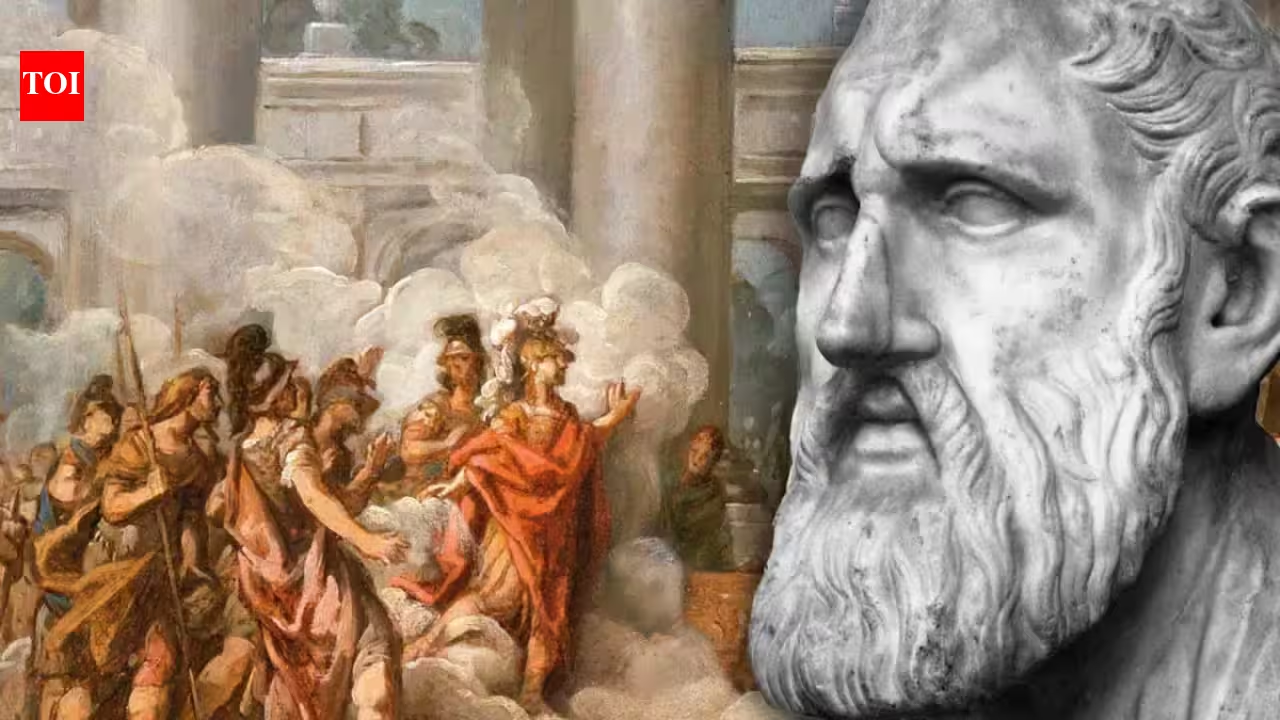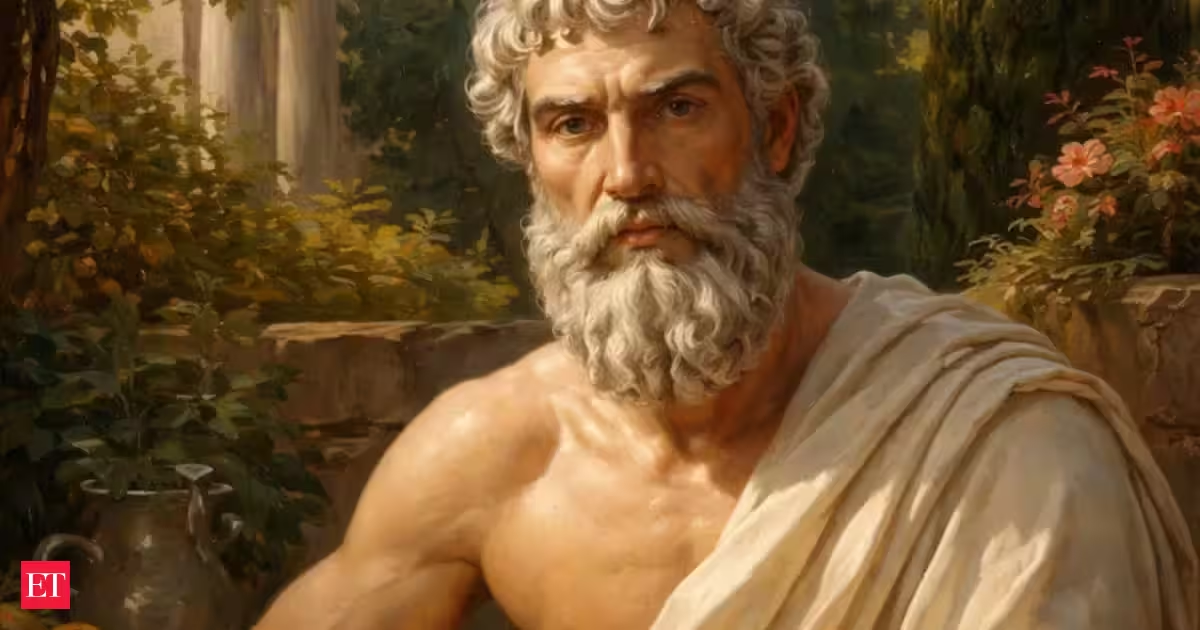
In Greek mythology, Chronos (not the guy who ate his kids), the primordial god of time, was depicted as a giant snake with three heads: a man, a bull, and a lion. Chronos and his consort, the goddess of inevitability, Ananke, circle around the cosmos and drive the rotation of heaven and the eternal passage of time. This description potentially speaks to how ancient societies viewed time: primordial, grand, and inevitable. It’s probably not too different from the way we think of time (philosophically, anyway), but today, we have an incredible tool: modern science. This has led not just to more objective standards but also to discoveries in unorthodox realities, namely the quantum and cosmic worlds. So we’ve come a long way from Chronos—or have we? Modern science has shown us that, in some realms, time as we know it appears to break down. But what does that really mean? Are we now beyond time? Do we want to be beyond time? What does our evolving understanding of time mean for the way we understand the universe—and ourselves?
These are the questions that Guido Tonelli asks in his latest book, Time: The Dream of Killing Chronos. Tonelli, a particle physicist at the University of Pisa in Italy, was one of the leading scientists involved in the monumental discovery of the Higgs boson in 2012, for which he received the Special Breakthrough Prize in Fundamental Physics, among many others. Gizmodo spoke to Tonelli about humanity’s relationship with the concept of time, as well as its role in scientific breakthroughs. The following conversation has been edited for grammar and clarity.