Tracking the ancient origins of time from early mankind up to our modern understanding of the concept, Eoin Murphy tells the story of how time came to be.
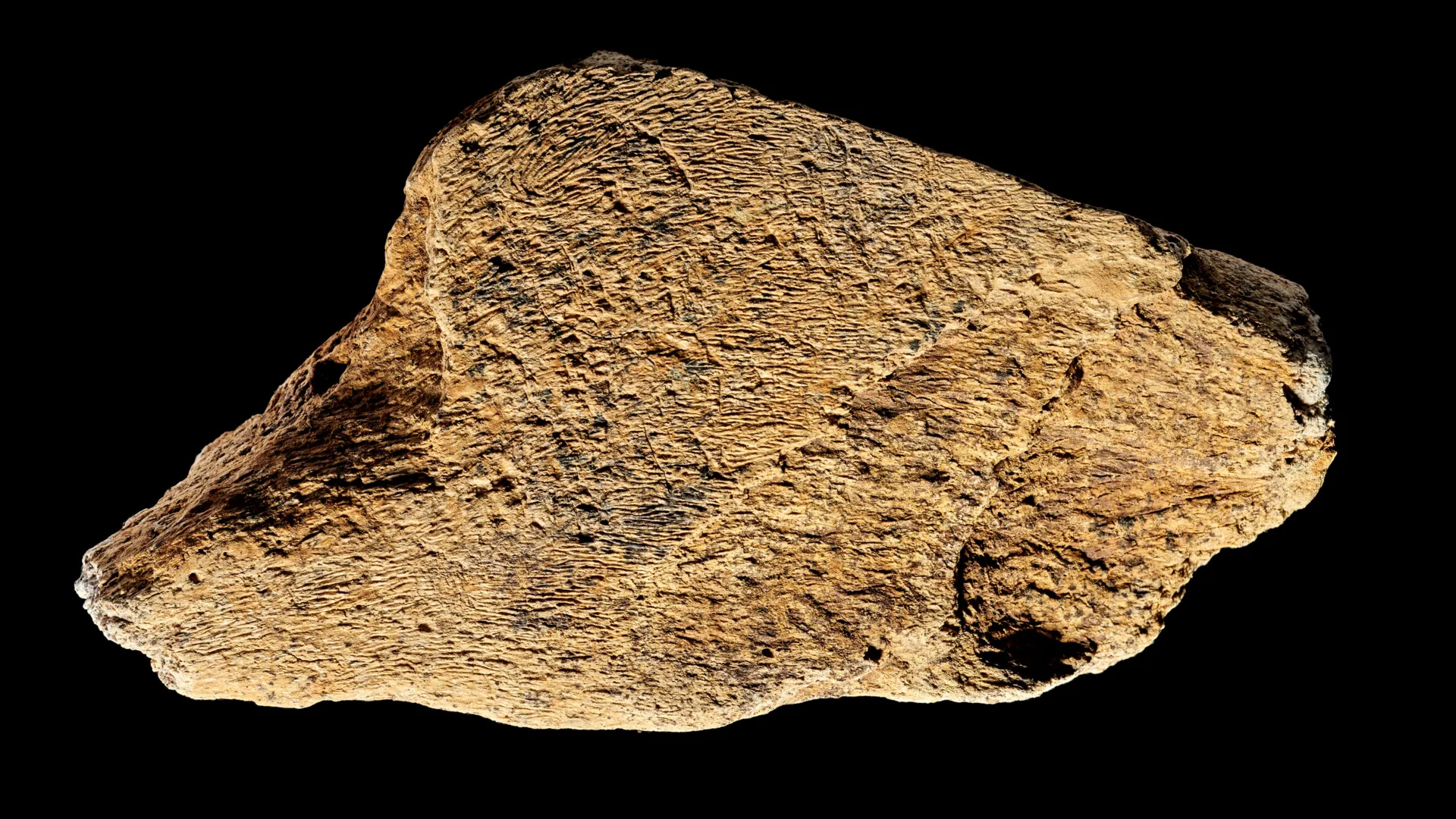
Discovered in the Lebombo Mountains between South Africa and Eswatini and shown by radiocarbon dating methods to be ~44,000 years old, the Lebombo Bone is the oldest known mathematical artefact. The fibula bone from a baboon contains 29 distinctive notches, strongly believed to have been used as a counting device or a rudimental calendar used to track the phases of the moon.
The Lebombo Bone. Image: Robert Hart, The McGregor Museum, Kimberley, South Africa
By ~12,000 years ago sites had been built containing markings and structures suggesting their use as early calendars. Gobekli Tepe, located in modern Turkey is believed to be the oldest permanent human settlement in the world. V-shaped carvings have been discovered at this site, which some archaeologists believe could represent a solar calendar.
Locations such as Newgrange and Stonehenge dating back to around 5,000 years ago demonstrate the understanding people had developed in order to align with the solstices. As incredible as this was, what was going on further east was even more astonishing.