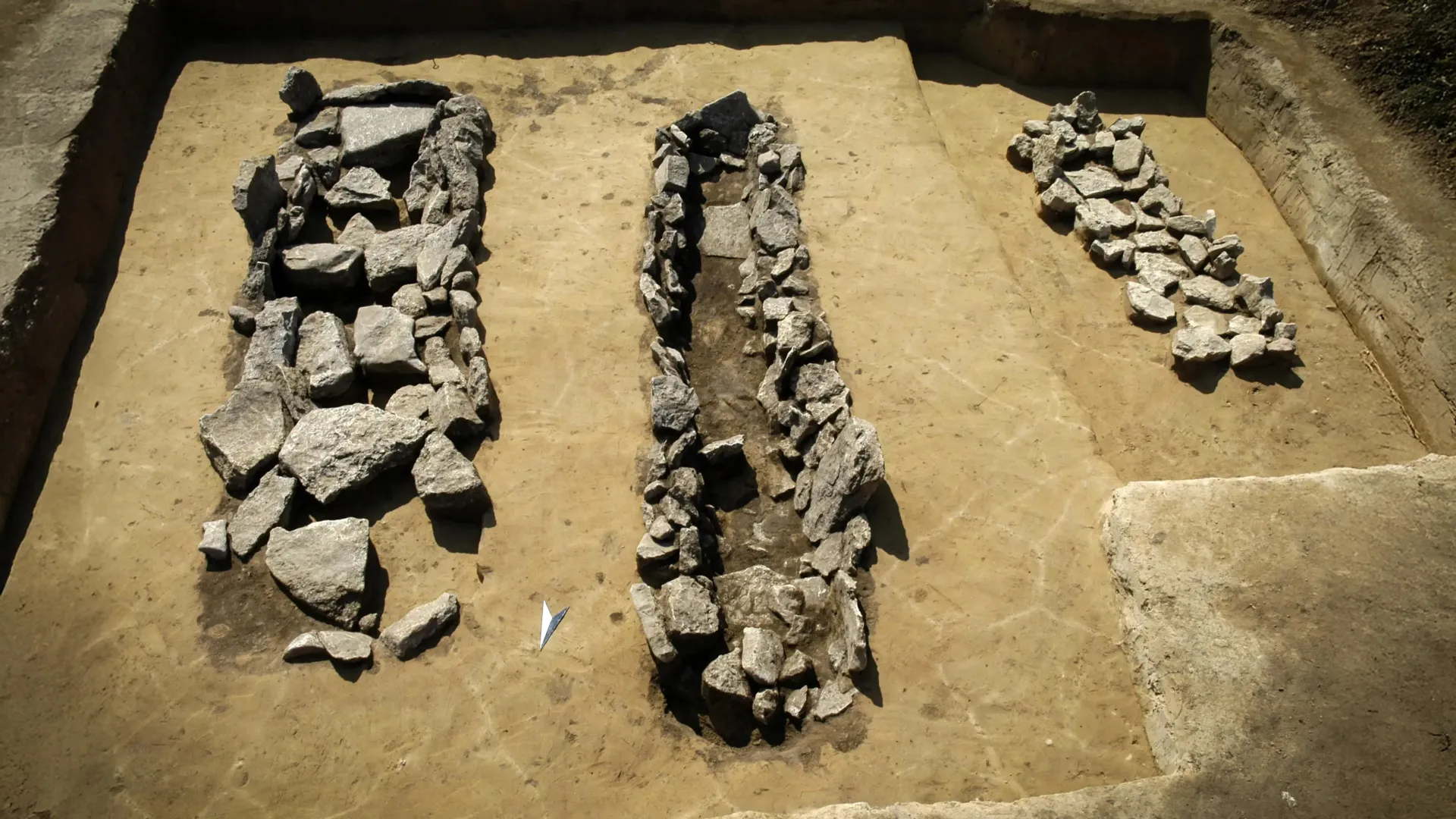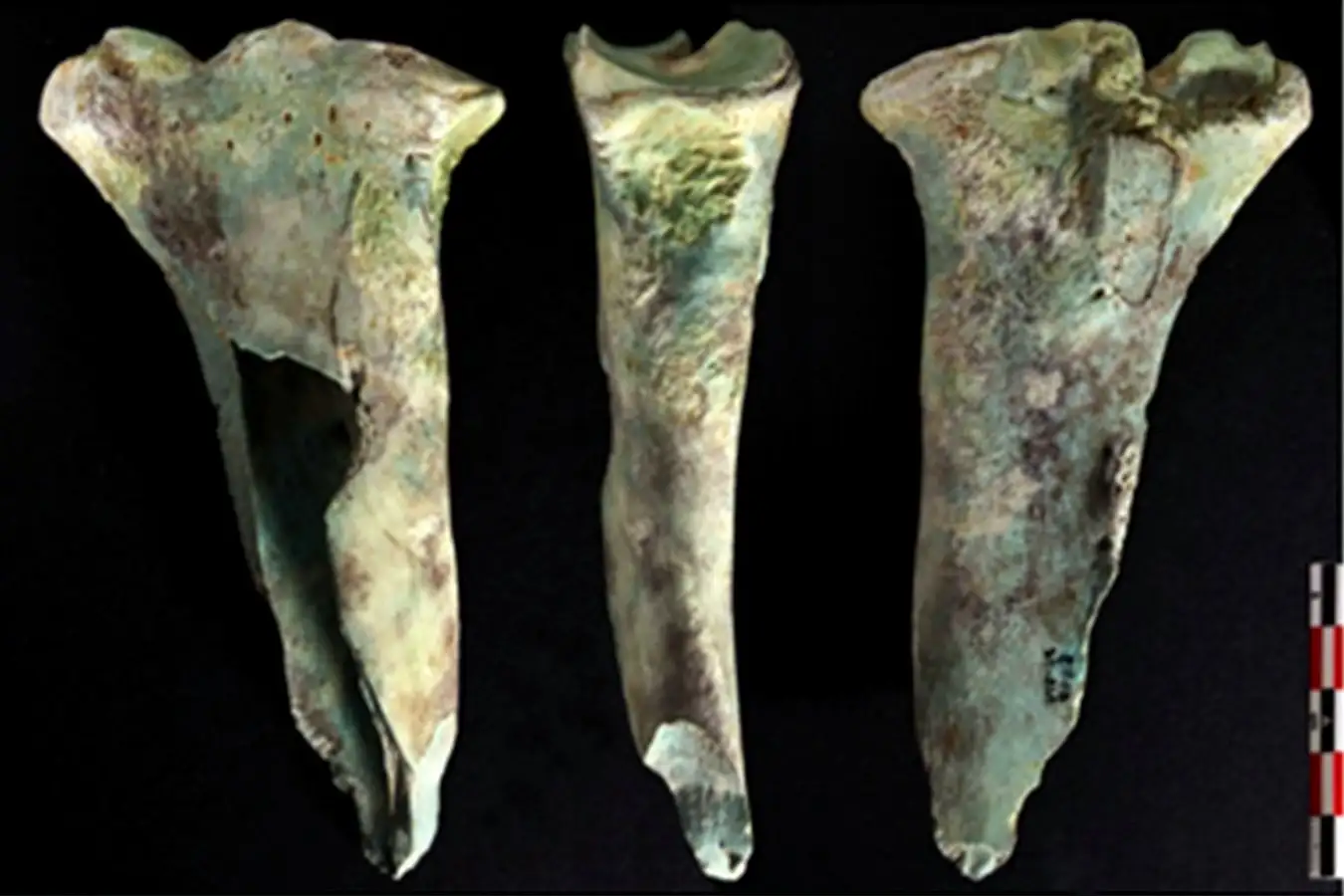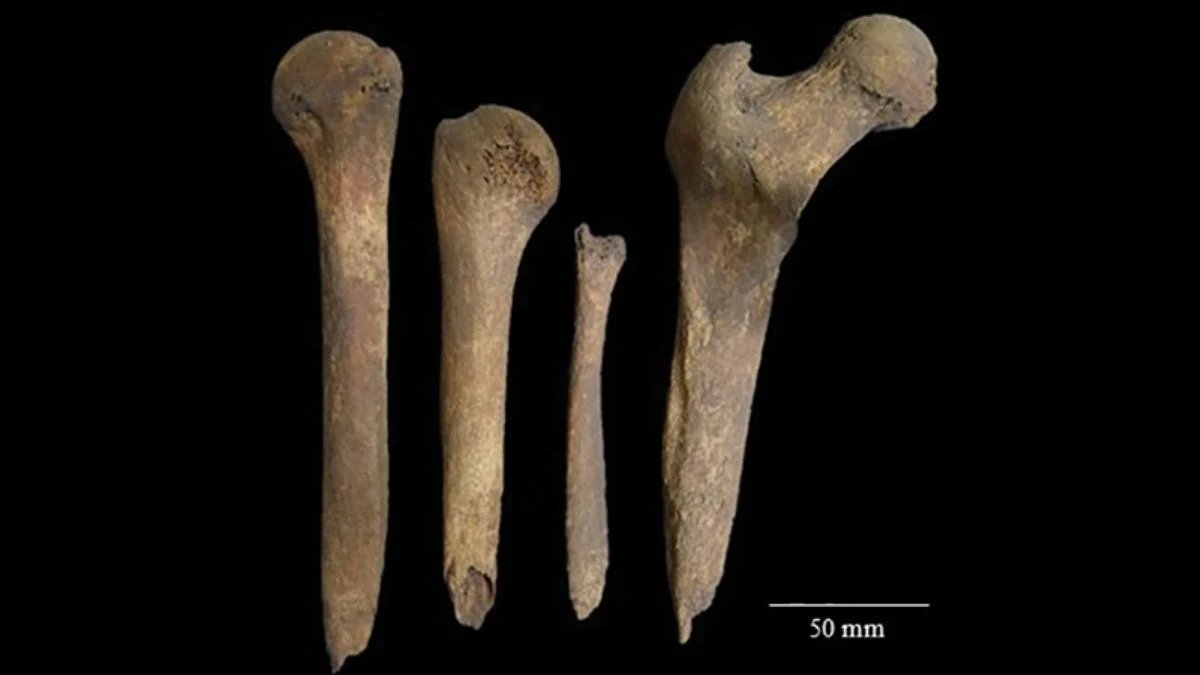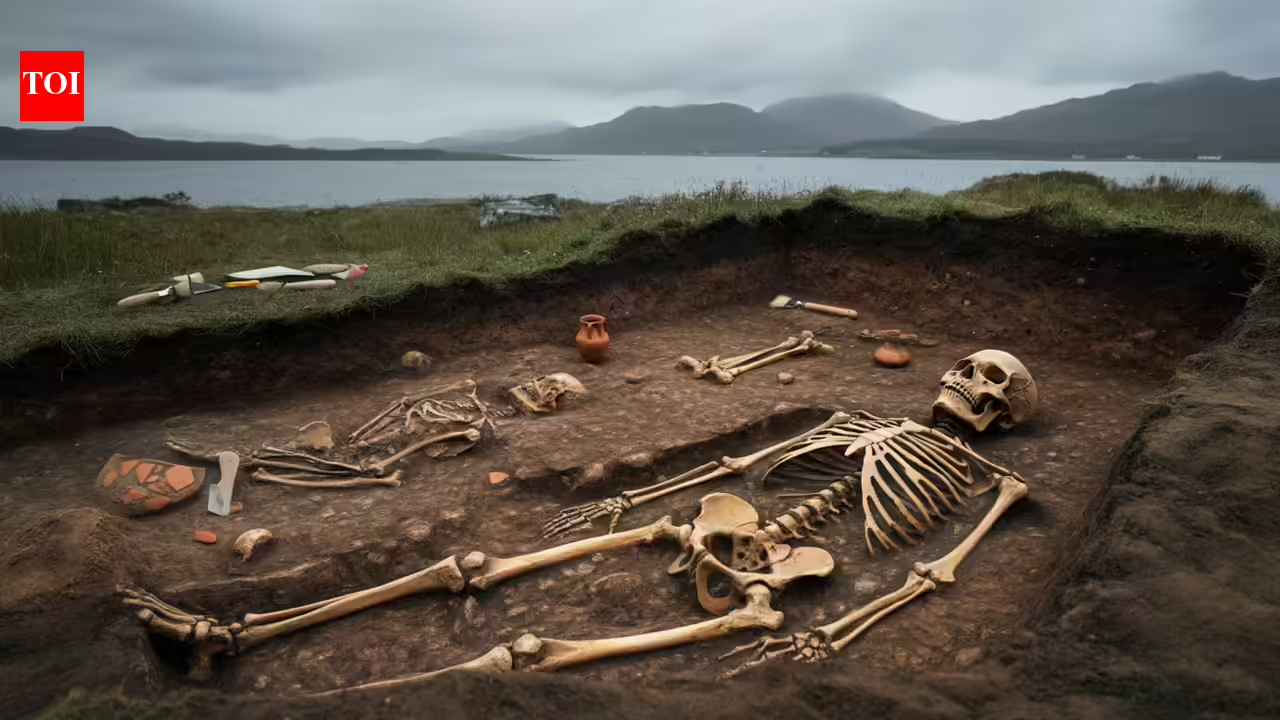
A Bronze Age burial site in Britain is raising new questions about how prehistoric communities treated their dead after archaeologists identified unusual stone objects shaped in ways that may resemble human bodies.
The discovery comes from research into the Coëby cemetery, a prehistoric burial landscape in Lincolnshire that contains a series of burial mounds dating back thousands of years.The unusual stones are among several features that make the site difficult to interpret.
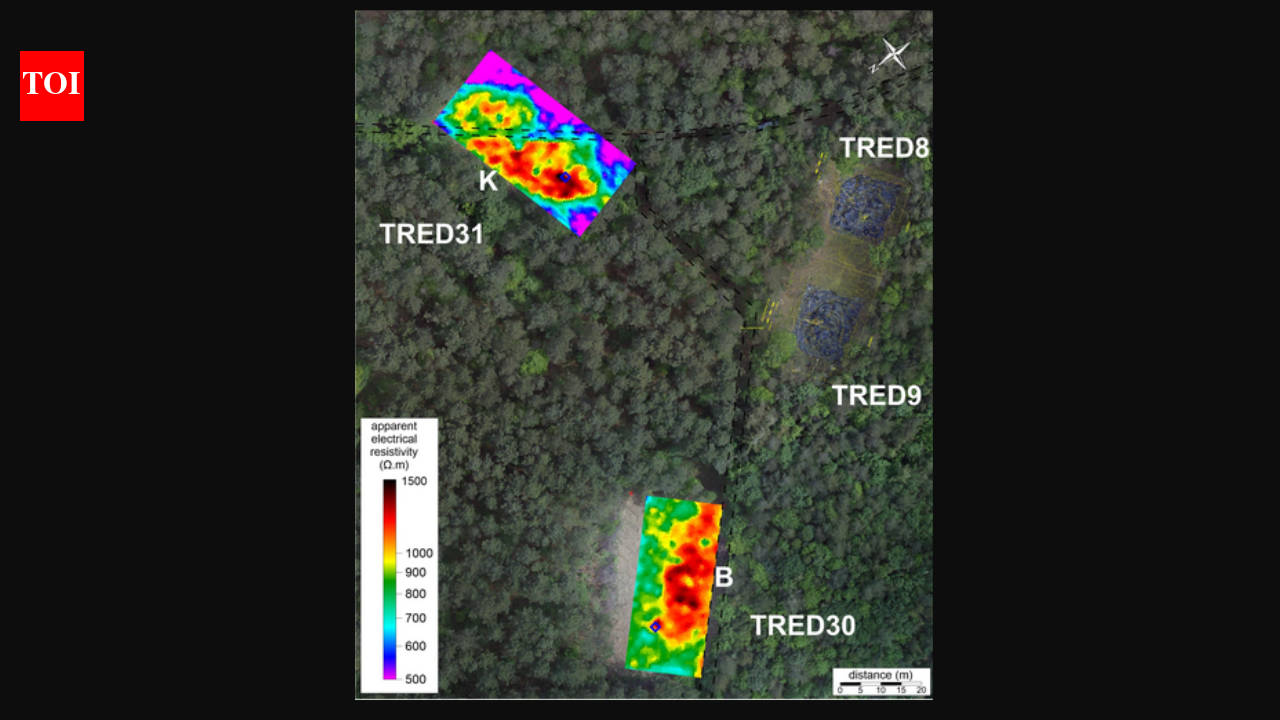
Rather than being ordinary pieces of naturally occurring rock, some appear to have been deliberately selected or modified and placed in contexts associated with prehistoric burials.A study titled ‘Atypical Long Barrows in the Cöeby Neolithic Cemetery (Trédion, Morbihan, France)?
The Contribution of Electrical Surveys’ examined the site using archaeological and geophysical evidence, adding another layer to the mystery surrounding Coëby and the practices of the people who used the cemetery.How a strange discovery is changing what researchers know about Coëby cemeteryCoëby is part of a wider prehistoric landscape in Lincolnshire containing monuments and burial sites created during the Bronze Age.
Burial mounds were an important feature of prehistoric Britain, but the people who constructed them did not always treat the dead in the same way.Some individuals were buried with objects, while others were cremated and their remains placed in vessels or pits.