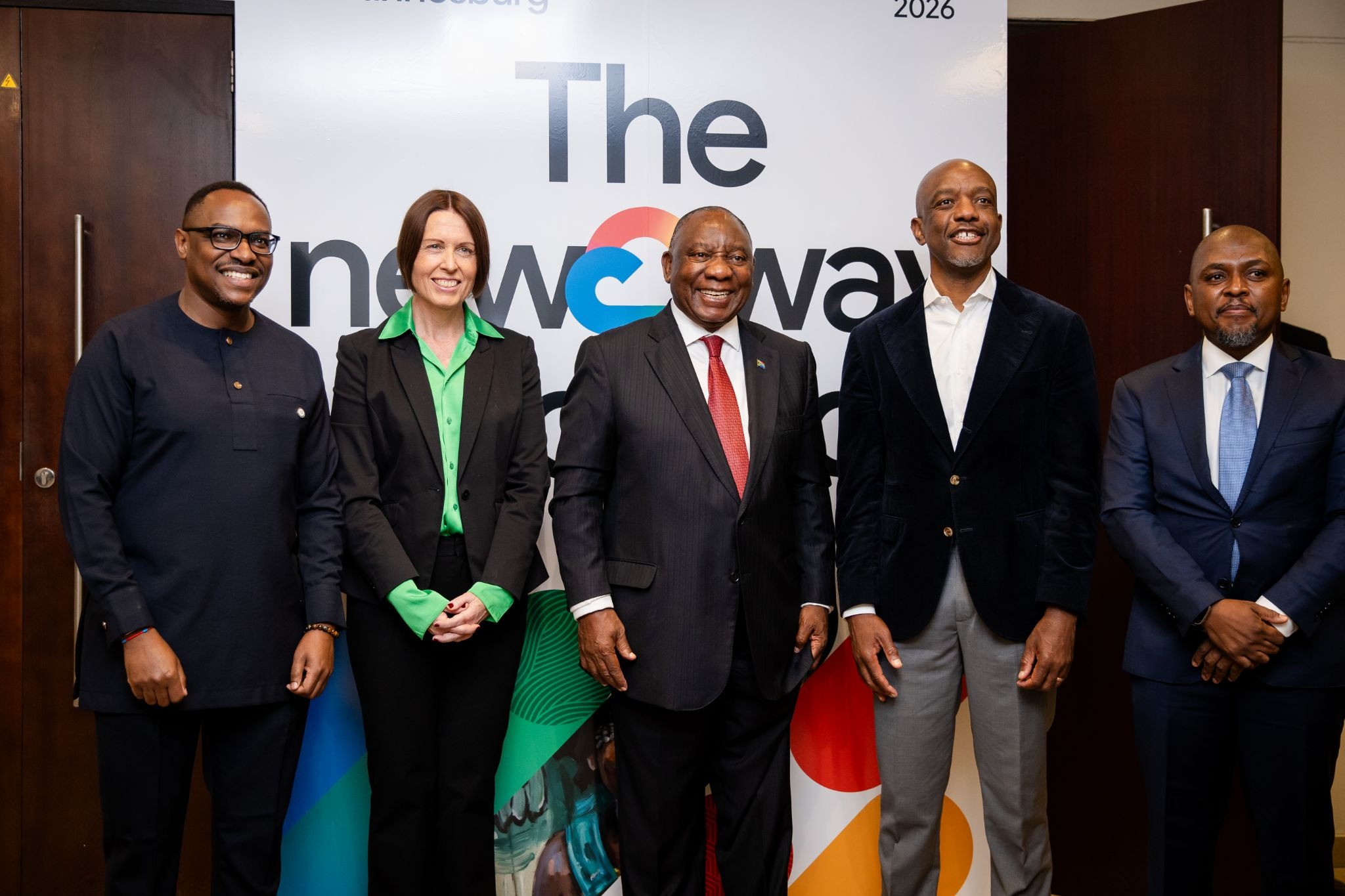
Twenty-two years ago my family took a holiday to South Africa. We spent a day at Johannesburg’s world-renowned Apartheid Museum, toured the historic township of Soweto, spotted wild game in Kruger National Park, drove the Garden Route, and explored Cape Town. I’d recommend that trip to anyone. But what I didn’t know at the time was that just a few kilometres from where we were staying in Cape Town, a small team of Amazon engineers was setting up a development centre that would go on to pioneer EC2 — the computing service that is foundational to our web services and, arguably, the modern cloud industry. I’ve thought about that coincidence many times over the years. While I was a tourist passing through, Amazon was already putting down roots. And those roots have only grown deeper. A thread running through decades I recently returned to South Africa for the first time since that family trip. In meetings with government leaders, business executives, entrepreneurs and our own teams, I found myself telling that story because it captures Amazon’s relationship with the country. We’ve been here, quietly building and delivering for customers, for more than two decades. We launched the AWS Africa (Cape Town) Region in 2020 — our first data centre infrastructure on the continent. In 2024 we opened Amazon.co.za, our first online shop in sub-Saharan Africa. And we recently announced an Amazon Leo partnership with Herotel to bring connectivity to communities around the country that have never had affordable, reliable internet access. The thread connecting each of these investments has been the same. We want to help South African customers access new technologies and maximise their benefit from them — whether that’s a retailer in Durban reaching customers around the world, a bank in Johannesburg using artificial intelligence to transform how it serves its customers across Africa, or a family in a rural village in the Eastern Cape getting online for the first time. The case for patient capital Strong, sustainable economies are built on investments that foster skills development, infrastructure, businesses and new opportunities that compound over time. What I believe sets our approach apart is the scale of our local investment. We hire locally. We build locally. And we partner with South African businesses rather than trying to replace them. We invest in the long-term capacity of the country, not just our own operations. Over the past decade Amazon has invested more than R54bn in South Africa. We support more than 20,000 jobs around the country, including employees, an extended workforce of contractors, seasonal workers and other temporary positions, and indirect and induced jobs in areas such as construction, logistics and professional services. Keystone Strategy, a third-party consultancy, estimates our investments have contributed more than R33bn to South Africa’s GDP over that time. When we launched Amazon.co.za, we built it so South African entrepreneurs could reach millions of customers, across every part of South Africa and beyond, from day one. Thousands of local sellers are already active, with thousands more preparing to launch. Our partnership with Herotel for satellite internet reflects this same philosophy. We chose to work with one of the country’s largest fixed internet service providers to deliver connectivity together. We believe that when you meet a country on its own terms, responsible investment works and you build a stronger foundation for everyone. Investing where it matters most We’ve always striven to be a responsible investor in this country, acknowledging the unique challenges South Africa faces from a historical perspective and the economic headwinds it confronts today. In practice, that means building our skills centre to provide free cloud and AI training, regardless of background or previous experience, and running wider training programmes that have reached more than 350,000 South Africans since 2017. It means committing R365m since 2018 through our equity equivalent investment programme to incubate 47 black-owned technology businesses that are now bringing cloud and AI capabilities to organisations across the country. It’s why we commissioned a 10MW solar plant in the Northern Cape — majority-owned by black South African women — that avoids 25,000 tonnes of carbon emissions each year. And why we’re participating in the R1.9bn commitment to spekboom reforestation in the Eastern Cape, which will rehabilitate 50,000ha, generate nearly two-million tonnes of carbon credits, and create more than 11,000 jobs in the next decade in communities with limited economic opportunities today. And it’s why we supported the Iziko Mobile Planetarium to deliver science education to underserved and remote communities across South Africa. Building businesses that last means building communities that thrive. I’ve seen what patient, locally rooted investment can accomplish. When Amazon launched in Spain in 2011 the country was in the grip of its worst economic crisis in a generation: unemployment of more than 20%, youth unemployment approaching 50%, and global investors pulling back. But we invested patiently, building fulfilment centres, hiring locally and training thousands of SMEs to sell online. Today Spanish SMEs selling on Amazon contribute about €2.4bn (R44.94bn) to Spain’s GDP and support more than 45,000 jobs across the country. Seventy-five percent of them export — compared with 9% of Spanish SMEs overall — generating more than €1.2bn (R22.47bn) in international sales in 2024. We’ve set a goal to double annual exports to €2bn (R37.45bn) by 2030. The parallels are striking. And they give me confidence that our long-term approach will deliver similar results for the South African economy and the people who drive it. Looking ahead Amazon is investing in South Africa for the long-term and I believe we’re only getting started. The latest AI technologies, delivered from data centres in-country, can help South African businesses and communities transform in ways that were not possible just a few years ago. President Cyril Ramaphosa has described South Africa as “a leading digital investment destination”. He’s right. This country has world-class talent, sophisticated institutions, a government focused on reform, and a generation of young people who are ambitious, digitally fluent and ready to build. The companies that earn their place here — investing with patience, partnering locally and building for the long-term — will be rewarded. Amazon intends to be one of them. Given everything I saw on this trip, I don’t plan to wait another 22 years to come back. Zapolsky is chief global affairs and legal officer at Amazon.
DAVID ZAPOLSKY | Why Amazon is doubling down on SA after 22 years
Investments in skills, infrastructure and partnerships aim to boost South Africa’s digital economy
1,052 words~5 min read