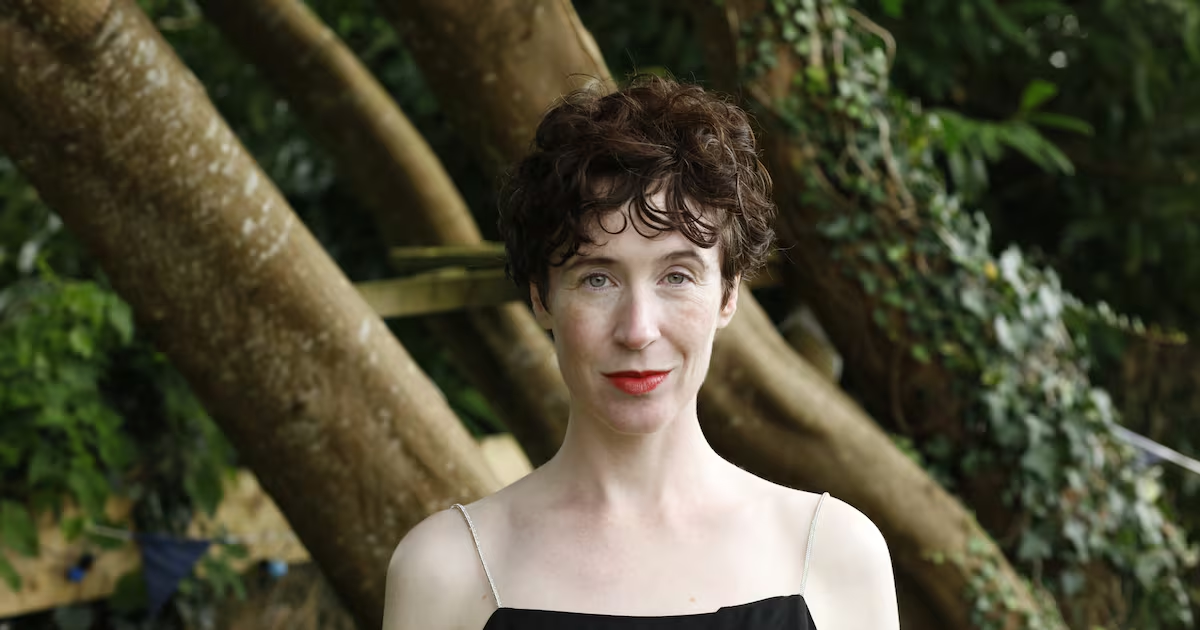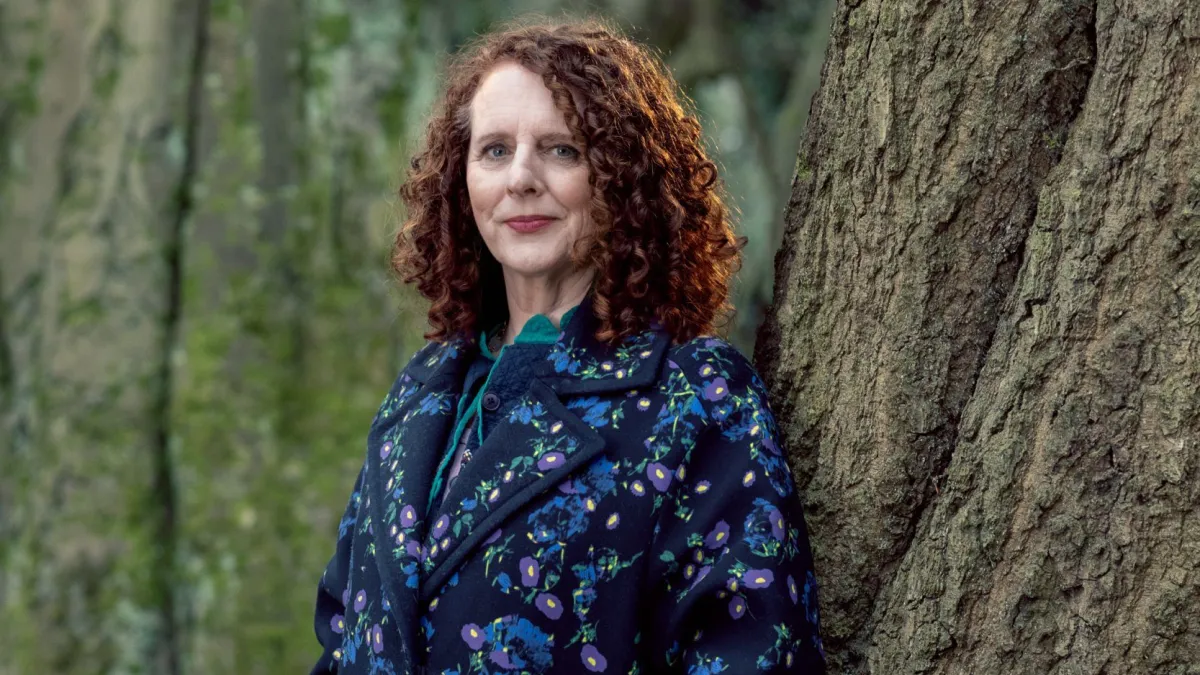
“I was a shy person. I’m still not someone who likes a lot of attention. Emotionally, on the night of the Orange Prize, I was elated. But it all felt very precarious. My memories of that time are strangely hazy and disembodied, like I can see myself in the tableau of the memory. It often felt like it was happening to someone else.”In the lounge of a Dublin hotel, Téa Obreht is relaying what it felt like to win the Orange Prize at age 25 for her novel The Tiger’s Wife, an intricately textured family saga set in a Balkan state.It was 2011, and Obreht was at the centre of a literary storm; not just the recipient of one of the world’s biggest literary accolades, but also a finalist for the National Book Award in the United States. She had already, in 2010, become the youngest person on The New Yorker magazine’s list of the 20 best writers under 40.It was a lot. Arguably too much.Obreht retreated, faced down doubt, worked through (and threw out) drafts of new novels, and learned how to write with the glare of success’s torchlight shining in her face. “That was a vulnerable time because The Tiger’s Wife had been a very personal book and the material for it was childhood,” she says. “The well was empty by the time the next book was on the docket. It took me eight years to get there, but a transformative learning experience happened in that time. I learned how to write again.”Fast-forward to 2026. Obreht’s new novel, Sunrise, her fourth after the acclaimed The Morningside (2024) and Inland (2019), sits between us on the table. It’s a book that ambitiously intertwines three dizzyingly different stories. Obreht threads together the narrative of Nina, a young woman who survives a plane crash in Wyoming in 2024 and needs to make her way back out of the wilderness; Anton Vargas, a gunslinger in 1902 searching for an old friend, Preacher; and Colin Yard, an amateur historian and theatre-maker with secrets, in 2003.Myth, hidden truths and the quest for survival are all explored in the novel, which coalesces to some degree in the rousing, heart-quickening conclusion.Lit up with expressive, delicate prose, Sunrise is the work of a confident writer, one Obreht now recognises she is. She wrote the book without having detailed plotting in place at every juncture.“It was the first time I had gone that far into a book without knowing what the ending would be,” she says. She trusted that instinct would guide her. “I have a good sense now of when something is working,” she says. How does she know? “It joins you in your every day,” she says. “You’re thinking about it all the time.”Téa Obreht: 'I’m excited. My relationship with Ireland is built on holidays, especially Christmastime.' Photograph: Bryan Meade The “every day” looks different now than it once did. Last month, she and her husband, the Irish writer Dan Sheehan, packed up their belongings, left their condo in Wyoming, where they’d lived since 2018, and moved to Dún Laoghaire, to a rental house that is a mile and a half from Sheehan’s parents.Relocating isn’t new to Obreht. Born in Belgrade in 1985, she moved to Cyprus and Cairo as a child before settling with her mother in the US at the age of 12. A graduate of the MFA programme at Cornell University, she has lived in New York, teaching at Hunter College, then at the University of Texas. But this latest switch is still a jolt. She has a new home, a new baby – five-month-old Maeve (“She’s at home; this is the first time I’ve left her.”) – and a new job. Obreht will start at Maynooth University as a part-time lecturer in creative writing next month. She looks calm and happy – elegant in black, chatty and bearing no trace of new-mom exhaustion – but how is she feeling about all the changes in her life and her move to Ireland?“I’m excited,” she says. “My relationship with the country is built on holidays, especially Christmastime. I’m looking forward to finding out what the literary community is like, what it’s like to parent young people in Ireland. There’s so much of the country that I haven’t seen. I want to explore as much as possible.”Obreht met her husband, who works remotely for the website Literary Hub, when they were both living in New York, after the publication of The Tiger’s Wife. They got married after just eight months together, when she was 28 and he was 26, at the Unitarian Church in Dublin.“We met at a literary party,” she recalls. “We got chatting and we closed down the bar, then shared a taxi to the same neighbourhood. We both lived in Harlem, two blocks away from each other. We ended up sitting on the street until morning. I was charmed by his accent. He was very chatty and transparent and I liked that a lot.” ‘I like to make the reader uncomfortable and I like to make myself uncomfortable as wel’— Téa ObrehtIs it difficult navigating a relationship with another writer? One imagines it might be. “I’d been in relationships with other writers before in which the delicacy of that balance didn’t work out. But with Dan, he’s very self-assured. Because we both work from home, we end up sharing our work with each other: early drafts and later drafts. There’s a wonderful camaraderie.”The couple have moved to Dublin partly to see more of Dan’s parents, but also as a respite from the US; specifically its gun control laws. Their first-born daughter, four-year-old Nella, is starting school next month and it felt urgent to leave the US before that happened. “As soon as we had her, the looming spectre of gun violence in American schools became something we talked and thought about a lot,” Obreht says.“Wyoming is a deep red state. Our town, Jackson, is a more progressive pocket, but the state – it’s the least populous state, there’s 500,000 people – is deeply conservative. It’s a place in which gun culture is very prominent, but that’s the case all over the States. The way we felt was, if you can manage to offer your child a childhood in which they don’t have to learn nursery rhymes about what to do in case of an active shooter in the school, you should probably do that.”If we were in a coffee shop in her old town instead of a Dublin hotel, would customers likely be armed? “They would be allowed to, but culturally probably not. But in most of the other towns in Wyoming it’s common enough. I always found it jarring. I never got used to it. It should be jarring to see a deadly weapon on someone’s hip, at the grocery store.”Perhaps appropriately given these concerns, a barbaric quality runs through Sunrise. In the 2003 part of the tale, a man strides into a bar on a Thursday night with a dismembered wolf, which he proceeds to seat at his table and then dance with. It’s discomfiting and eerie, and that’s the intention. “I like to make the reader uncomfortable and I like to make myself uncomfortable as well,” Obreht says. “Complicity is a huge theme for me. There’s often a character who has done something they’re not necessarily proud of, something they’re trying to excuse. That’s always present in my work, along with,” she says with a laugh, “the obligatory corpse.”Téa Obreht recently moved with her Irish husband and their children to Dún Laoghaire, Co Dublin. Photograph: Bryan Meade We’re also introduced to Vargas, a fabled gunslinger who plays the hero in a manuscript discovered by Nina, the young woman who survives a plane crash in the Wyoming mountains. Nina discovers the unpublished book when she wanders into Sunrise, an abandoned frontier town, frozen in time. Vargas was a founding father of Sunrise but Nina discovers in her reading that he was alsocomplex and ambiguous. Obreht was keen to explore the tension between mythmaking and reality. “With these folkloric heroes, there’s so much of their personalities that gets ironed out,” she says. “People like Buffalo Bill and Wild Bill Hickok and Jesse James. These legends who were so exalted in the States that they actually became global in their reach. Buffalo Bill Cody toured with his Wild West show for many years, all over the world. Made it to the Balkans.”Obreht was eight years old when she started writing stories. She loved magic realism – inspired by writers including Gabriel García Márquez – and the sense of an anchor fiction offered her. “What was appealing was the ability to disappear inside a world of my own,” she says. “That remains appealing to me to this day. There’s something about it when it’s going well. It gives me an elation I don’t feel in other spaces. There’s an element of escape and control, a curated isolation.” She began her research for Sunrise more than a decade ago, inspired by old Hollywood Westerns, which she first came to because of grandparents’ interest in them. “I did a tour of Wyoming, Utah and Montana in 2015, doing research and stopped in a lot of places. Really small regional museums and bigger museums including the Buffalo Bill Center of the West in a town called Cody, Wyoming, which he founded. To this day there are statues of him everywhere and a well-run museum.“That was where the fascination took hold. With Buffalo Bill Cody, he’s allegedly buried in a place called Golden, Colorado. There’s a great point of debate about why he’s buried there when he had the hometown of Cody, Wyoming to go back to. There’s this almost rivalry between the towns, and rumours of his body being snatched. I was fascinated by how deeply people feel a history like that belongs to them.”Talking of belonging, national self-definition is something Obreht seems comfortable keeping fairly loose. “I think of myself as a pretty international author. I think of myself as Yugoslav-American, but my writing, I’ve always felt, is more global than that. Because I’ve lived in so many places.”Obreht doesn’t have an Irish passport yet – “my children do” – but she may in the future, if Ireland proves to be the right home for their family. “A huge part of my childhood was moving around. I always expect that everything in my life is sort of temporary. For many years, it was like, ‘Well, you’ve been here four years, so it’s time to go.’ As I’ve gotten older, those stretches have gotten longer and longer. Perhaps here will be the longest of all. That’s certainly my hope.”Sunrise by Téa Obreht is published by W&N
From America to Dún Laoghaire: ‘Gun violence in US schools is something we thought about a lot’
The award-winning novelist on fiction, fame and moving from the United States to Dublin with her family
1,790 words~8 min read