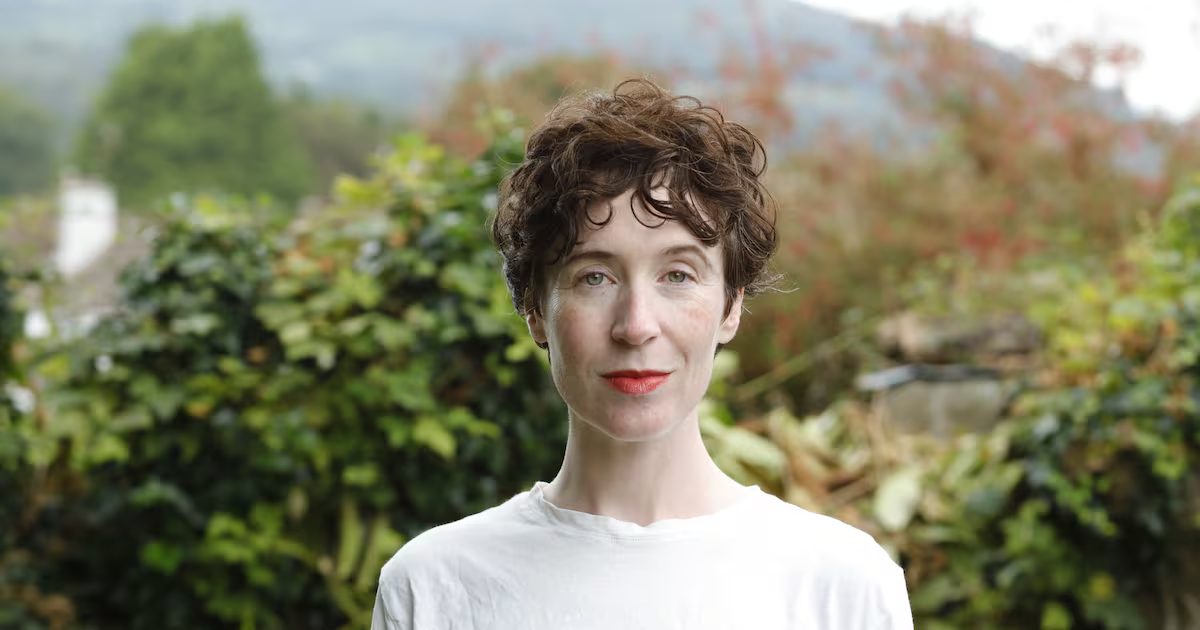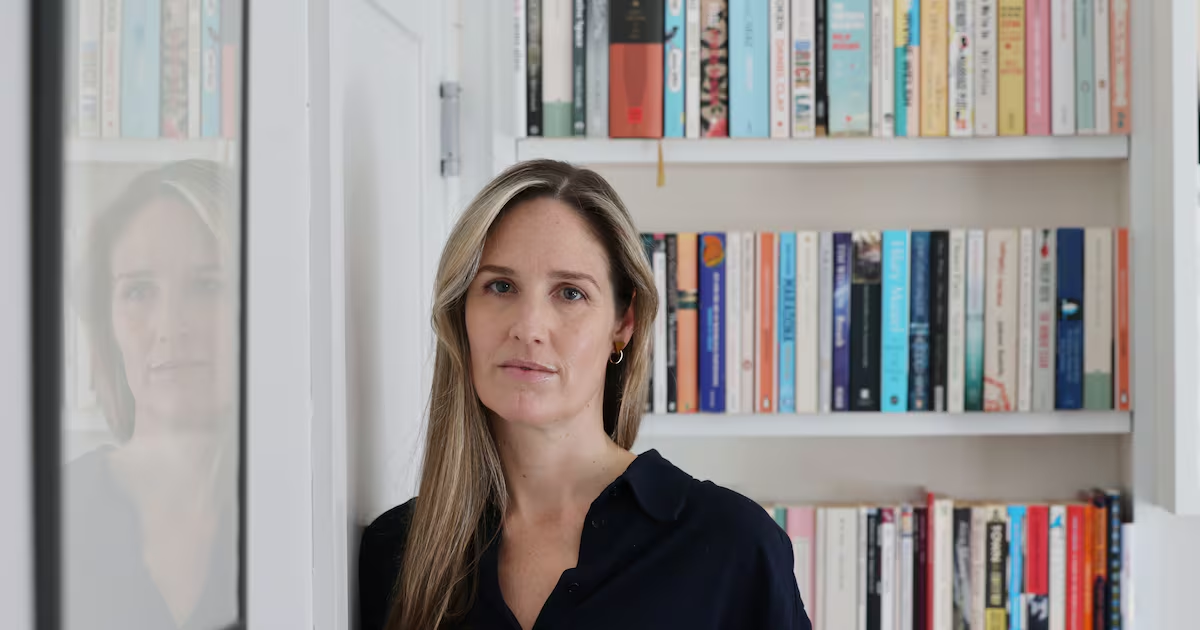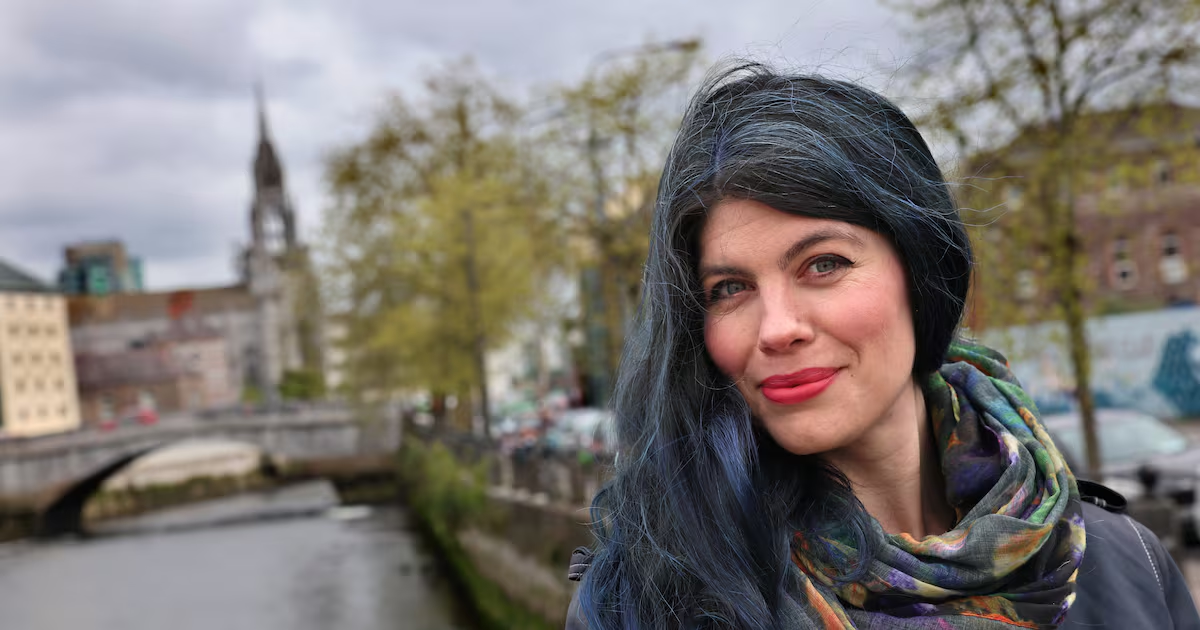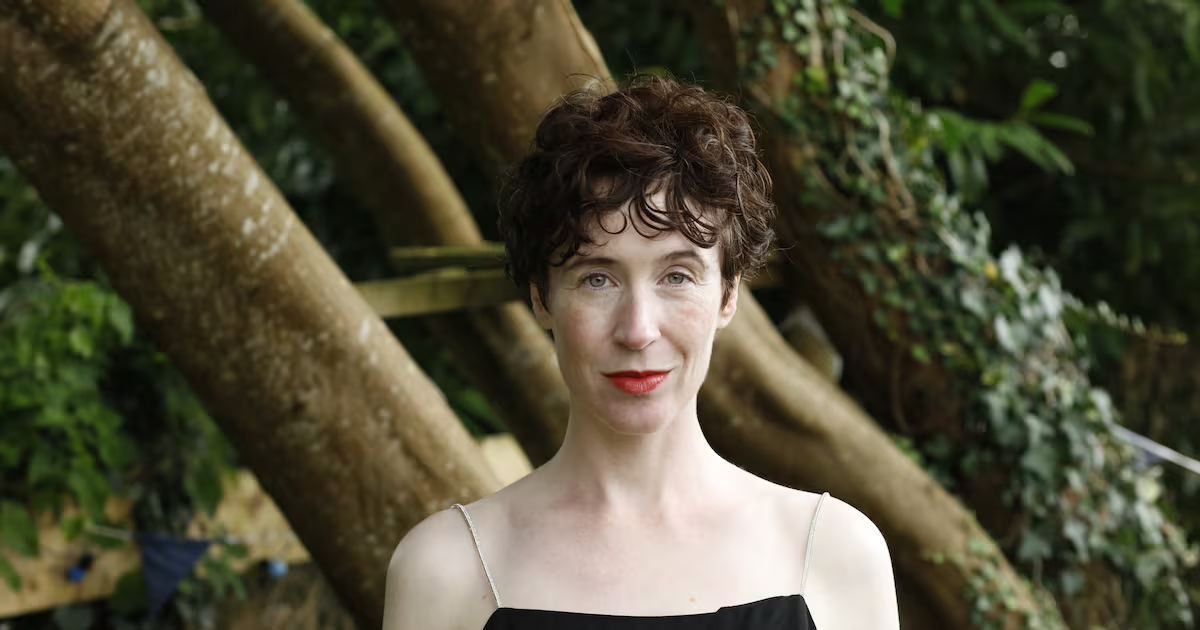
From her home in Co Clare, Niamh Campbell appears on the video call looking as serene as a swan. Her one-year-old is sleeping peacefully in the next room; her three-year-old is at creche. Wearing red lipstick and fashionable blue denim, ready to talk about her impressive third novel, Campbell seems, at 38, every inch a success story: a literary award-winner who has figured out the trick of having it all.But the page can be a home for hard truths, and Campbell is honest about what a struggle it was to find herself again after the birth of her first child. As she put it in an essay for The Dublin Review, in the days after she had her daughter, she texted a friend – in a “rueful, abrasive WhatsApp voice note” – and said, ‘I have met myself and I am not the kind of person I thought I was’”.“I was one of these mothers that’s not naturally very maternal,” she says. “I had this manic thing when my daughter was first born that I insisted every day on wearing make-up, no matter what. I would claw myself out of the bed, out of the fog and mess, and be, like, ‘God damn it, I’ll die on this hill: I will have something of myself.’”In those early months Campbell clung to red lipstick as the symbol of who she was, through attempts at breastfeeding and the abdication of self that parenting can require. “You had to cling on. You had to make the space for yourself and demand it.”When, after maternity leave, she returned to University College Dublin, where she was teaching fiction as part of the creative writing team in the school of English, her thoughts continued to spiral. “I couldn’t reconcile the different sides of my life. I think a part of me desperately wanted out of this. That thought of, like, ‘Oh God, I can’t back out of it,’ or, ‘Have I made a mistake? I’m not up to this.’”It’s a friction that has fuelled her third novel, Make Strange, the story of a Dublin-based couple who have a four-year-old who believes she once died. When we meet Lena and Odhran they’re rushing their daughter Sunny to A&E because she has a fever that is spiking. Days later, Sunny asks, “Mama, you remember when I died?” The eerie set-up gives Campbell a jumping-off point to explore themes that have been percolating in her mind for years.“I wanted to look at the idea of maternal ambivalence or loss of identity or all the things that motherhood throws up that I didn’t expect through a prism that would be a metaphor,” she says. “I feel like I’m living through a moment where the idea of keeping a child safe from contaminants is a very present idea, and one of the contaminants is you.” ‘I believed there was a place where people were going to understand me instead of thinking I was odd or awkward’— Niamh CampbellIn the novel, Lena gets pregnant by accident. “It catches Lena off guard, and she’s concerned that there’s all this unresolved material in her own past that she can’t face.”In speaking to her fears, and writing spiky, thoughtful, resonant fiction, Campbell is channelling the energy of one of the writers she most admires: John McGahern.Before she began publishing fiction, Campbell wrote a book, Sacred Weather, about McGahern that was based on her PhD on him. She is reverent when she talks about the late Irish writer. “I became attached to him at such an early age,” she says. “I had writer’s envy: I wanted to be able to do that. In Amongst Women, I still think the opening line is one of the best I’ve ever read in my life: ‘As he weakened, Moran became afraid of his daughters.’ It’s just ... man, top it!“There are writers who are recognised internationally for being guiding stars to people who want to learn to write, like Alice Munro or Henry James,” she adds. “For me, John McGahern became someone close enough but remote enough to model this timeless way of writing about your own life. He’s writing for the ages. He’s doing it so singularly.”Fractured families are a speciality of McGahern’s. In reading him, Campbell perhaps recognised something of the tensions of her own early life in Balbriggan, in north Co Dublin. As a child she was nervy, sensitive. Her parents separated when she was in her teens. It wasn’t easy.“We’re all friends now,” she says. “My parents were fairly young having me. They’re only human. But it was a rattly couple of years. It exacerbated the sense I had that I didn’t belong, that there was somewhere else I belonged and that’s where I needed to get to.Niamh Campbell chronicles Dublin in her new novel in a way that makes the city feel unsettling “College became that out. I loved reading. I loved studying. I believed there was a place where people were going to understand me instead of thinking I was odd or awkward.”Campbell’s first published writing appeared in Poetry Ireland Review when she was 17. After tackling her PhD at King’s College London she won a Next Generation Artists award from the Arts Council. Her first novel arrived in 2020, and with it the happy timing of a Sunday Times Audible award for the short story Love Many. The prize netted £30,000, or almost €35,000 – a remarkable sum by any stretch of the imagination but particularly notable because it exceeded the advance Campbell was paid for her first two novels, This Happy and We Were Young.“There’s a lot of shame around it,” she says of the money paid to authors. “Even I’m ashamed to say what I get, because I know people got more and I don’t want them to pity me. It is awkward. It reflects market realities. It doesn’t reflect artistic realities necessarily, and if you can live with that, maybe it’s okay. “I’m 38. Partly through having that prize money and other prize money that I got, I’m safe – and I have a good job. It’s younger writers starting, trying to get a foothold, who I think are way more vulnerable.”Campbell has recently been appointed a full-time member of UCD’s creative writing school, joining writers including Anne Enright and Sarah Moss. “I love to teach,” she says. “It’s not my writing. It takes from my writing, but I enjoy it and I have a good relationship with my colleagues.”‘To have enough head space to be a good mother but never have to stop writing. I’d be happy with that’— Niamh CampbellShe tells the students in her classes not to expect to make a full-time living from writing. “Statistically the chances of being a published writer are pretty slim. You’re here to develop your artistic skill. You will probably work in a related area to pay the rent and that will be fulfilling. So don’t look at it like ‘I simply must be making this much money from writing’ as your aim, because you’re only going to harm yourself.”Campbell moved to Co Clare 3½ years ago with her curator husband, Matt Packer, who is director of EVA International, Ireland’s biennial of contemporary art, based in Limerick. They live in Killaloe.[ Our Deadly Summer by Emer McLysaght & Sarah Breen: Fast-paced millennial mysteryOpens in new window ]Dublin – expensive and full of thrown-up hotels – is no longer a place she recognises easily. “The Dublin of 2015 was so full of optimism. We got Repeal and we got marriage equality, and great changes were made,” she says. “It was normal to have a social life made up of fundraisers and marches, and it was easy to live there. Bit by bit it got more expensive and exclusive and harder to stay. Then the pandemic happened and the wheels came off.”Campbell chronicles Dublin in the novel in a way that makes the city feel unsettling, whether it’s descriptions of O’Connell Street filling with violence or chatter about the riots of 2023.It’s not the only element of the novel that jolts the imagination. Readers may find themselves floored by a happening that forces a radically different interpretation of the narrative. “I wrote that scene in one go and I haven’t read it through since,” Campbell says. “It’s important. You see the book in a whole new light.”She adds: “I don’t write with a plot, but a kind of idea. There are things around me that seem to hold little kernels of resonance, and if I pull them in, the atmosphere will go in the right direction.” She allows that sensibility to take hold even if it leaves her anxious about what readers will think. (She notes that so far the reaction to the twist has been “mostly disturbed and angry”.) “The part of me that writes has a ruthlessness,” she says. “You cannot compromise yourself.”Fiction can be a way of giving voice to one’s private fears and, through that process, exorcising them. Asked what she hopes the future will hold, Campbell has a telling response. “To have enough head space to be a good mother but never have to stop writing,” she says. “I’d be happy with that.”Make Strange is published by Weidenfeld & Nicolson
Novelist Niamh Campbell: ‘The Dublin of 2015 was so full of optimism. Bit by bit it got harder to stay’
The award-winning author – whose new novel Make Strange is out now – on motherhood, publishing and making a living from fiction
1,543 words~7 min read