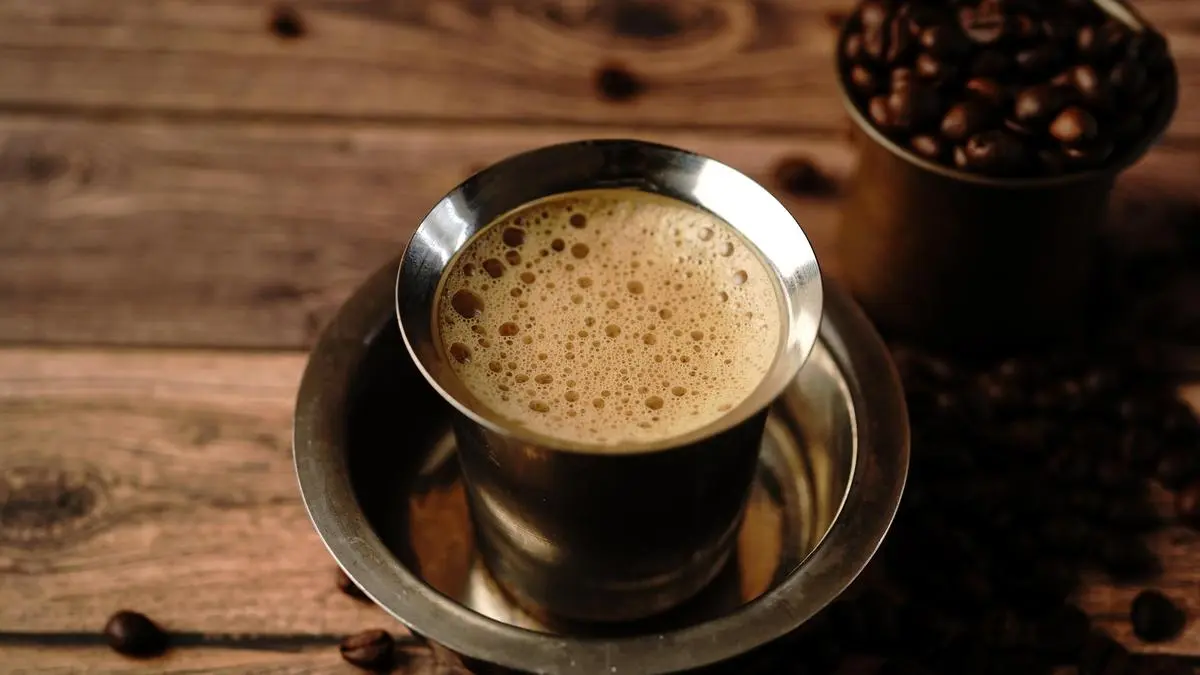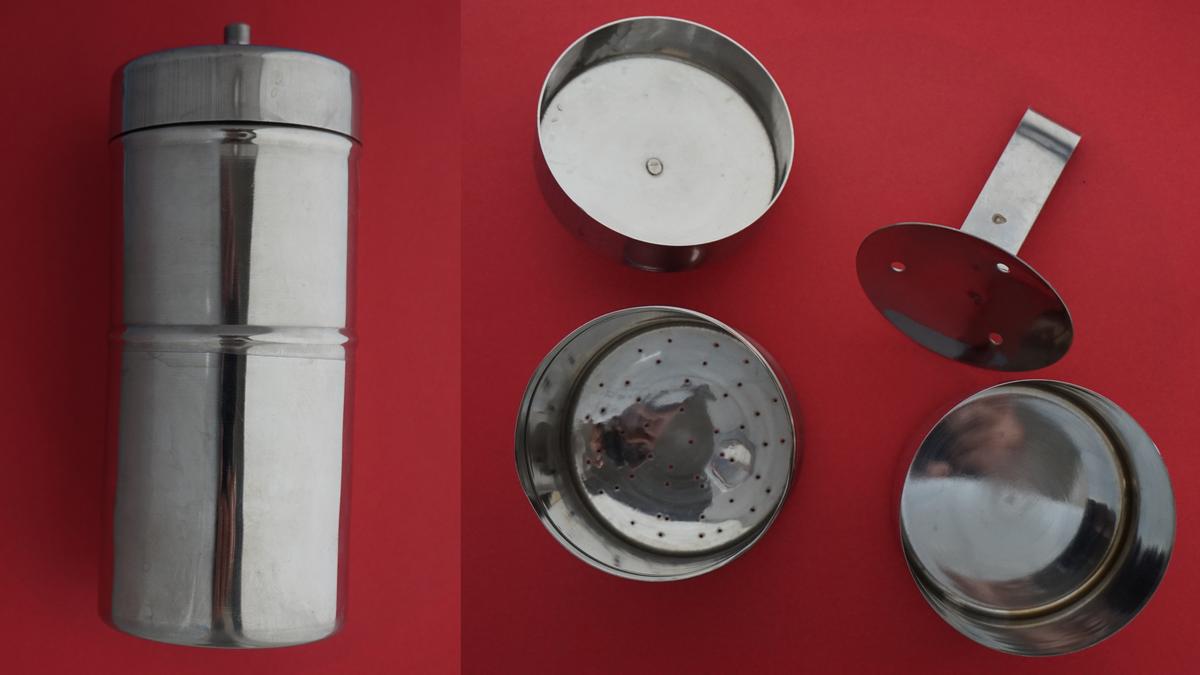
The filter is a two-chambered gravity percolation device
| Photo Credit: Getty Images/iStockPhoto
The unique taste of South India’s filter coffee has three to four distinct contributors. First, the coffee powder with a chicory mix of between 10% and 40% contributes body, a mellow bitterness and an earthy character. According to How to Brew South Indian Filter Coffee on the website Indian Coffee Beans, the preferred texture for the powder is medium fine — that of fine sand or table salt — so that water moves through it steadily. If it’s too coarse, water passes through too quickly, producing a pale, thin decoction. If it’s too fine, the grounds can block the flow, leading to an over-extracted result.Next is the filter, a two-chambered gravity percolation device. Unlike popular assumptions, it does not work like an espresso machine. The base of the upper chamber has small holes that hold the coffee grounds and allow water to pass through slowly. The plunger is a flat plate with 3-4 holes and a central rod that slows the drip rate and extends contact time. Over-pressing the plunger can compact the coffee bed so tightly that water cannot pass through. A lid shuts the upper chamber to retain heat. The lower chamber collects the concentrated decoction.How to makeThird is the actual making. For a standard home filter, around 35g of powder is placed in the upper chamber. A lesser dose produces a thinner decoction. A heavier dose increases concentration but can also increase bitterness. Rest the plunger disc flat on the grounds under its own weight. Boil 150 ml of water, take it off the fire, and wait for 90 seconds for the temperature to come down to 91-93°C, as higher temperature extracts bitterness from chicory. Pour 40–50ml in a slow circular motion over the plunger. Wait 30-45 seconds, allowing the water to saturate the coffee evenly and the dissolved gases to escape. Pour the remaining water in a slow circular motion. Do not stir, as it displaces the powder and can clog the perforations. Allow 10-15 minutes for full decoction collection. The decoction is ready when dripping slows to a near-stop.A good decoction should be deep dark brown, fully opaque, thicker than water, with flavours of chocolate, caramel, or roasted grain. Pale brown or yellowish, watery, translucent and with a flat or faint aroma suggests under-extraction. An almost-syrupy, very dark decoction with strong bitterness and a sharp, acrid smell suggests over-extraction.