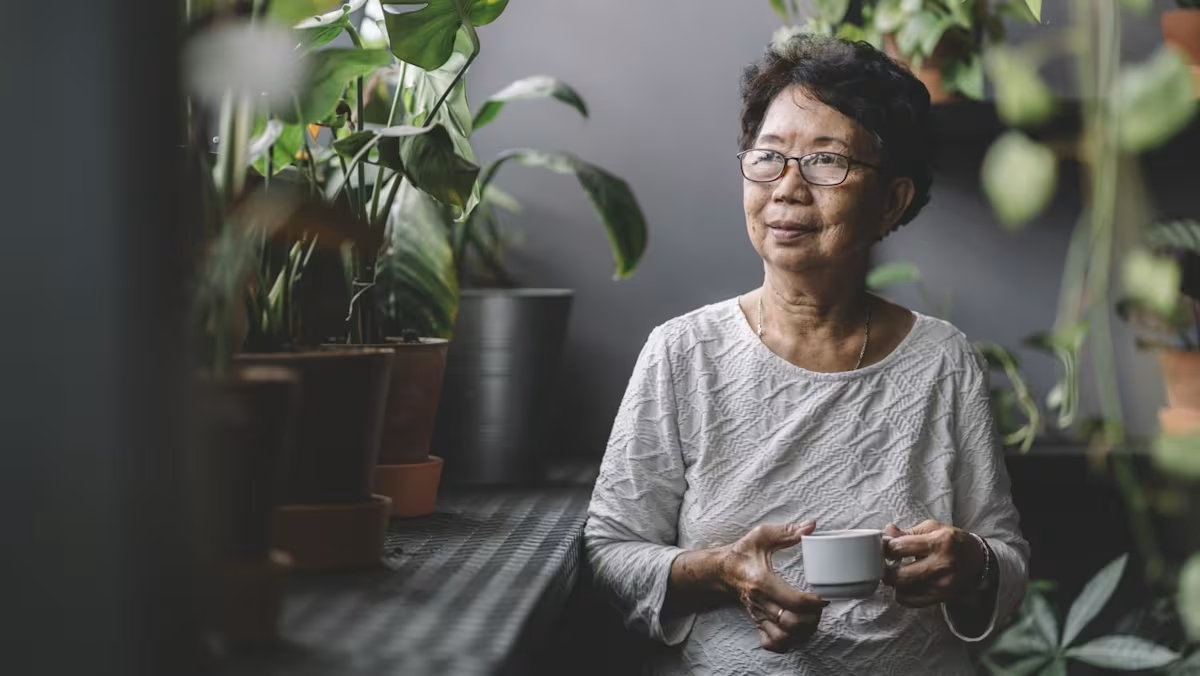
For more than a decade, Madam Betty Tan's days followed a familiar rhythm.She worked as a cleaner for 13 years at the Tsao Foundation, a social service organisation that helps seniors age well.When she retired in 2022 to care for her 92-year-old mother with the help of a domestic worker, she thought life would become less hectic. She did not expect it to feel emptier.Although household chores and caregiving kept her preoccupied, there were long stretches of the day that she did not know how to fill."I had nothing to do. I had no more routine," the 77-year-old recalled of the initial period after retirement.Boredom slowly crept in and she found herself feeling listless and stressed, the hours slipping away without purpose.Eventually, the retiree began planning a new routine for herself.
She returned to the Tsao Foundation at least once a week – not as an employee, but as a volunteer at its Hua Mei Active Ageing Centre, where she helps take attendance during activities and supports outings for seniors.Retirement, a significant milestone in life, is often portrayed as a well-earned reward after decades of work.But for many older adults, leaving the workforce also means losing the routines, relationships and sense of identity that had shaped everyday life – a transition that can take a toll on their emotional well-being.A Well-being of the Singapore Elderly (WiSE) study by the Institute of Mental Health found that the prevalence of depression among seniors in Singapore rose from 3.7 per cent (one in 27) in 2013 to 4.4 per cent (one in 23) in 2023.Social isolation and shrinking support networks – both risks that can accompany retirement – are known contributors to poorer mental health among older adults.It may explain why some seniors choose to remain in – or return to – the workforce.WORK IS MORE THAN A PAY CHEQUEAn AIA Live Better study conducted in 2025 found that one in two Singaporean residents planned to continue working after retirement. Of that group, fewer than three in 10 were doing it purely for financial reasons. Most wanted to avoid boredom and to try something new, for example. However, mental health experts said that having a job is only part of the answer. It is also about replacing what work once provided.Associate Professor Ng Chong Jin, head of geriatric medicine at Khoo Teck Puat Hospital, said: "Work gives structure to the day, a sense of purpose, social interactions, intellectual stimulation and an identity."He added that returning to work can help only if the work is meaningful and suits the person's interests, abilities and health. "The real protective factor is not employment itself but having purpose."That purpose can come from volunteering, caring for grandchildren, lifelong learning, community groups or new hobbies.