Attacker-controlled instructions can make Atlassian's Rovo assistant collect Jira or Confluence data that a signed-in user can access, then send it to an outside server. Two security firms found that behavior independently, by different routes. Only one of those routes is confirmed closed.
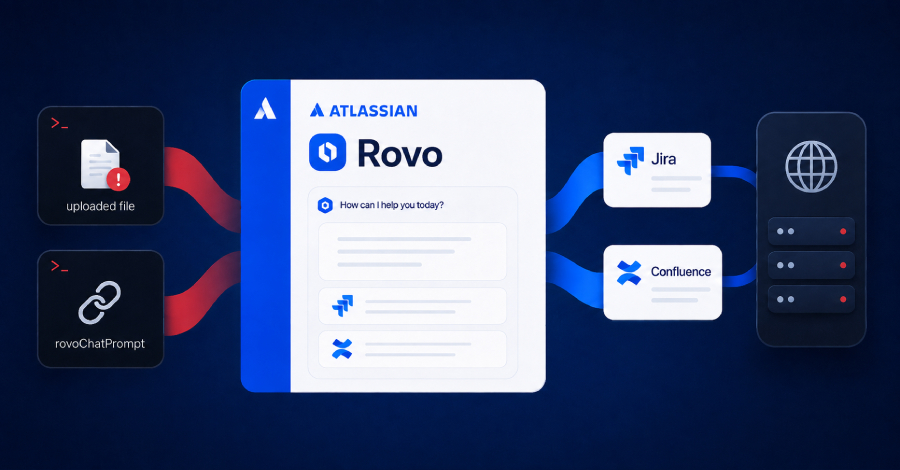
PromptArmor, an AI security firm, hid the instructions in content Rovo reads. It said an uploaded file was enough to make the assistant gather internal data and send it out through a URL request, with no separate approval step.
The firm published on August 5, 2026 and said the chain still worked with Rovo's web-search option switched off. That bypass is single-sourced, and the report establishes the finding's status only on that date; a later remediation is not confirmed here.
Varonis Threat Labs put the instructions in a link instead. It found that the rovoChatPrompt URL parameter would preload attacker instructions into Rovo Chat, so one click from an authenticated user was enough for Rovo to run them with that user's privileges and send the results to an attacker-controlled server.
Varonis calls the flaw RovoBlast and says it disclosed the issue through Bugcrowd. The Bugcrowd record shows Atlassian fixed it server-side on July 8, 2026, and the reporter validated the fix.