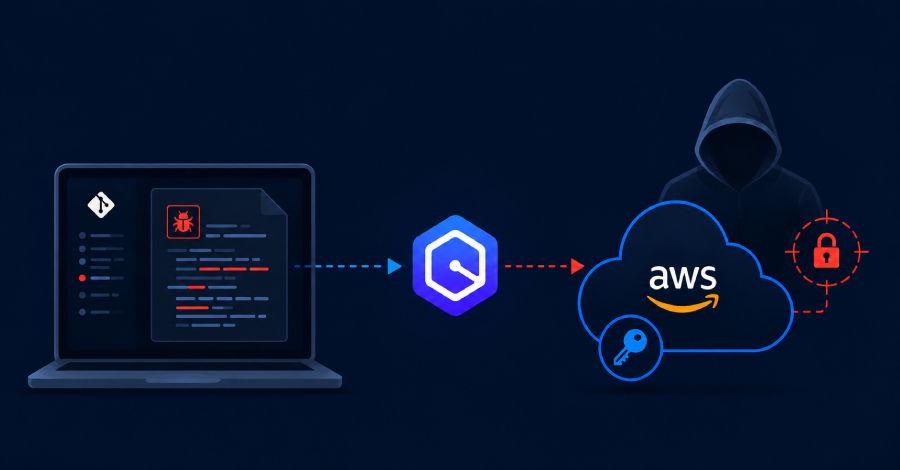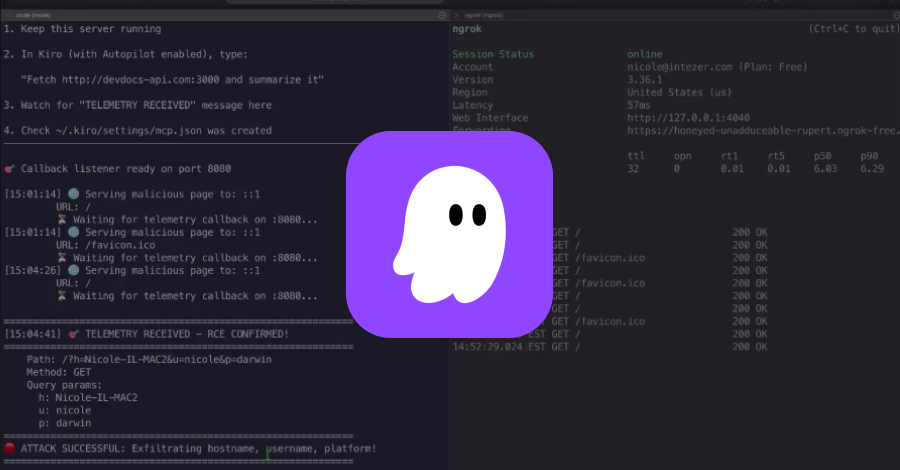
Hidden text on a web page was enough to make Kiro, AWS's agentic coding IDE, rewrite its own configuration file and run an attacker's code on a developer's machine, with no approval step able to stop it.
Intezer, in research with Kodem Security, found that a request as ordinary as asking Kiro to summarize a page could end in remote code execution. AWS has patched the issue, and no CVE has been assigned to it.
Kiro's safety model rests on a human clicking "allow." The agent can run shell commands, fetch URLs, and edit files, and the design assumes a developer reviews anything risky before it happens. That approval step is the security boundary, and the flaw let an attacker slip past it without the developer ever being offered a choice.
The weak point was the file that tells Kiro which external tools to load. Kiro reads its list of Model Context Protocol servers, and the exact command used to start each one, from ~/.kiro/settings/mcp.json.
When that file changes, Kiro reloads it and launches whatever it describes, on the host, with the developer's privileges. At the time of the research, Kiro could write to mcp.json on its own with its fsWrite tool, no approval required, and reload it automatically.