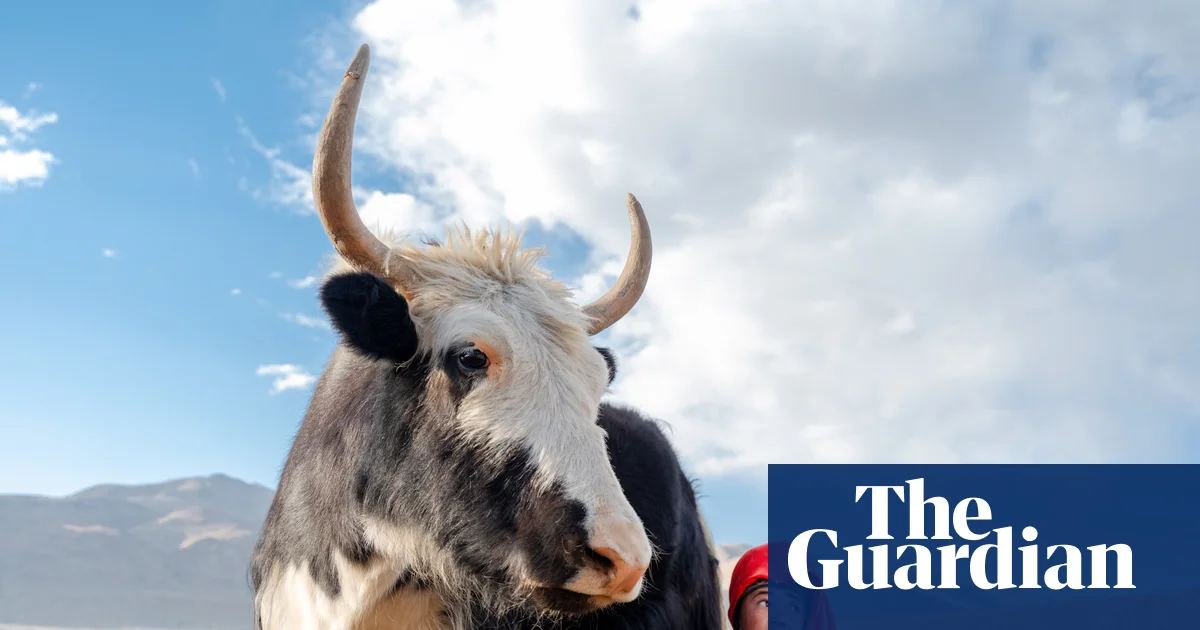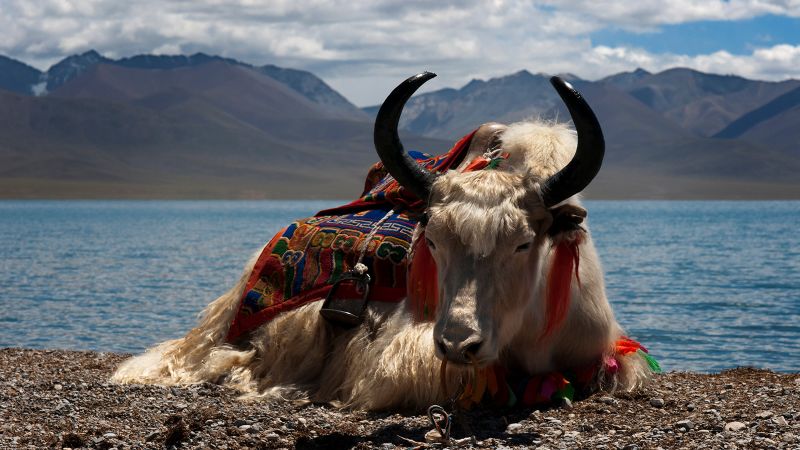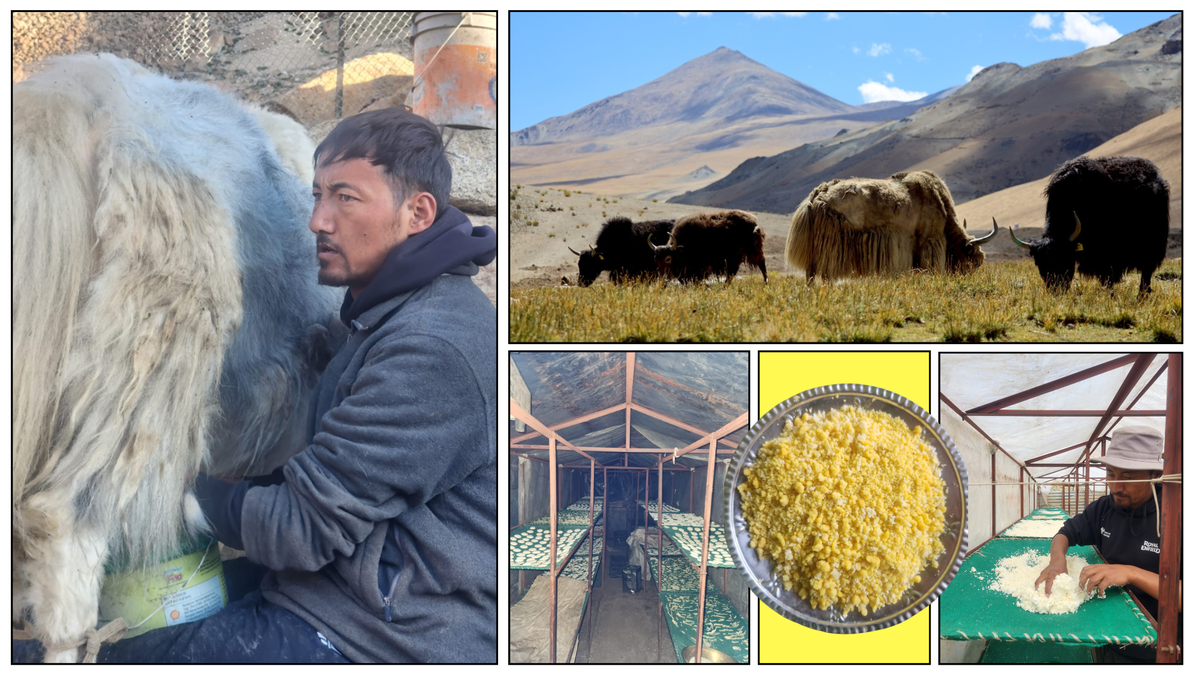
It is 1°C in the highland pastures of Ladakh’s Changthang region, and first light is just breaking as Thenlay Nurboo bundles up in a thick yak wool sweater and steps out of his tent. At 5.30 every morning, the 36-year-old begins milking his family’s shaggy-haired yak herd grazing at 16,600 feet. The task is slow — taking around four to five hours — and entirely manual.
Thenlay Nurboo milking his family’s yak herd
His family owns around 100 yaks, of which 50 to 60 are milked each day, yielding nearly 60 litres of milk. Each yak, Nurboo says, produces 1 to 1.5 litres. For generations, this rich milk, with its distinct earthy aroma and creamy notes, has been turned into butter, buttermilk and cheese — food essential for survival in the high-altitude landscape of Ladakh. But this April, Nurboo’s chhurpe travelled much farther than Changthang, to win a gold medal at the fourth edition of the Mundial do Queijo do Brasil, a biennial international competition for cheese and dairy products. He, however, was not there to receive it.
Thenlay Nurboo’s soft yak chhurpeNurboo shares that he received the invitation only 12 days before the event, and needed a yellow fever vaccination before he could travel. He went to Delhi for the shot, only to reach the centre half an hour after it had closed. Eventually, he arranged for the cheese, a softer variant of the region’s well-known chhurpe, to be taken to Brazil through the National Dairy Development Board while he stayed back. “I did not want to waste government money,” he explains. “I had already briefed the officials [of the NDDB] about the process and told them to present the cheese.”Then came the unexpected news: the cheese — with its dense yet chewy texture and smoky flavour — that he had been making the same way his elders had for generations, had won gold.