Two winters ago, I took a long, lonely walk through the highlands of a prefecture on the edge of the Tibetan Plateau in north-western China. Vivid memories still linger: the spearmint-fresh air in my lungs, the sky rinsed of clouds, streams braiding through valleys, ice crystals forming at their rims. For hours, I saw no one; just yaks and sheep grazing the slopes. Each hill crest led onto another, in an endless roll of frost-yellowed grassland that was meditative in its monotony.
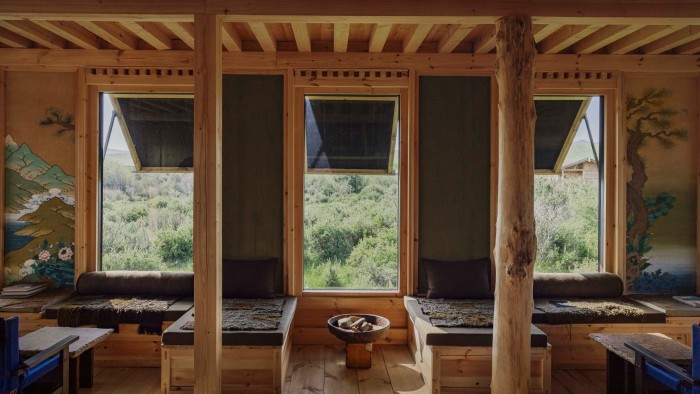
A cabin at Norden camp furnished with Norlha textiles © Mariell Lind Hansen
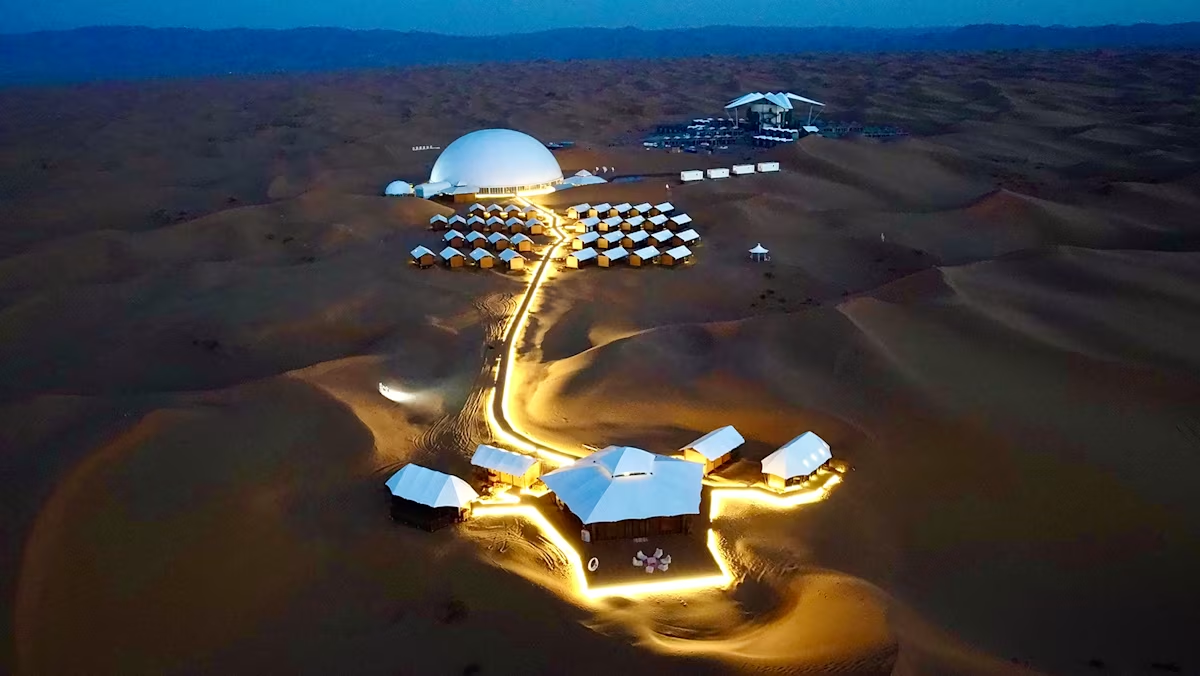
I had come to report an HTSI story on Norlha, a textile atelier in the village of Ritoma, where members of Tibetan nomad families and former nomads spin yak down, known as khullu, into cashmere-soft scarves and coats. I’d also hoped to stay at Norden camp, Norlha’s hospitality spin-off about an hour and a half to the west, but arrived a few weeks too late: the camp had just shut down for a complete rebuild after its first decade of operations.
Two years and an hour-long flight from Chengdu later, the new Norden has just opened to guests. The landscape is the same; wild garlic and periwinkle-coloured asters speckle the hills like confetti. But tourism has multiplied since my last visit. New accommodations with names like Grassland Happy Camp have cropped up everywhere, as have buses offloading camera-toting Chinese tourists at viewing platforms and corrals, where they ride bored-looking ponies for a few yuan.