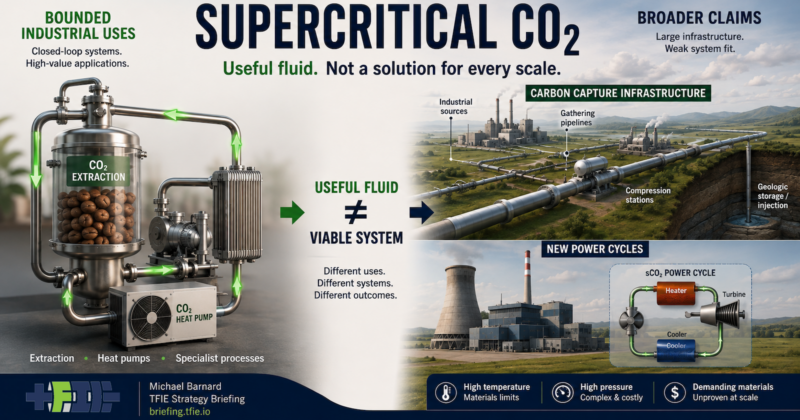
Supercritical CO₂ is genuinely useful in compact, controlled industrial systems, but those successes do not by themselves justify climate-scale carbon pipelines or a broad new thermal-power market.
Support CleanTechnica's work through a Substack subscription, on Patreon, or on Stripe. Help us produce all of the high-quality, original content we publish week after week despite the challenges of content-scraping AI, antisocial media, inflation, and other hurdles.
Supercritical carbon dioxide is genuinely useful stuff. Above roughly 31° Celsius and 73.8 bar, CO₂ enters a state that combines gas-like flow behavior with densities that can become much closer to liquids. Engineers have found good uses for that combination. It can extract caffeine from coffee, separate valuable compounds from plants, replace more problematic chemicals in some cleaning processes and serve as the working fluid in certain heat pumps and refrigeration systems.
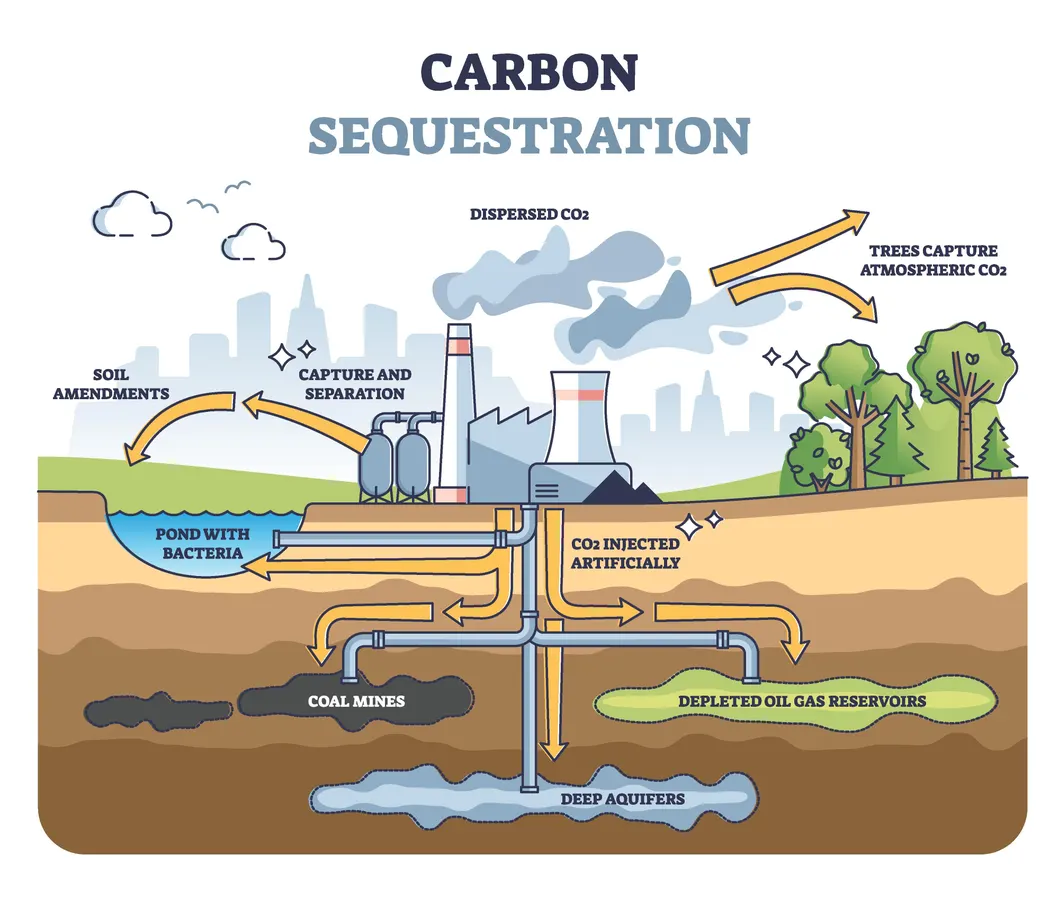
Those applications are compact and controlled. A comparatively small inventory of CO₂ circulates through equipment designed around a known pressure, temperature and maintenance envelope. The fluid does something valuable and stays inside the system. That is a very different proposition from gathering millions or billions of tonnes of CO₂ from distributed industrial facilities, compressing it, moving it across large pipeline networks and storing it underground.