This article was originally published on BuildZn.
Everyone's shipping AI coding agents, but the hallucination rate on real enterprise projects is a nightmare. Standard vector RAG just isn't cutting it when the context gets complex. I spent months battling this, especially with our internal tools, and finally built an AI agent codebase semantic RAG system that actually works.
Why Standard RAG Fails for Codebases, and How AI Agent Codebase Semantic RAG Changes That
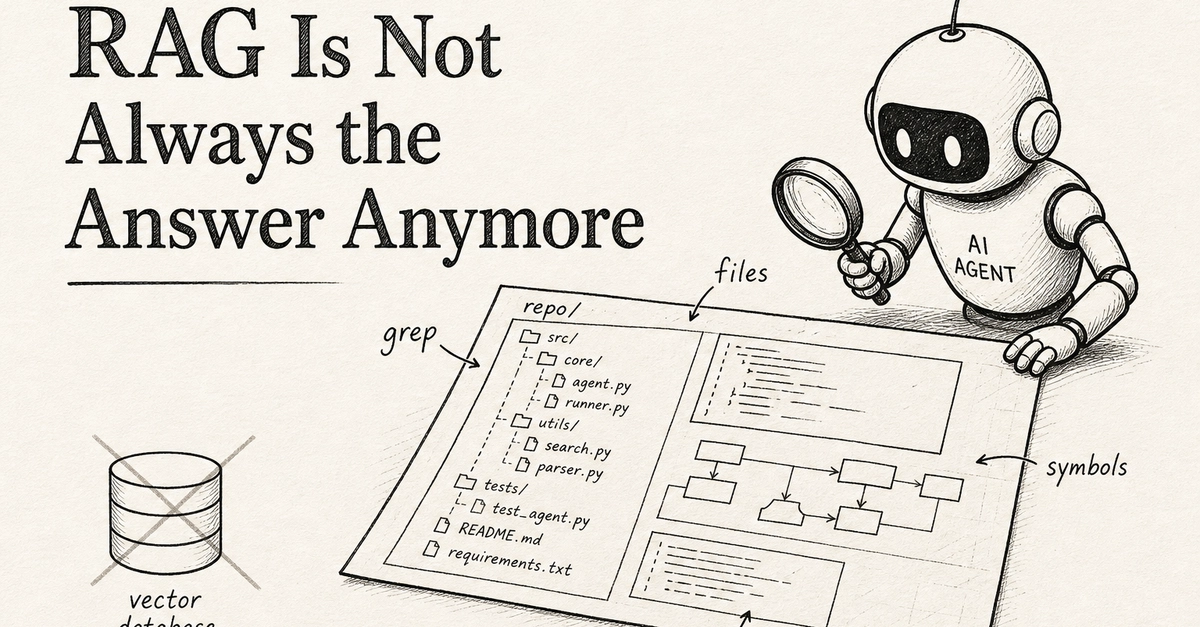
Most AI coding agents today are glorified grep tools with a fancy LLM wrapper. You chunk up your codebase, embed the text, throw it into a vector DB, and hope for the best. This works for simple queries like "find all uses of useState". But ask an agent to "refactor the AuthService to use the new JWTTokenProvider class and ensure all consumers are updated," and it'll inevitably try to call methods that don't exist or completely miss architectural nuances.
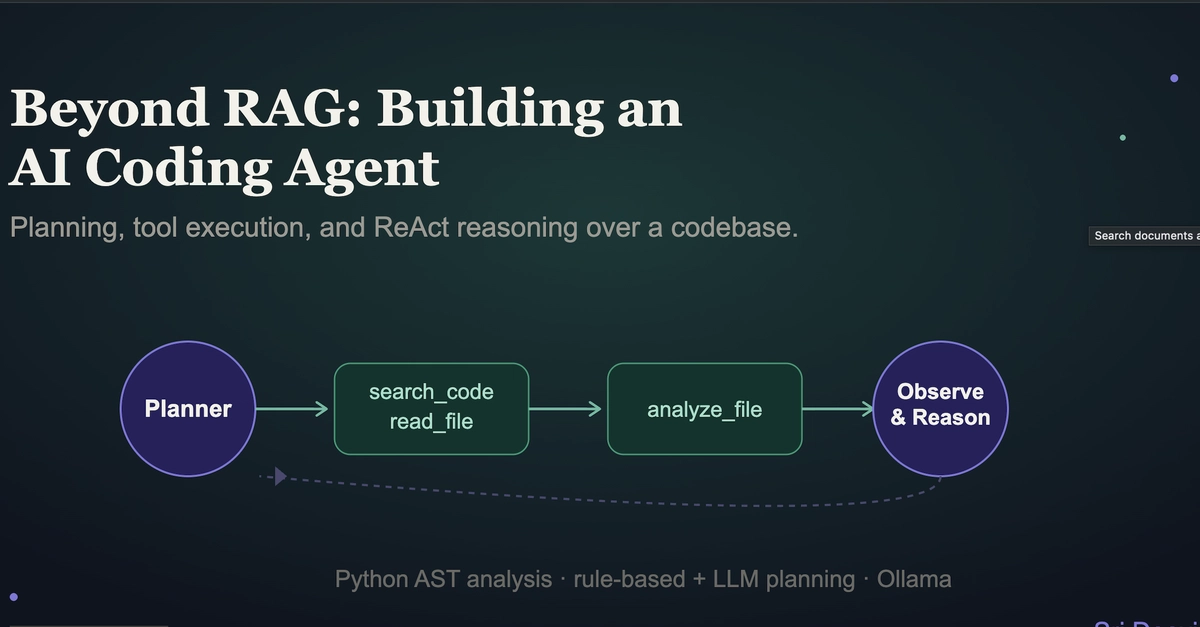
The problem? Code isn't just text. It's a structured graph of relationships: calls, definitions, imports, inheritance, scope. When you treat it as plain text for RAG, you lose all that critical context. The LLM gets raw snippets, not an understanding of how those snippets connect. Honestly, relying solely on text-chunk embeddings for complex codebases is like trying to understand a novel by reading random paragraphs. It's fundamentally flawed for anything beyond trivial tasks. This is where our approach to semantic code search AI comes in, focusing on structure over raw text.