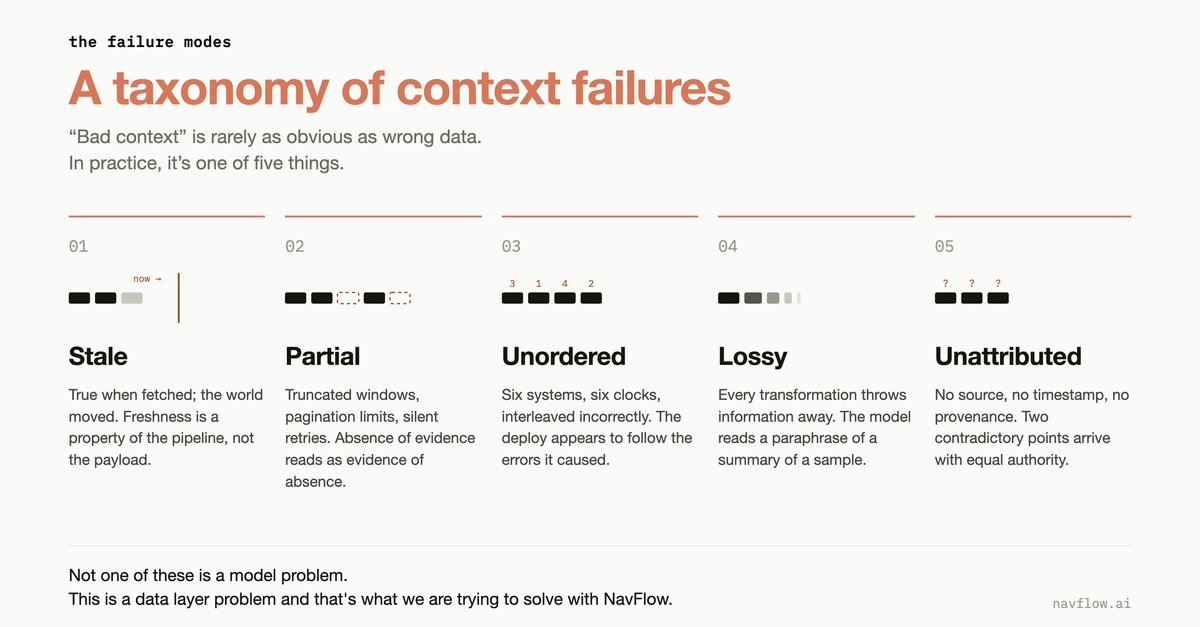
Most engineers I pair with can spot an AI coding agent hallucination when it happens. The AI invents an API that doesn't exist, reaches for a deprecated library, or rewrites a function you explicitly said to leave alone. They notice it, they're annoyed by it, and they move on.
What I've noticed is that fewer engineers have developed the instinct to do something about it. Not just fix the output, but fix the input. When I hallucinate the same way twice, something in my environment is wrong, and I should go find it.
I won't rehash the anatomy of a conversation or why context limits matter. Dex Horthy described the "dumb zone" concept well in his talk on solving hard problems in complex codebases: the gist being that LLM performance degrades as the context window fills, roughly past the 40% mark. Most of those concepts still hold. What I want to share instead is a feedback cycle that I've been trying to teach to anyone who'll listen, along with the specific things I've learned applying it.
Most of us react to AI hallucinations. Few investigate.
I've seen a range of reactions when the agent goes off the rails: some people are amused, some get annoyed. In an extreme case, an engineer I know will ctrl+c out of the conversation the moment it goes sideways, which is fair. If the agent is heading in the wrong direction, stopping it saves tokens and time.