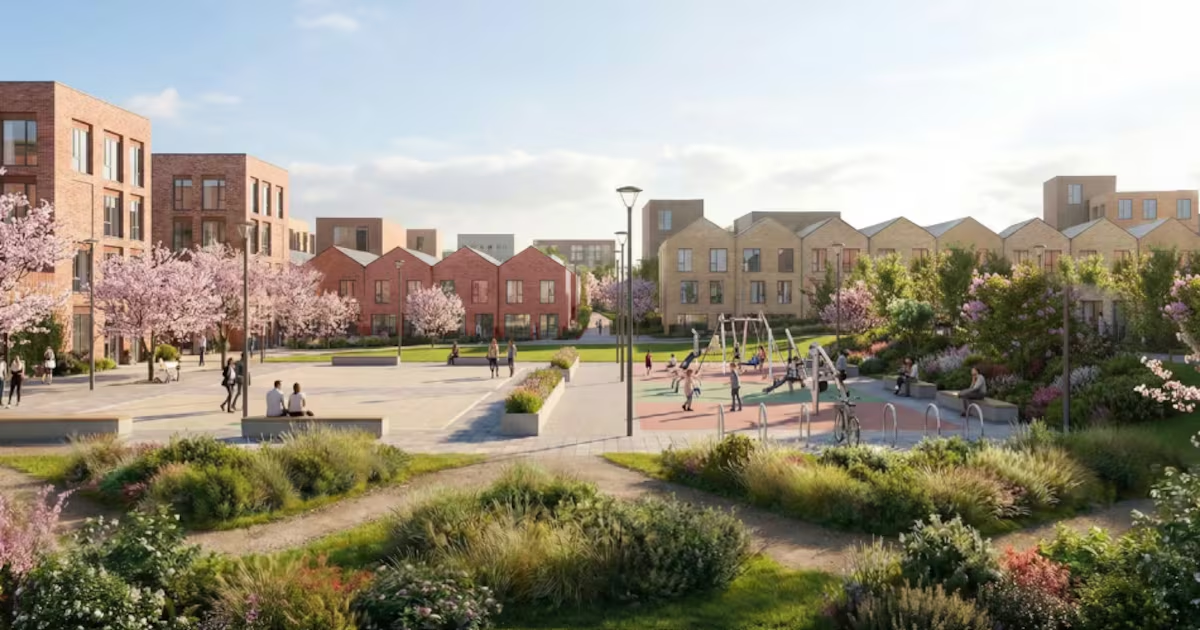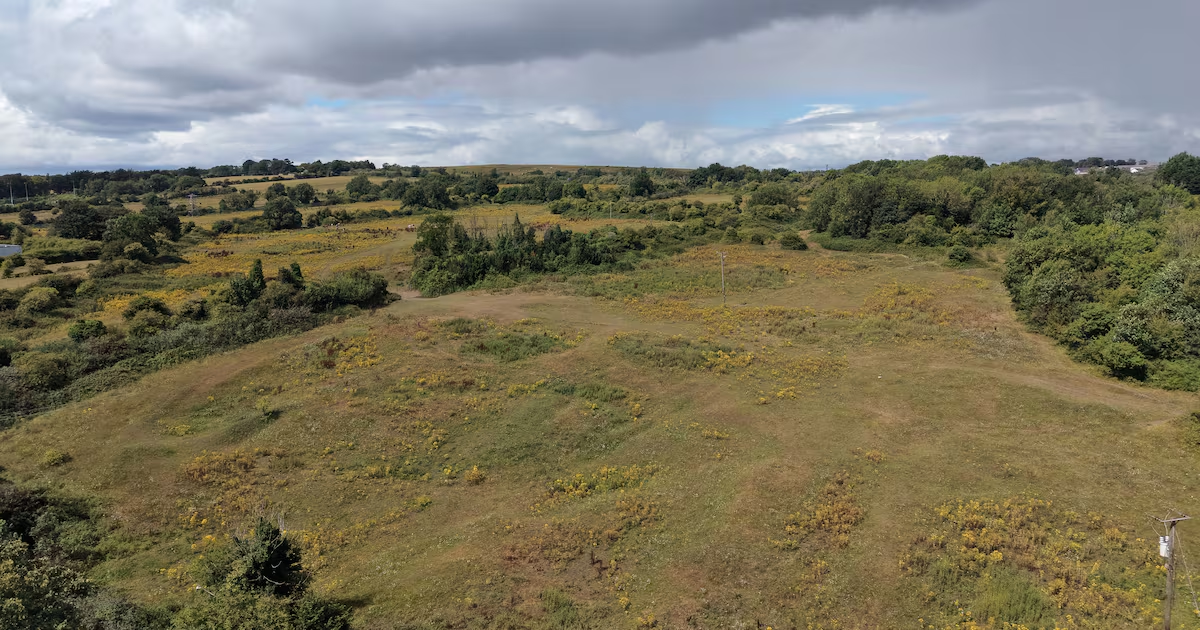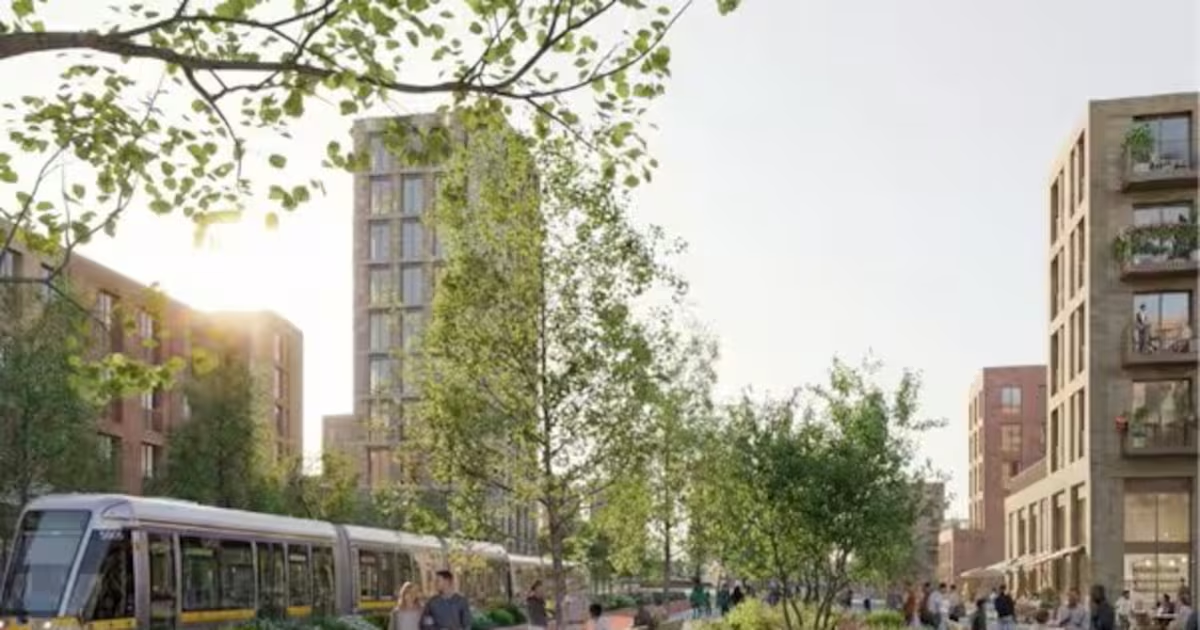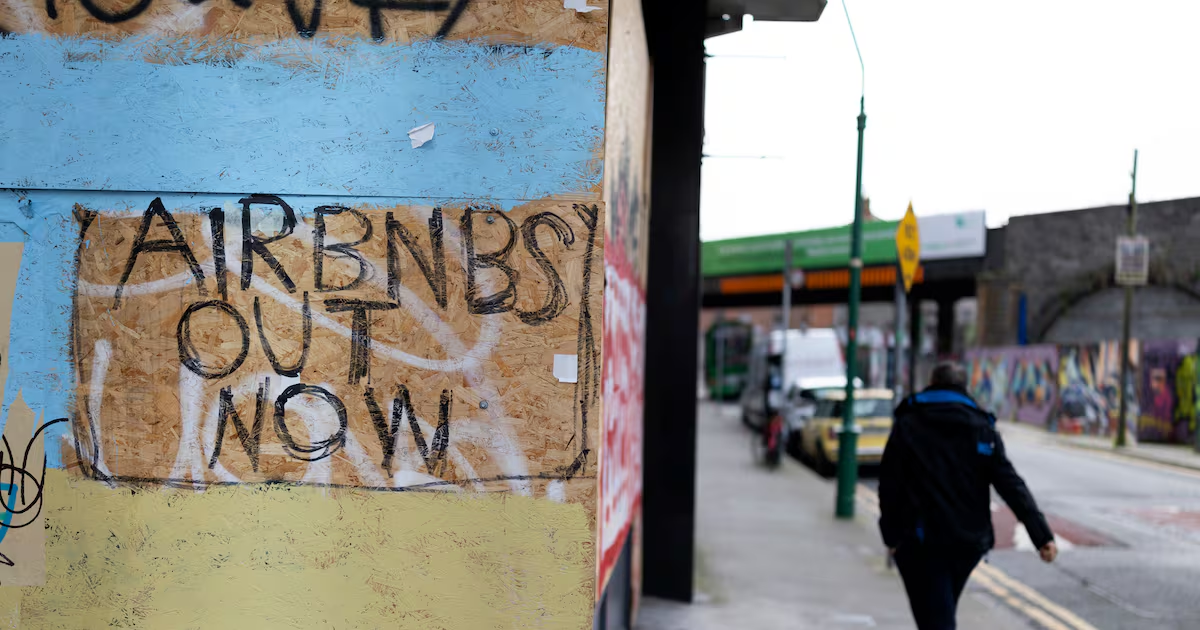
This week it was reported that hundreds of people objected to the State’s plans to build thousands of homes at Dunsink, an area inside the M50. A town on a huge empty site inside the M50 is probably the most logical location for construction at scale, not least because the more dense the development the cheaper the homes to residents, the closer they will be to where they work, the lower the commute times and the easier it will be to service the town with transport infrastructure. Once you go out beyond the M50 – inner Dublin’s obvious semi-circular boundary – commuting increases and efficiencies in transport and other infrastructure links diminish. Yet, here we are again. In the biggest housing crisis in peacetime Europe, residents are intent on obstructing a solution to the housing shortage, exposing the contradiction at the heart of the politics of Irish housing: most people want the housing crisis solved, and yet many of us object to the specific initiatives that would solve it. The more any community opposes supply, the more expensive existing housing becomes; the less it opposes, the cheaper it becomes. In effect, the politics of Irish housing pits the interest of those people who have homes against those people who do not. Bizarrely, the State and institutions of the State have become the referee in this game, as if the State only exists to monitor the rules. This is a complete abdication of responsibility. The State is not the referee, it is a player. Indeed, it is the main player and it should be setting the rules not refereeing them. In the real world of supply and demand, restrictive land-use rules, drawn-out consultation processes and the near-automatic flurry of objections from existing residents all squeeze the supply of homes, usually in the places where housing is needed most: close to the urban centre, transport nodes and jobs.When supply is constrained and demand - driven by demographics, migration and household formation - keeps rising, the result is not just upward pressure on prices, but a shunting process where the homes that used to be built for the working class are snapped up by the middle class, pushing the working class out of their own neighbourhoods. So we get high prices, forcing people away from where they were brought up, atomising families and breaking up deep social and cultural bonds. Once we have appreciated the contradiction and understood that the State is playing the referee when it should be the playmaker, the question then is what is the purpose of the State’s housing policy? Is the objective to provide enough housing or is it to keep existing (often middle-class, often already-housed) constituents content? [ AI will bring bankruptcies, bank failures and chaos in international financial sectorOpens in new window ]The way in which councillors respond to objectors by asking for “more time” suggests that what is driving Irish housing policy is the imperative of keeping people who already have houses happy, not trying to provide housing for people who don’t have then but are prepared to pay for them. We give huge procedural leverage to objectors, yet they do not bear the cost of their actions. In contrast, non-objectors - the people who want homes - pay more and wait needlessly. Ultimately, as time is money, builders simply move on, fed up with all the objections, red tape and restrictions. Meanwhile, developers who bought the original land are clobbered by interest payments, and this is then recouped by charging higher prices to the families who ultimately buy the homes. Fingal County Council’s draft Dunsink Urban Area Plan was published for consultation between June 19th and July 31st, 2026. We are talking about more than 1,000 acres of land beside Finglas, Ashtown, Castleknock and Blanchardstown, earmarked for up to 18,500 homes and a population of more than 46,000. That would make it the single largest town in the State, in advance of Drogheda, Dundalk, Swords and Navan. Almost 400 submissions were lodged against the plan before the deadline.Obviously, some of the objections are understandable. People are worried about the fact that it used to be a dump, raising legitimate concerns about contaminated liquids and landfill gas being disturbed by excavation. Surely this can be solved by engineers? Others worry about transport links and traffic due to the new town being constructed. But part of the plan should include extending the Luas and bus routes to Dunsink promptly – before rather than after building - as would be done in most countries where critical infrastructure is put in before you build. The solution: fast-track the Luas extension. However, many of the objections are not well-founded but are typical Nimby classics: people commenting about the scale and size of some of the proposed buildings, or the loss of the Elmgreen Golf Centre (which the council wants to redevelop for “more compact residential development” given its proximity to the M50).One resident’s submission - “I personally don’t want to be looking at high-rise apartments. Build them elsewhere ... Finglas people are proud of their heritage” - captures the now-traditional tension between people who already have a home attacking the chance for someone else to have a home. When you talk to builders, they make the very simple point that when you build up, every home becomes cheaper. If affordable homes is central to Government strategy, then let the people who might buy an apartment in a 13-storey building be the arbiters of whether they want to live there or not. [ David McWilliams: Sinn Féin’s class-war language is more British than IrishOpens in new window ]We are locking into a battle between some residents and their rights and the rights of people who would like a normal life, starting with securing a home. Are the rights of people who have a home senior to those who do not? We know that by preserving those rights these objectors are automatically enriched, while the people who suffer are those without homes. Is that fair? Surely this is where good governance comes in. The State needs to look after all its citizens, not just the people who already have homes, who are likely to be older, richer and more vocal. There are the other taxpayers, the ones who are not organised in residents’ associations, who are disbursed widely, who only want a normal chance in life, yet who find themselves paying the price of the objectors. Other countries have figured this out and are not hostage to the interest of one section. The picture is stark. Eurostat’s 2025 Housing in Europe report found Ireland’s housing costs were 87 per cent above the EU average in 2024, down slightly from a peak of 101 per cent above average in 2023, but up dramatically from just 17 per cent above average in 2010. No EU member state has seen a larger relative deterioration over the past decade and a half. Objections are part of this problem. The State must stop playing the referee, mediating on the rules and must understand that it is the policymaker, it sets the rules and what it says, goes. So say it. Pick a side!
David McWilliams: People who already have a home are attacking the chance for others to have one
In the biggest housing crisis in peacetime Europe, residents are intent on obstructing a solution to the housing shortage
1,197 words~5 min read