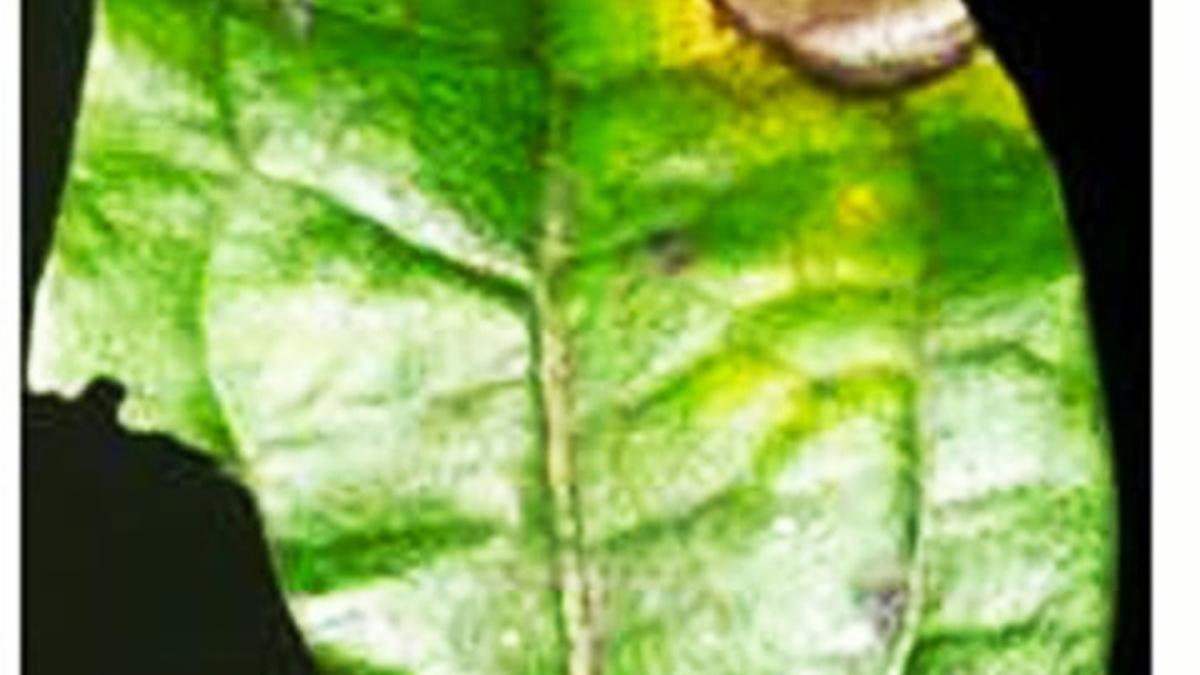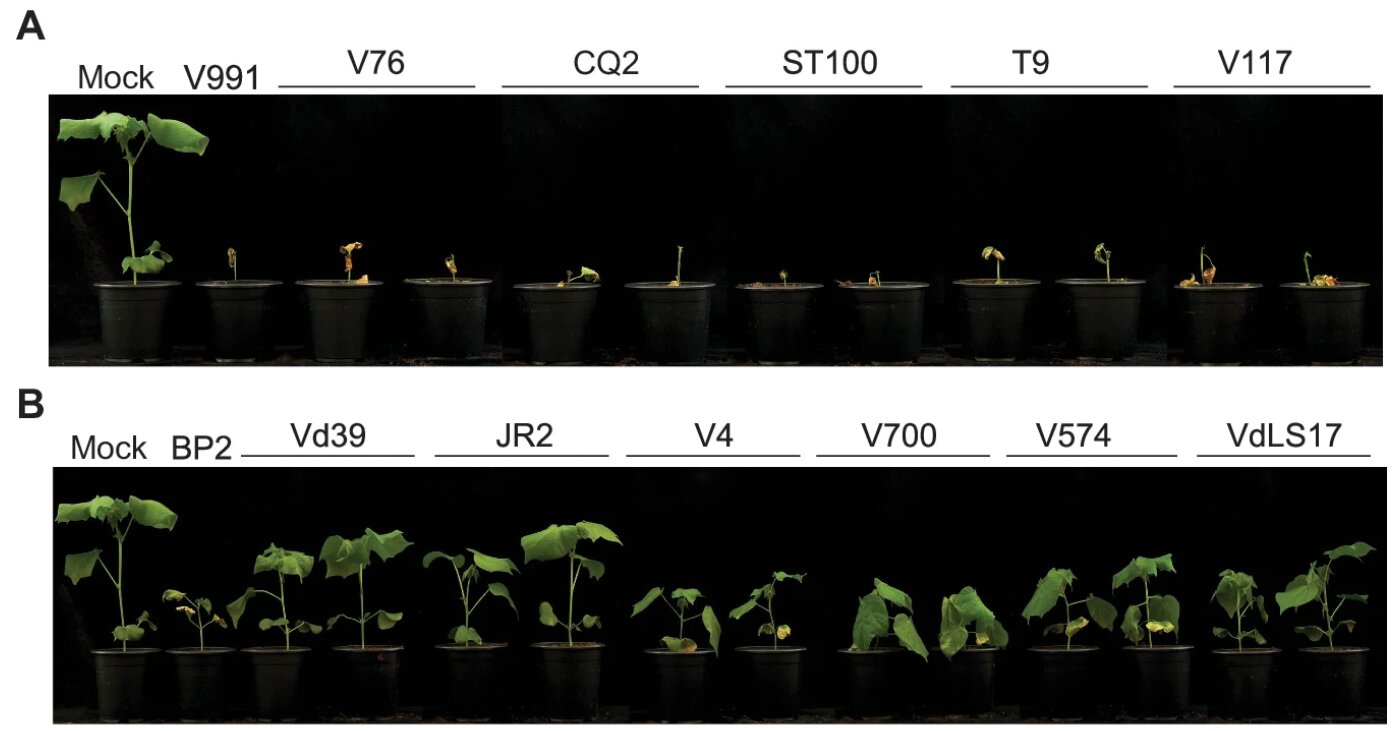
Phenotype of cotton plants inoculated with various sequenced Verticillium dahliae strains. Credit: Nature Communications (2026). DOI: 10.1038/s41467-026-74504-z
An international research team led by plant scientist Professor Dr. Bart Thomma of the Institute of Plant Sciences at the University of Cologne, the MiBiNet Collaborative Research Center and the CEPLAS Cluster of Excellence for Plant Sciences has identified the region of the genome in the pathogenic fungus Verticillium dahliae responsible for producing a specific protein that the pathogen secretes during infection.
This protein causes leaf loss in host plants and determines the pathogen's virulence. The findings were published in the journal Nature Communications under the title "A structurally unique effector shared between vascular wilt fungi drives cotton and olive defoliation."
The most virulent strains of Verticillium dahliae, a pathogenic fungus known in agriculture as a cause of wilt diseases, result in complete leaf loss (defoliation), particularly in cotton and olive trees. This leads to the death of affected plants and, consequently, significant crop losses. Until now, the genetic mechanisms by which Verticillium dahliae causes this leaf loss were unknown.