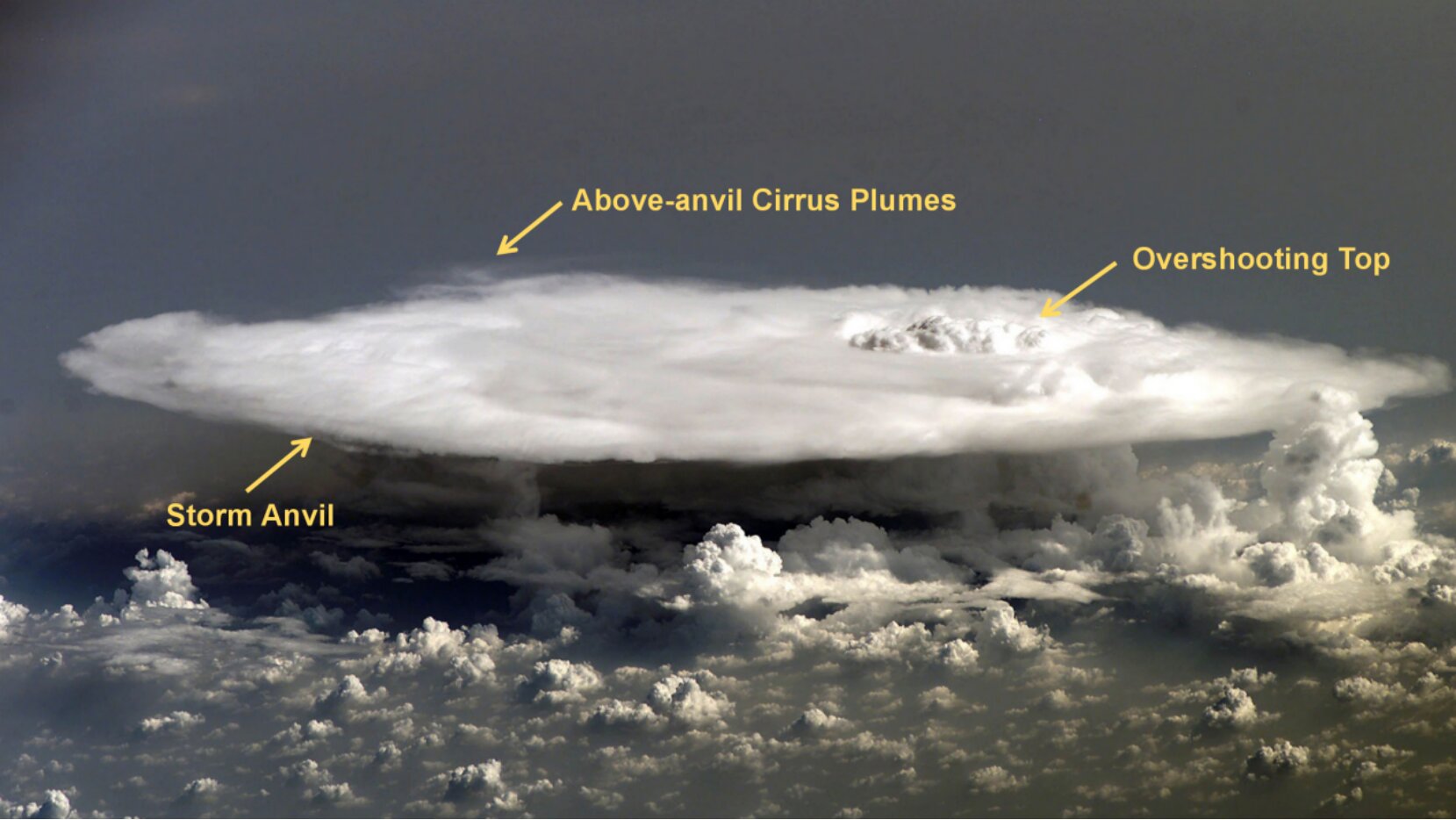
Shallow clouds show regions of high particle clustering that may be the key for rain formation. Credit: Max Planck Society
The initiation of rain in clouds without ice remains one of the largest unsolved mysteries in atmospheric science.
Researchers from the Max Planck Institute for Dynamics and Self-Organization (MPI-DS) have uncovered previously invisible structures within shallow cumulus clouds in their study published in PNAS.
Using the unique Max Planck CloudKite platform, the team discovered submeter regions where cloud droplets cluster together. Such areas provide ideal conditions for droplet collisions, which in turn have a high chance of triggering rainfall.
Revealing the reasons for rainfall