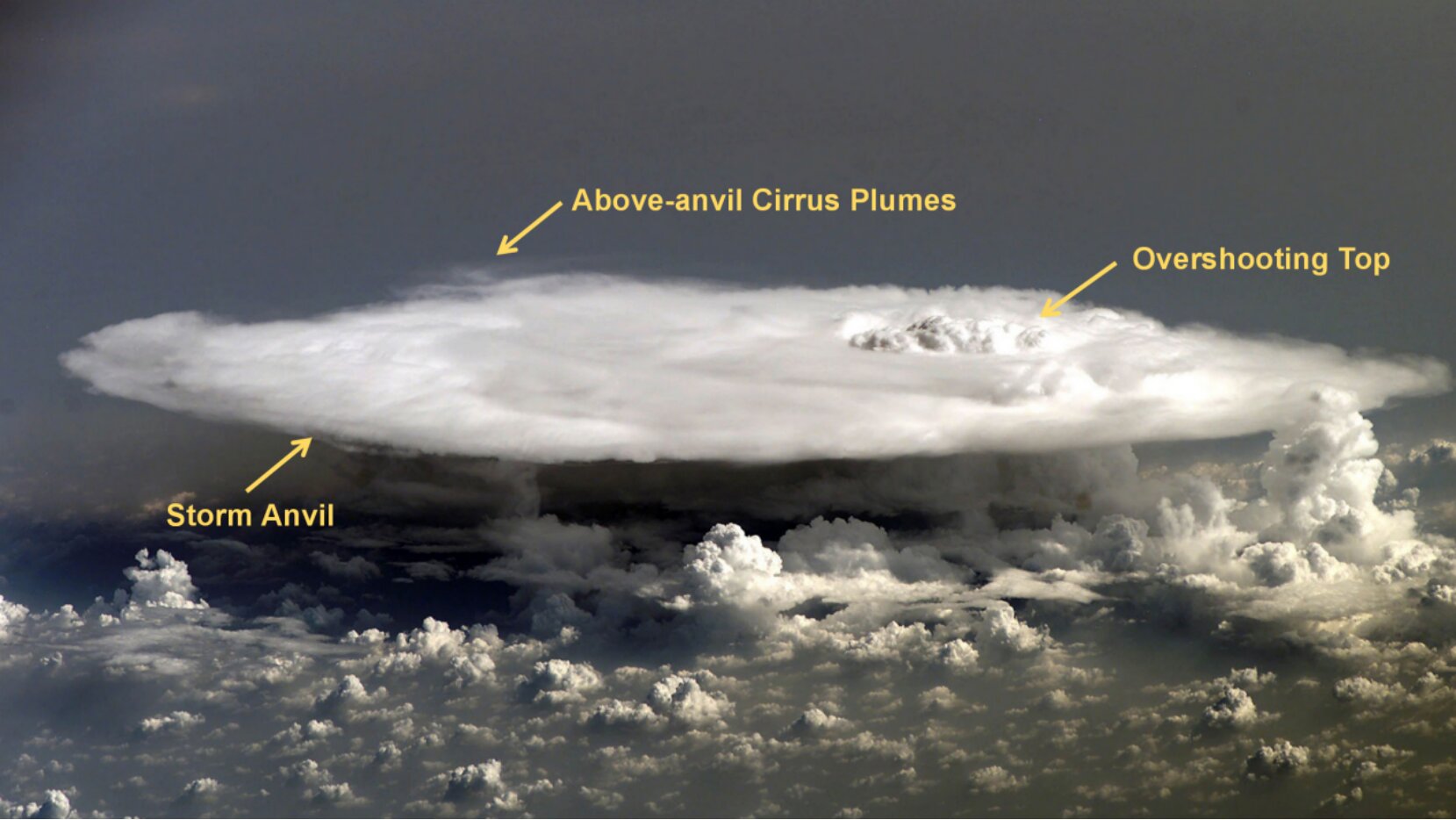
Tiny aerosol particles may be able to strengthen tropical convective clouds, but scientists have debated the idea for decades. Aerosols influence the formation and growth of cloud droplets, which can affect condensation and the release of latent heat.
One proposed process, called condensational aerosol convective invigoration, depends on clouds developing very high water vapor supersaturation. When those conditions occur, additional aerosol particles can form new droplets. That can increase condensation, release more latent heat, and potentially accelerate rising air inside the cloud.
Why Earlier Studies May Have Missed It
Aircraft measurements have generally not detected the high levels of quasi-steady-state supersaturation required for this process. However, that does not mean such conditions never occur in the atmosphere.
Many previous measurements focused on cloud environments where extreme supersaturation was unlikely. These included relatively polluted clouds, shallow warm clouds, and clouds sampled below their deeper convective regions. At greater heights, droplet collisions, precipitation formation, and faster updrafts can reduce the total surface area of droplets, allowing supersaturation to build.