view more
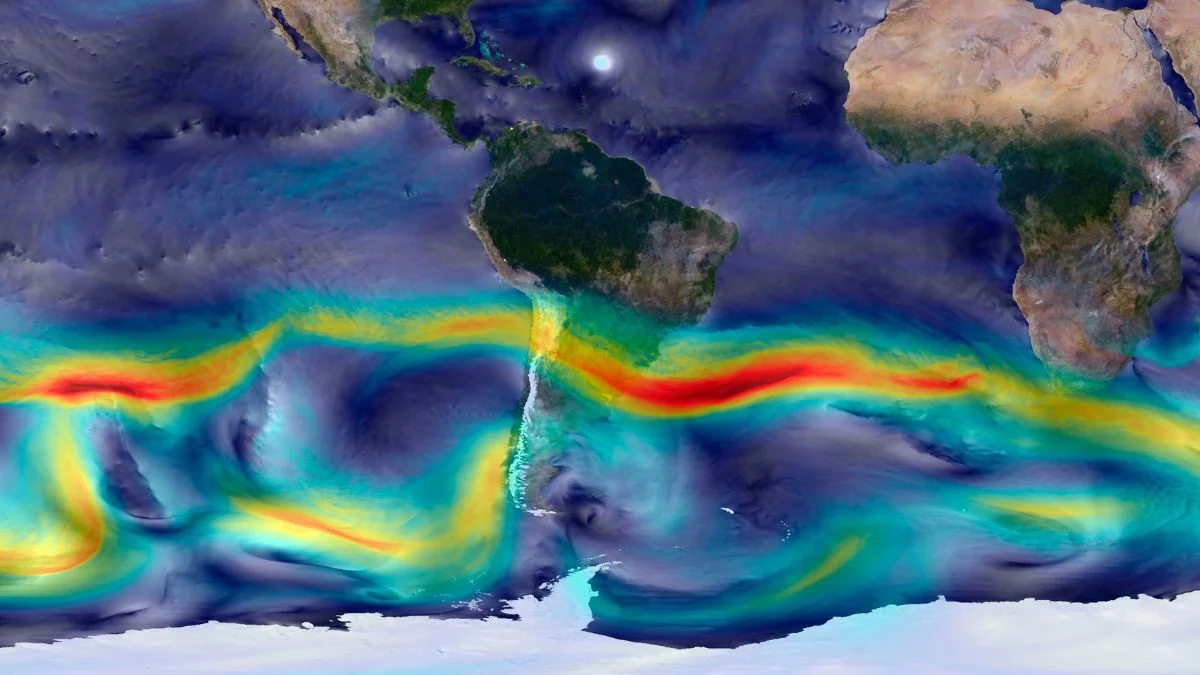
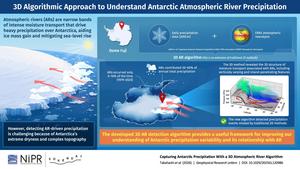
A rise in the global sea level is closely linked to snowfall in Antarctica, as it directly affects the mass balance of the Antarctic ice sheet. A major source of this snowfall is atmospheric rivers (ARs), which are long, narrow bands of concentrated water vapor in the atmosphere that transport huge amounts of moisture from tropical or subtropical regions toward cooler areas. When these systems reach Antarctica, they can trigger substantial snowfall events over the ice sheet. While this is known, detecting ARs over the Antarctic continent remains a major challenge due to the steep topography and extremely dry environment of Antarctica.
To address this issue, Kazu Takahashi, a doctoral student at the Graduate University for Advanced Studies , SOKENDAI, together with Professor Jun Inoue, Assistant Professor Kazutoshi Sato, Assistant Professor Naohiko Hirasawa, and Project Researcher Kyohei Yamada from the National Institute of Polar Research, developed a new three-dimensional (3D) AR detection algorithm. Their study, made available online on May 5, 2026, and published in Geophysical Research Letters on May 16, 2026, extends conventional 2D AR detection methods into a three-dimensional framework for accurately detecting ARs.