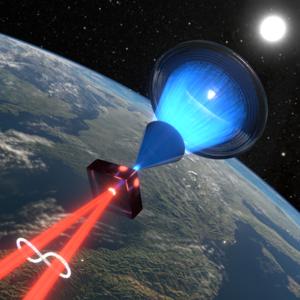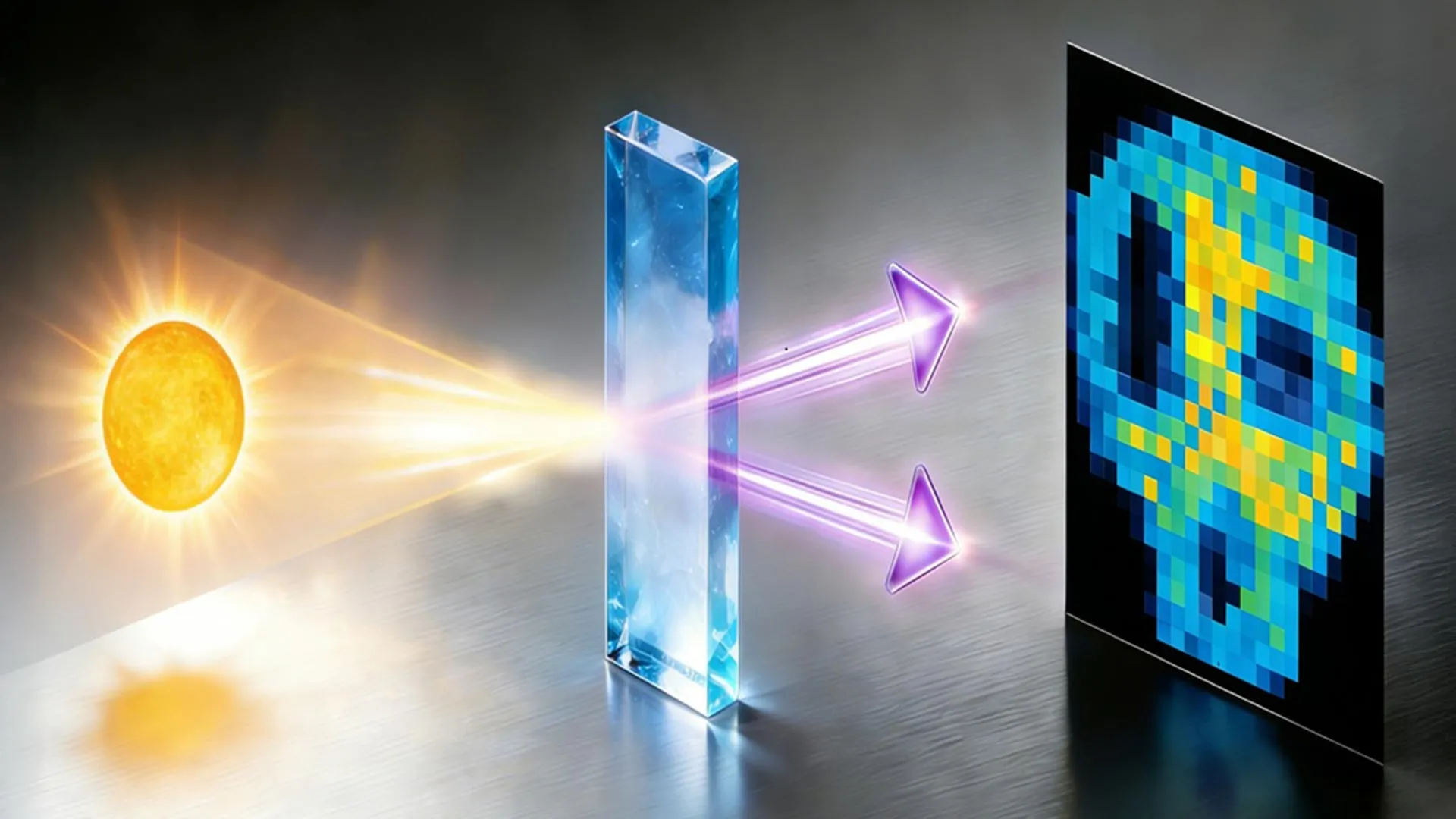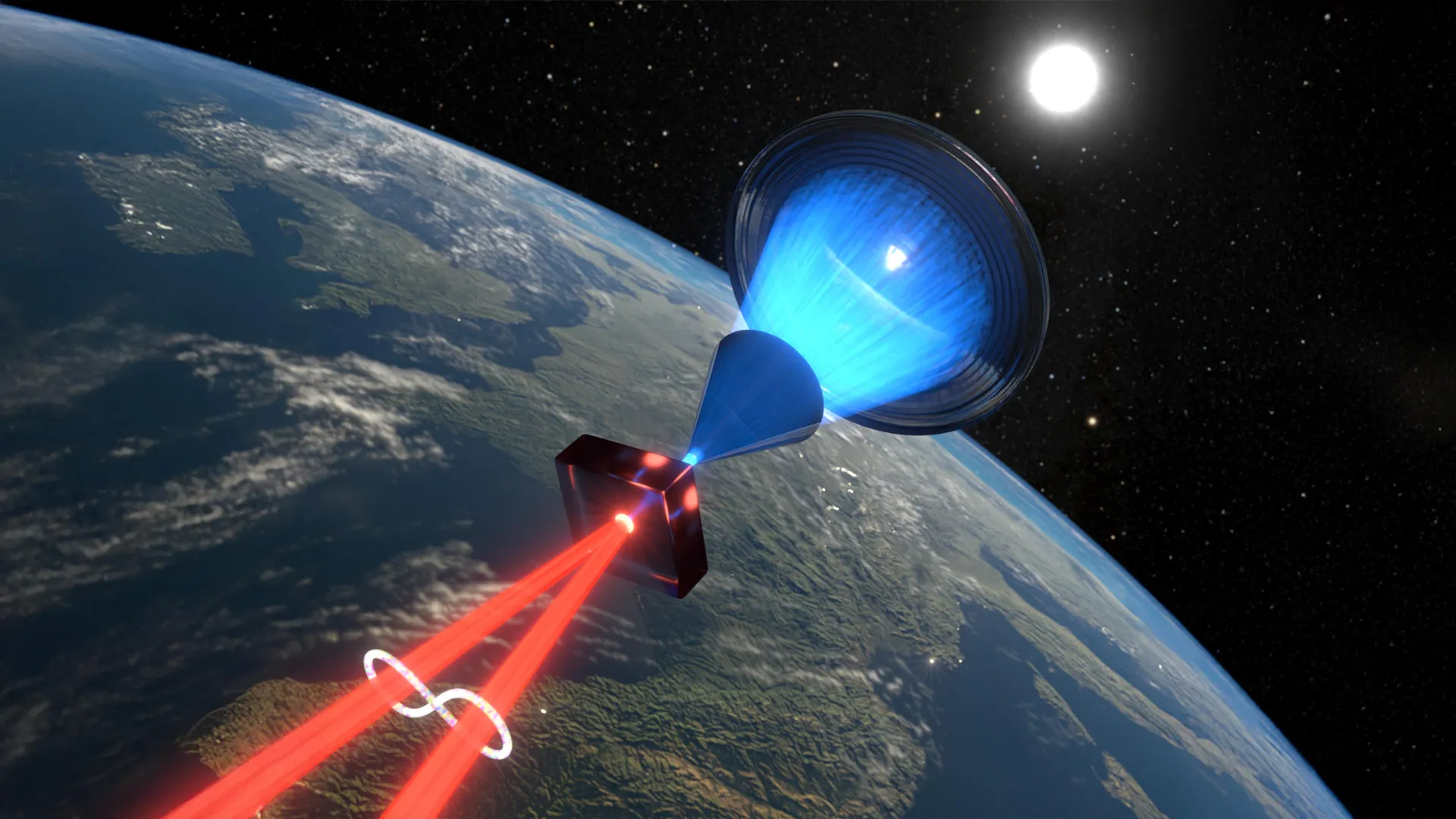
Many of today's quantum technologies depend on powerful lasers that consume significant amounts of energy. As these systems grow larger and more widespread, their electricity requirements could become an increasing concern. Researchers have now demonstrated a striking alternative: sunlight itself can be used to generate quantum entanglement between photons.
"Quantum entanglement is crucial for applications such as secure communication, ultra-precise sensing and high-performance computation," said Cheng Li, a recent graduate of the University of Ottawa in Canada. "Our work shows that abundant natural light sources can be used for quantum entanglement, opening the possibility of more energy-efficient and accessible quantum technologies."
The findings, published in Optica, Optica Publishing Group's journal for high-impact research, show that sunlight can produce entanglement comparable to laser-based techniques when differences in the bandwidth of the incoming light are taken into account. The achievement brought together theoretical work from Robert Boyd's group at the University of Ottawa and a new solar concentrator created by Hanieh Fattahi's team at the Max Planck Institute for the Science of Light (MPL) in Germany.