view more
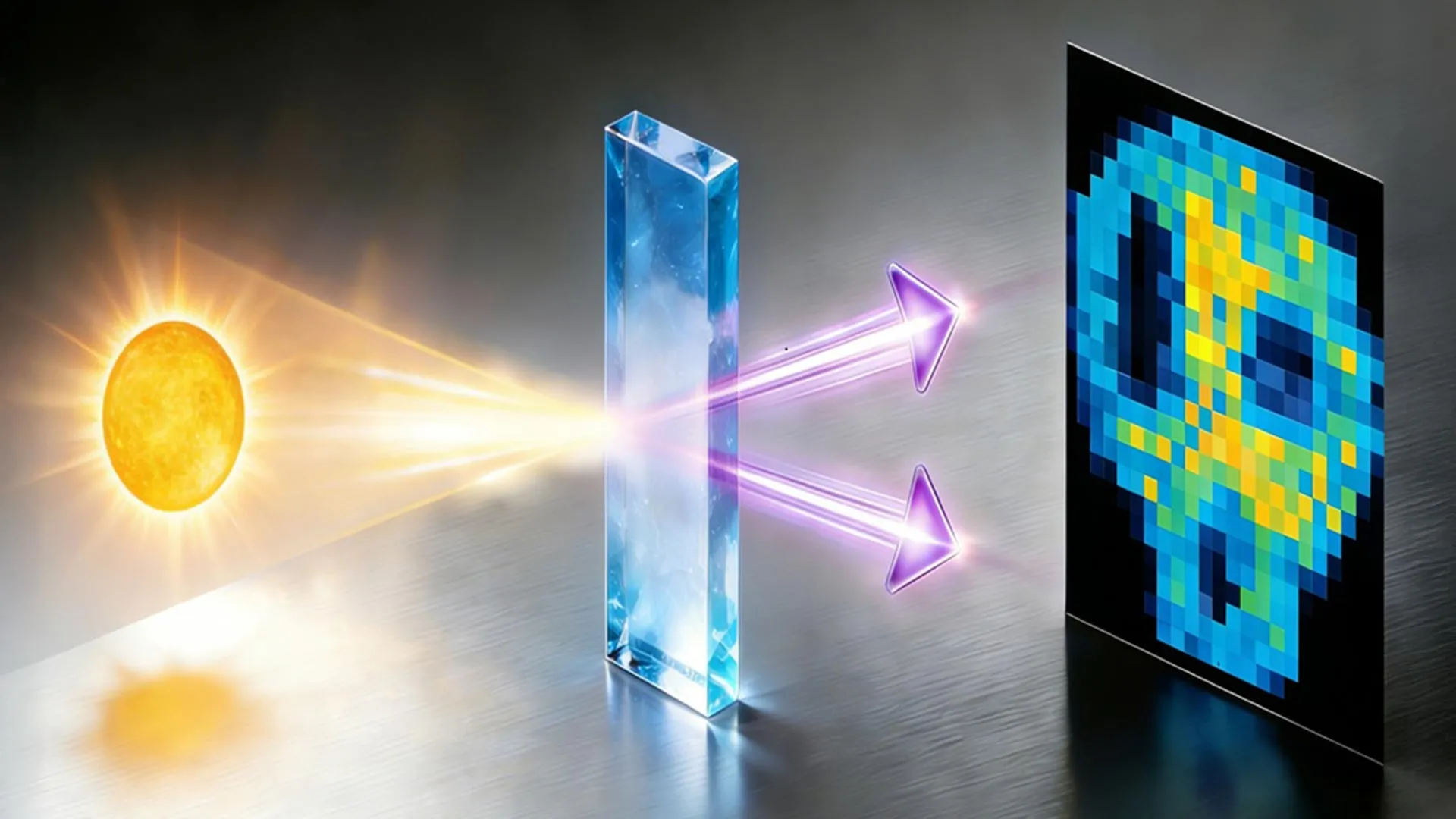
WASHINGTON — Today’s quantum technologies rely on energy-intensive lasers, raising concerns that scaling them up could further increase energy demands. In new work, researchers have demonstrated that quantum entanglement between photons can be generated directly from sunlight, offering a potential alternative.
“Quantum entanglement is crucial for applications such as secure communication, ultra-precise sensing and high-performance computation,” said Cheng Li, a recent graduate of the University of Ottawa in Canada. “Our work shows that abundant natural light sources can be used for quantum entanglement, opening the possibility of more energy-efficient and accessible quantum technologies.”
In Optica, Optica Publishing Group’s journal for high-impact research, the researchers report that the entanglement they achieved using sunlight was comparable to laser-based approaches after accounting for differences in the bandwidth of the input light.. The advance combined theoretical advances from Robert Boyd’s team at the University of Ottawa with a new solar concentrator developed by Hanieh Fattahi’s team at the Max Planck Institute for the Science of Light (MPL) in Germany.
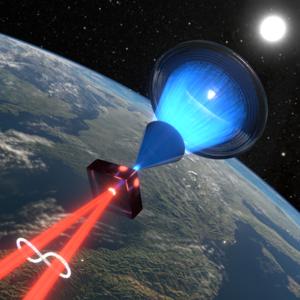
“This technology could one day enable satellites to create secure encryption keys using the sunlight already abundant in space, reducing the need for onboard lasers and much of the supporting hardware,” said Li, first author of the paper. “Sunlight-driven entanglement generation could also provide the crucial ingredient needed to scale up quantum computing without adding to the energy burden.”