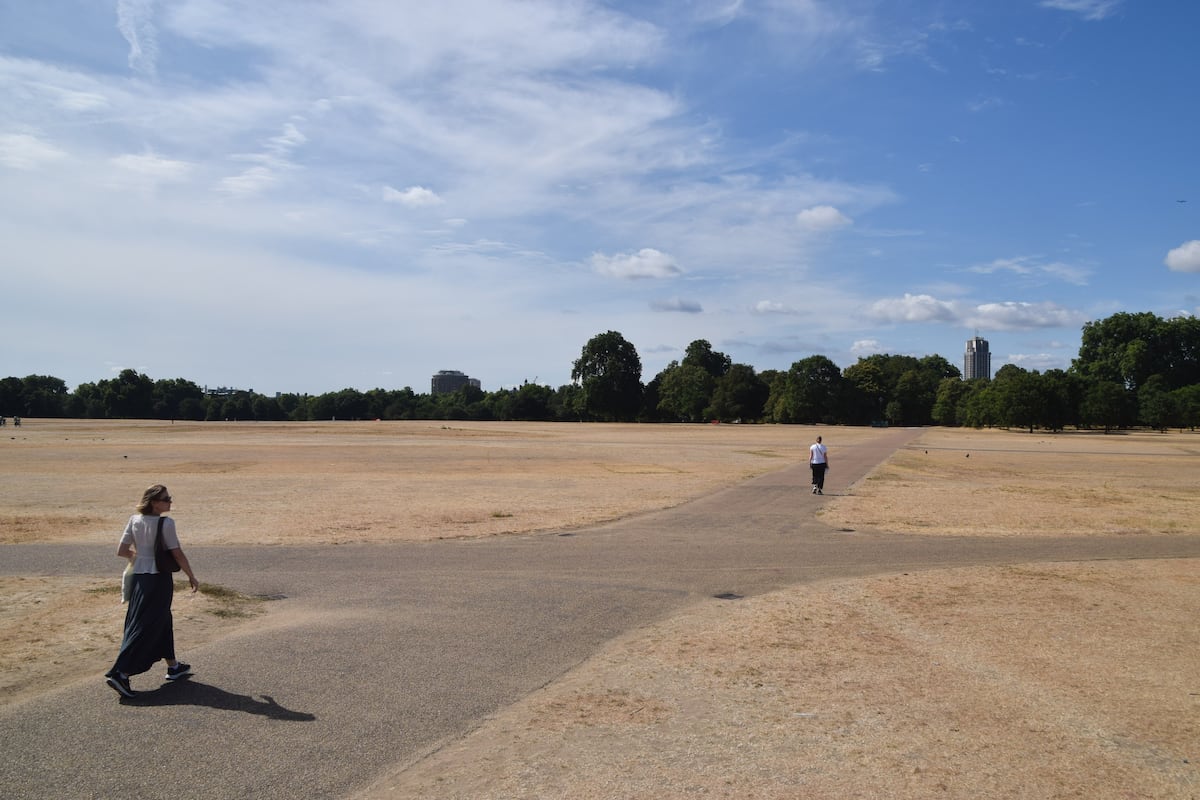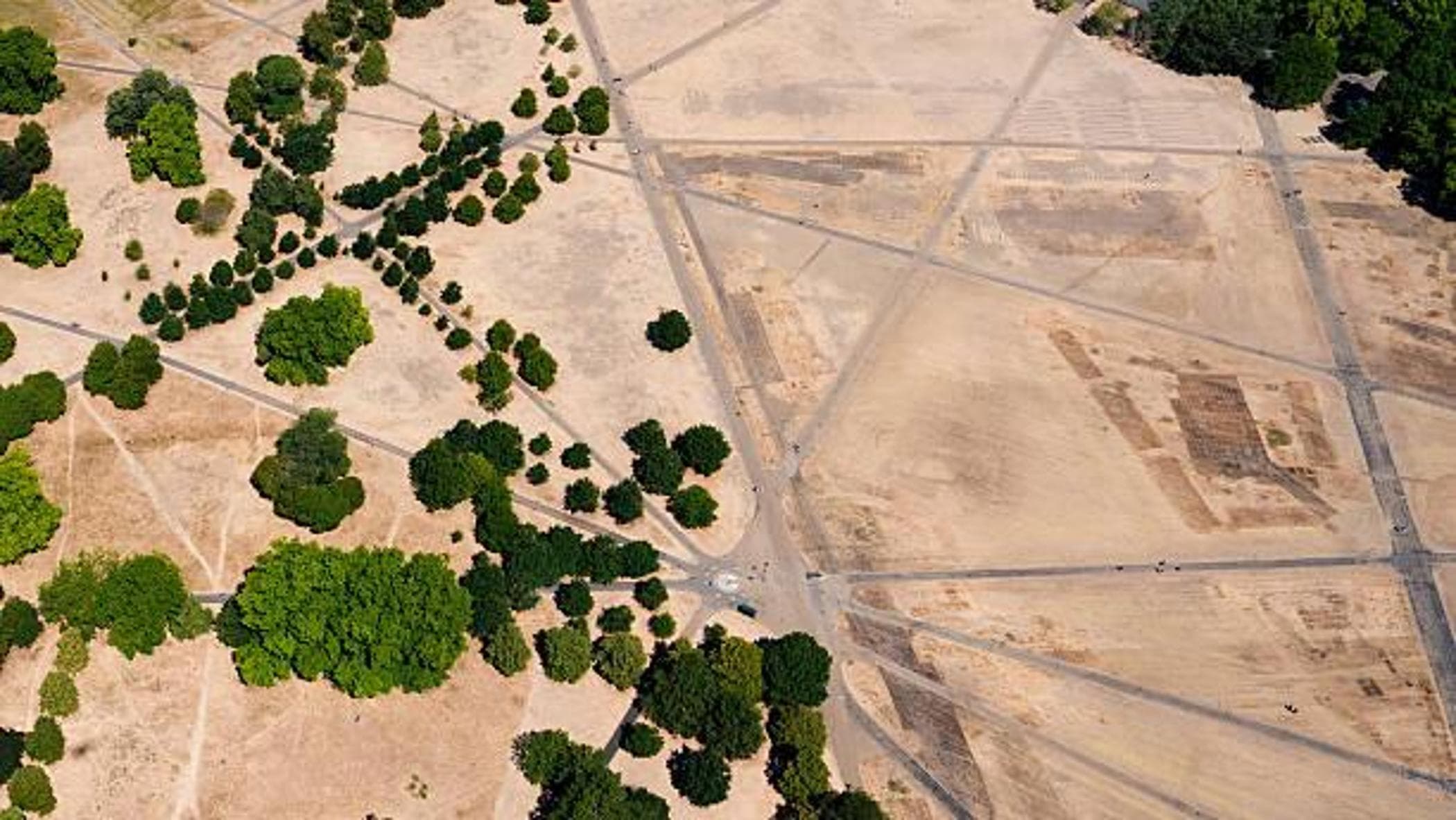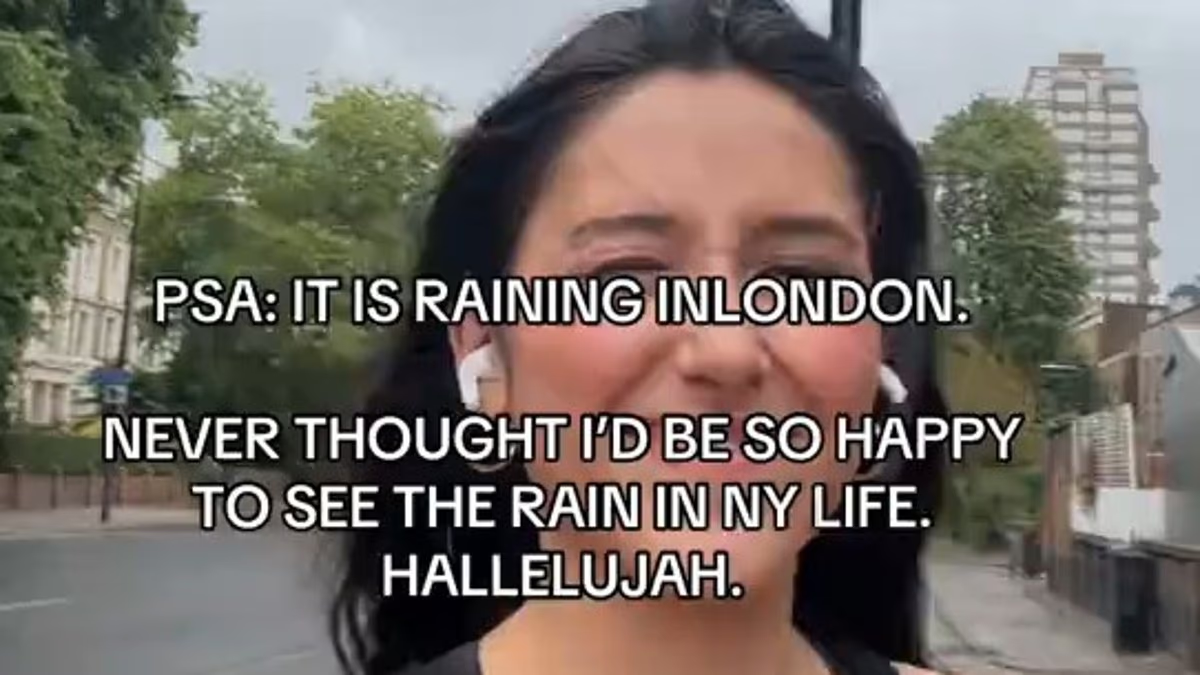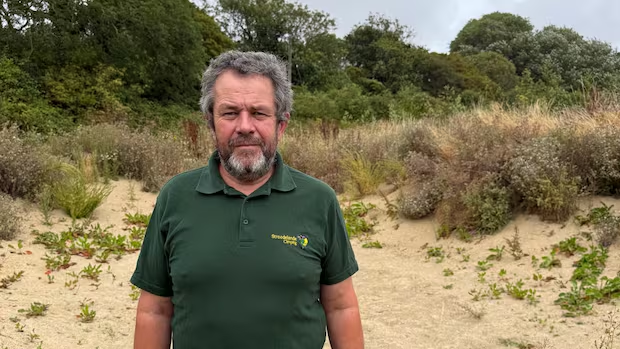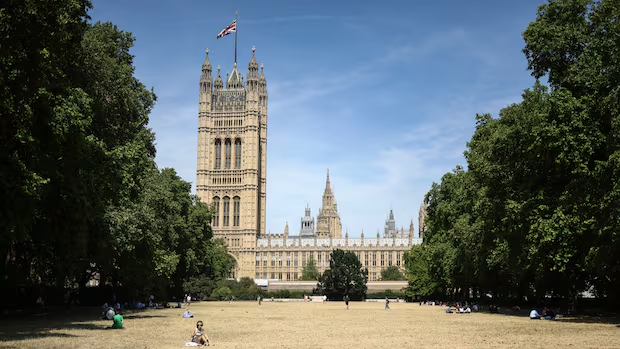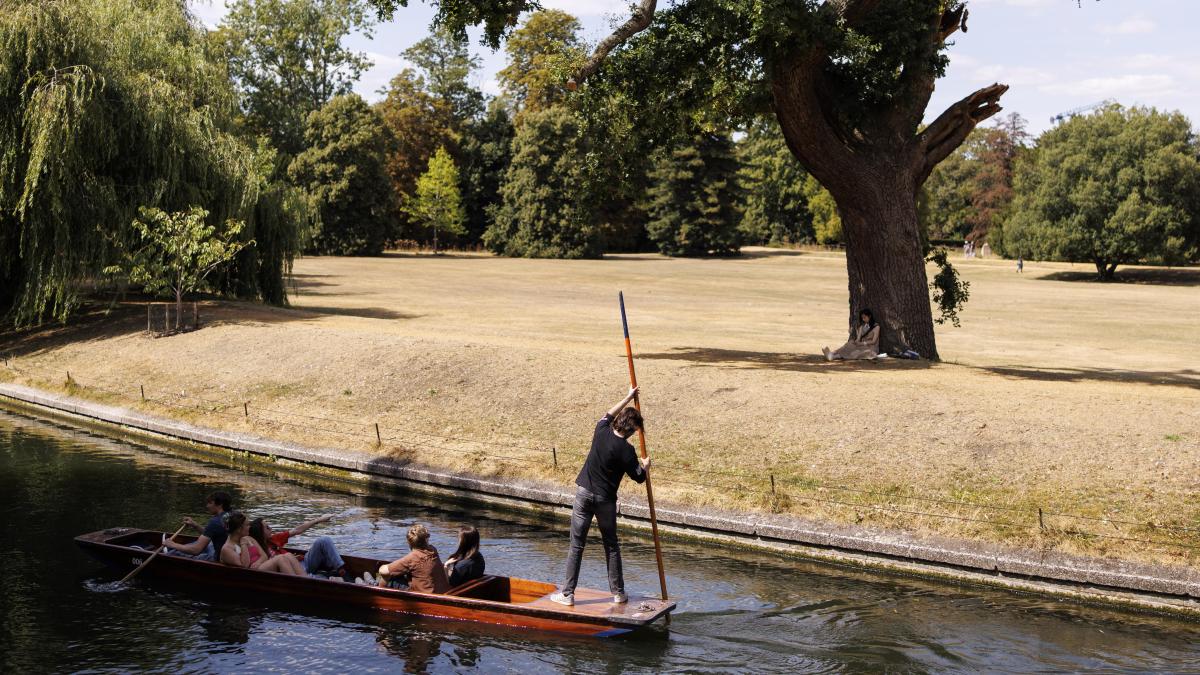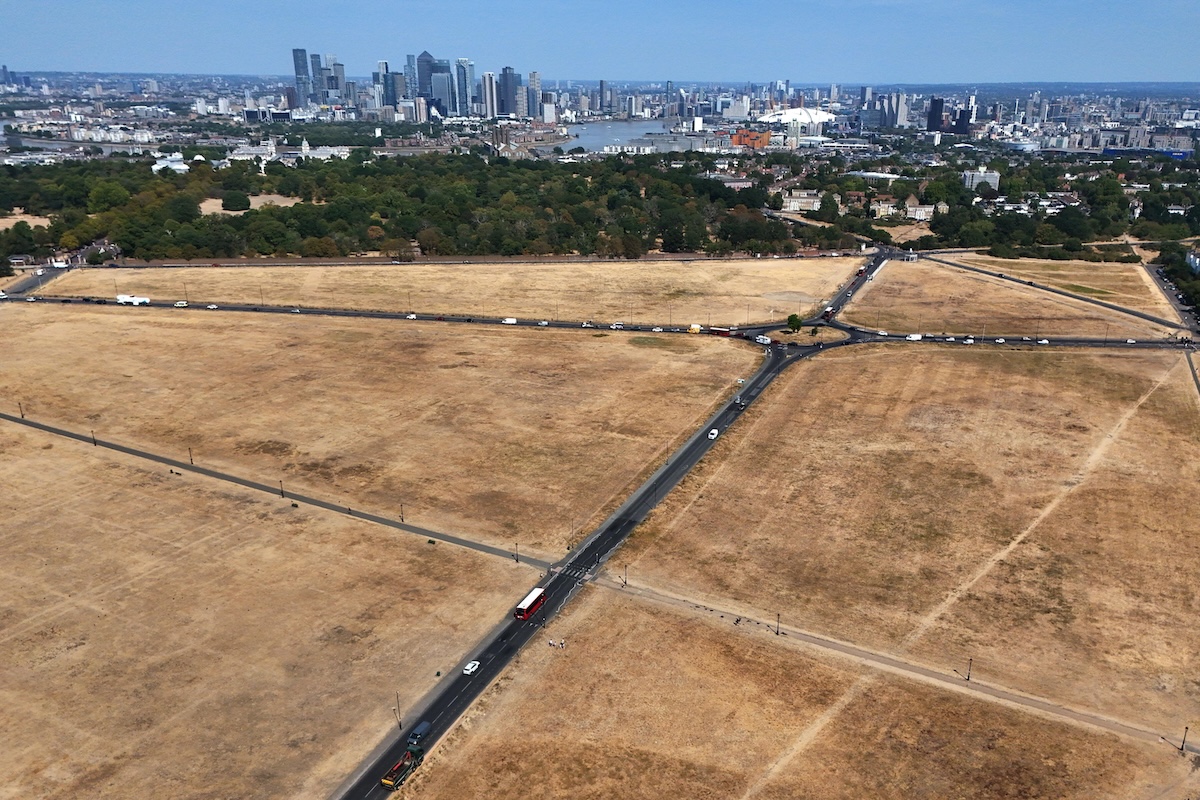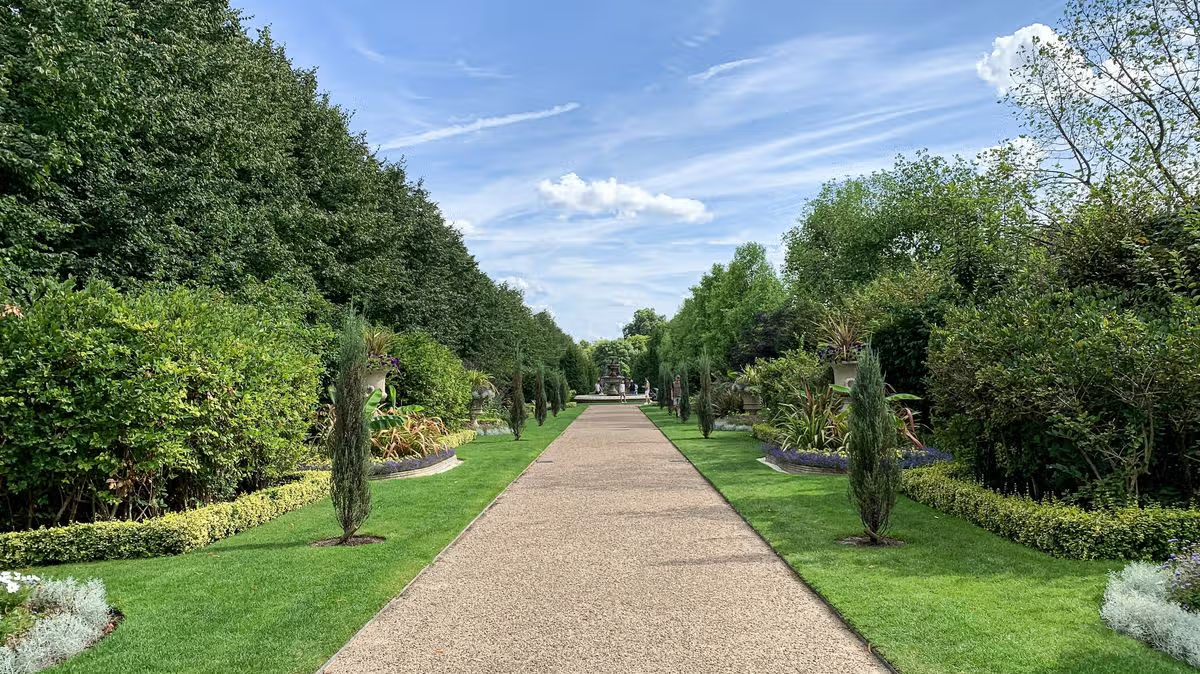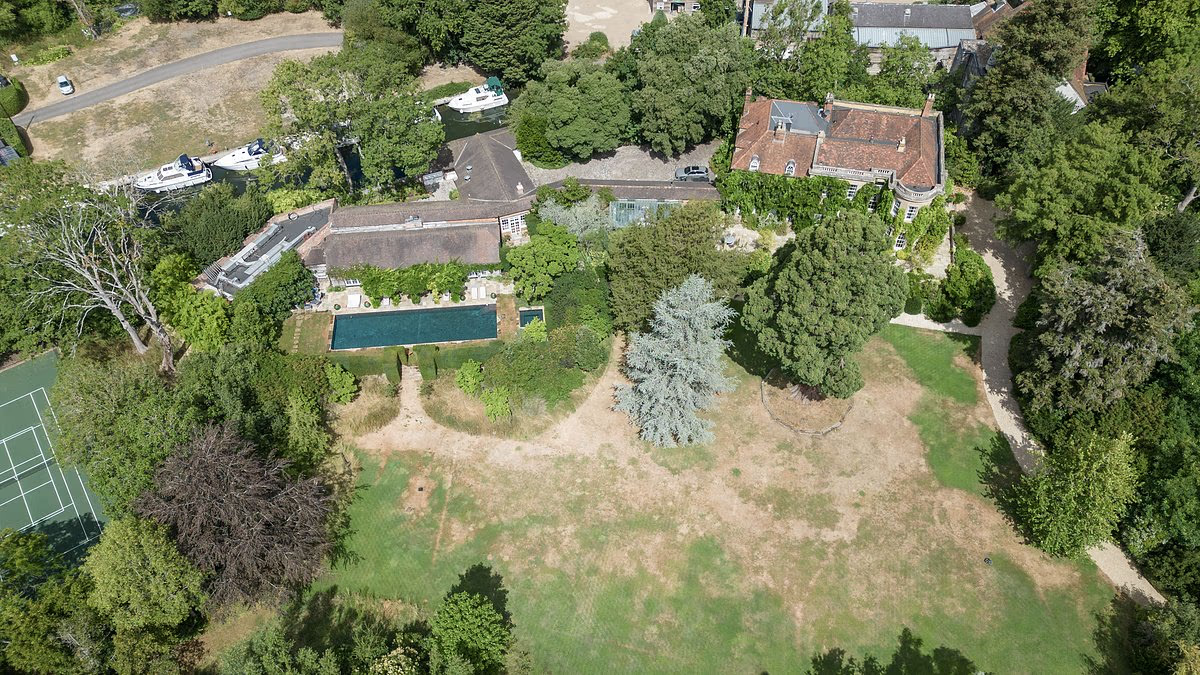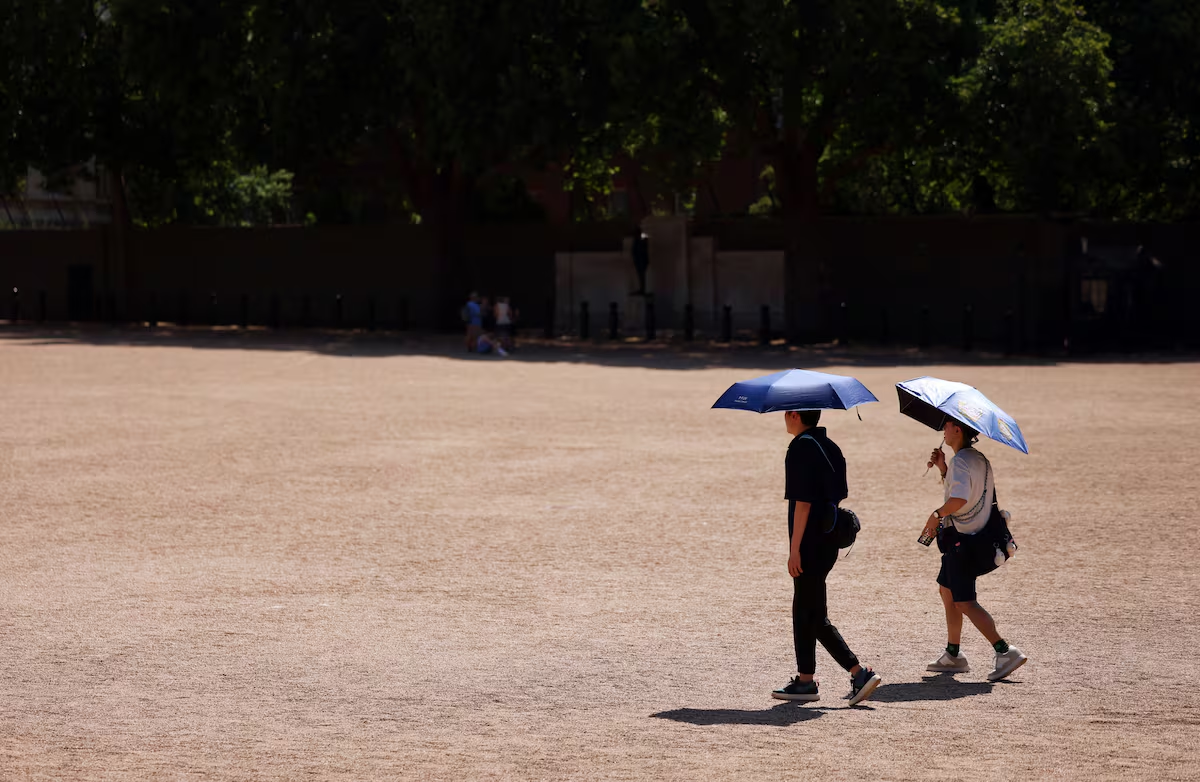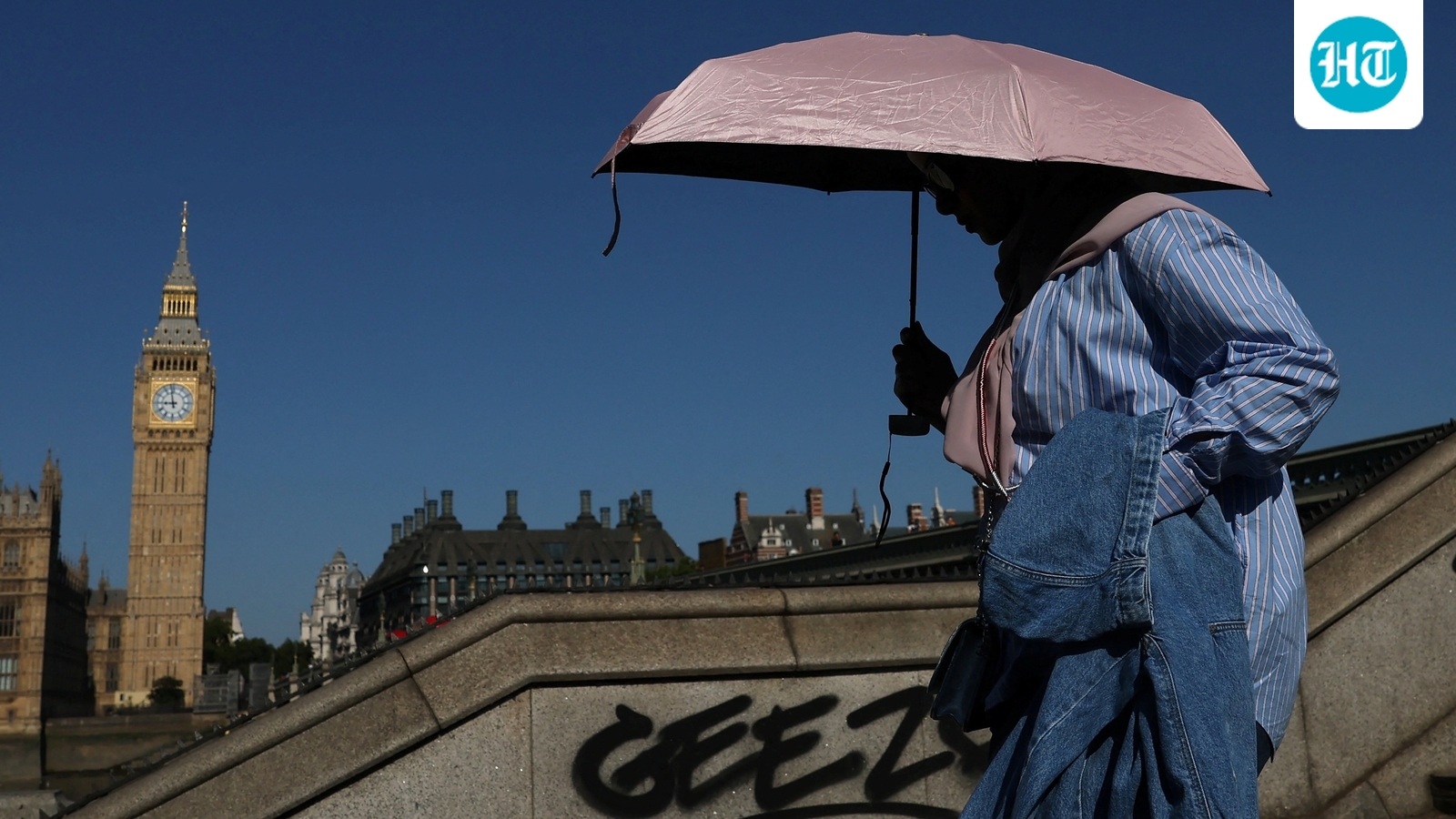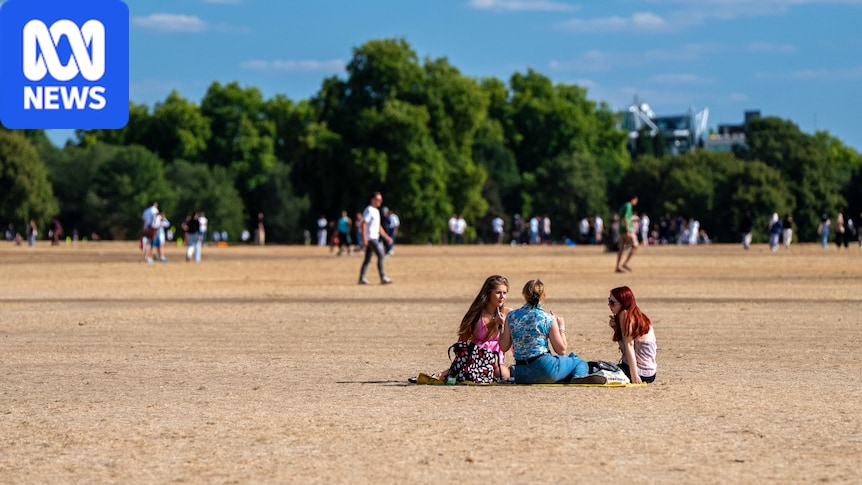
Britain is known for its grey skies and miserable weather.But as a devastating drought grips more than half the country, many of its famous parks and pastures have become almost unrecognisable.London's lush green spaces have been transformed into brown and yellow dust bowls, rivers are running low and more than 2,700 "excess deaths" are thought to have been heat related during sweltering weather in May and June, according to the country's official weather service.More than 10 million people have had their water use restricted. A hosepipe ban has come into force, meaning hoses cannot be used for watering gardens, cleaning cars, filling pools or cleaning windows. The crisis is even threatening one of the United Kingdom's most iconic dishes: fish and chips.Farmer Richard Barr grows potatoes for chippies across the country at his farm in Warwickshire in the West Midlands.Richard Barr says this is the worst drought he has seen in the UK. (ABC News: Daniel Pannett)But he said most of his crops would not make it to the fryer this harvest, after England endured its driest July on record."You pick up the potatoes, and they are less than half the size they should be," Mr Barr said."You want big, long potatoes to make chips, but you can't make chips out of these, they're just too small."Mr Barr, who has worked on the farm for 30 years, said he had never seen a summer like this one."Our main crops are in dire straits; they are all shrivelled up," he said."The prolonged heat is just killing the potatoes; they are dying off, and they are just giving up."These potatoes are too small to make chips from, Mr Barr says. (ABC News: Daniel Pannett)The UK government has declared half of England, and all of Wales, as officially being in drought. Parts of London recorded no rain last month, and in multiple parts of the country, July was the driest on record.Many farmers are facing the worst harvest they have seen.Mr Barr's yields are expected to be less than half of what they should be."I've never known crops like this dying off in August; they should be green until October," he said."Our green and pleasant lands are just desolate at the moment."England's patchwork of green fields has disappeared this summer. (ABC News: Daniel Pannett)As heat records tumble in the UK this year, its European neighbours are also struggling.Firefighters in Spain, France and Portugal have struggled to control dozens of blazes being fuelled by dry pastures and sweltering weather, triggering an ecological and humanitarian crisis.Even parts of Britain have been burning, and the country's Environment Agency has said the UK is facing an "exceptionally serious situation".May and June brought record-breaking heatwaves, including a new temperature high of 37 degrees Celsius in London, according to the Met Office — Britain's official weather service.The effects of those successive heatwaves are visible across the capital. In Hyde Park, the iconic green lawns have been replaced by barren, brown ground, with picnic-goers now sitting on dirt instead of the usual lush grass."I mean it's very, very dry. It's kind of giving desert vibes," one woman who was picnicking in the park told the ABC this week. "It's usually really nice to come here when it's bright green grass, so it is a shame."London's Hyde Park is almost unrecognisable amid the drought. (ABC News: Daniel Pannett)England has experienced three droughts in the past five years."The conditions we're seeing in the UK at the moment are a result of climate change," climate scientist from the University of Oxford Chloe Brimicombe said."It's very alarming the amount of extreme weather events we've seen this summer."Wildfires are affecting many regions and going into autumn we could see flash flooding, so there are a lot of compounding hazards."Dr Brimicombe said the UK was experiencing increasing "climate whiplash" that was also having a psychological effect on people."In the winter, we had 41 days of consecutive rainfall. It was very grey, very green and that is the sort of climate that may be expected of the UK, so this is the opposite of that and therefore it doesn't look like a pleasant green place to live, it's very brown and very crispy," she said."Research is showing that people are now feeling hopeless in the UK about heatwaves, and that's not good because we want them to be able to feel like they can take action and there is something they can do, which there is."Authorities say the unusually wet winter means drinking water reserves are not threatened by the current drought.At Charles Goadby's farm in Warwickshire, his cows were struggling to cope with the relentless heat, with milk production down 20 per cent.Charles Goadby is worried this drought will have flow-on effects in future years. (ABC News: Daniel Pannett)"They're no different to you and me — when you're hot, you're not wanting to eat, you're not wanting to work, so it's the same for them, and when they're not eating, they're not producing," he said."We've still got the same import costs, so that's hitting us hard in the pockets."Potato crops in some parts of the country have been struggling to grow in the heat. (ABC News: Daniel Pannett)Many farmers are already using their winter crops to feed their stock. Mr Goadby, who has installed a shower for his cows to try to keep them cool, said the heat had also affected their fertility."This is going to go on for the next 12 months because the cows are not getting back in calf because of the heat stress," he said."It's going to have a real long-term knock-on impact."This is unprecedented in the UK. I'm nearly 50 years old and I've never seen anything like this and I hope to God I never see anything like this again."Forecasters are warning that much-needed rainfall may not arrive until October, and that the drought conditions could worsen before they improve."You're fighting against the weather, climate change, government polices, everything seems to be against us at the moment," Mr Goadby said."It's still the best job in the world, but my God it's tough."
London's parched Hyde Park reflects 'unprecedented' drought ravaging UK
London's parks turn brown and British farmers battle to salvage what is left of their produce as a drought grips multiple parts of the country.
1,012 words~5 min read