Story audio is generated using AI
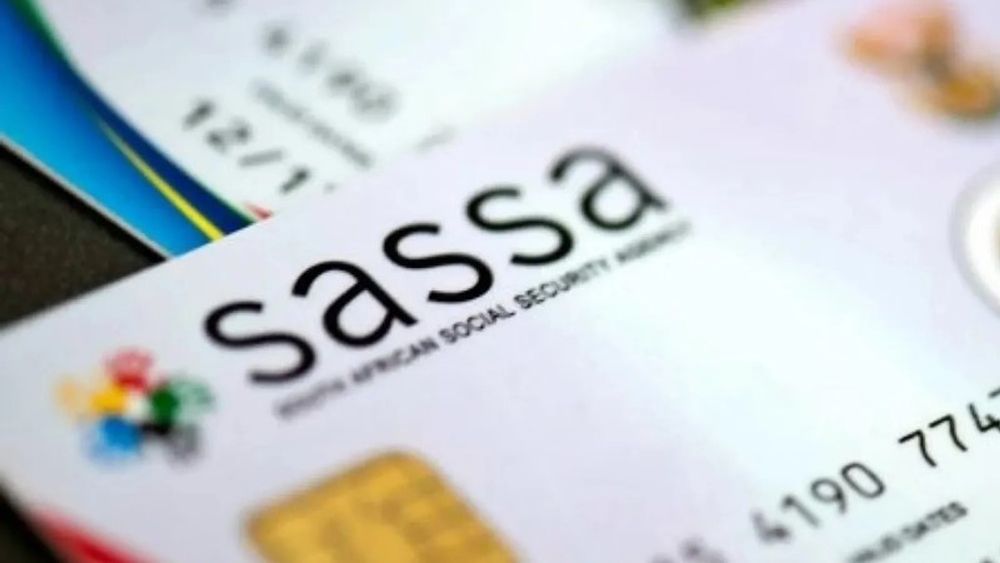
The National Treasury will tell the Supreme Court of Appeal (SCA) later in August that any further increase in the Covid-19 social relief of distress (SRD) grant would be unaffordable and that the assistance was never intended to become a permanent feature of South Africa’s social safety net.The Treasury and its sister department, social development and its entity, the South African Social Security Agency (Sassa), seek to overturn a Pretoria high court decision that ordered the government to remove numerous administrative barriers that locked out about 10-million people from accessing the grant; and to increase its monetary value.The effect of the high court decision is to expand the grant to 18-million people, from the current 8.3-million people, and hike it from R370 per month to about R450 — R65bn higher than in the 2024/25 financial year.The Treasury in its papers, which Business Times has seen, says the high court’s decision is unaffordable and that it erred when it found in favour of the Institute for Economic Justice (IEJ).“The Treasury has explained the context in which the SRD Regulations must be interpreted. It has pointed to the fact that adopting the IEJ parties’ interpretation would increase the value of the grant, even without accommodating for inflation, by R60bn per year,” says the Treasury’s papers.“It has explained the absurdity — in the context of the goal of the SRD regulations and the extremely limited resources — of interpreting ‘financial support’ to exclude loans from friends and relatives and even gifts of, say, R4,000. But that would be the implication of the IEJ parties’ interpretation.“That is even leaving aside the fact that it would be impossible for Sassa officials to litigate every source of revenue, to weed out, for instance, loans from friends but keep loans from third-party lenders.” The Treasury argues:The extension of the grant to 18-million people at R430 will cost an additional R93.5bn a year;If the SRD is increased to R663 to be in line with the child-support grant, the additional cost will be R139bn;£63bn was cut from the 2024/25 budget due to the government’s high borrowing costs; and SRD is not a grant but rather social assistance.The high court’s 2025 ruling was scathing towards the Treasury and the department of social development.Judge Leonard Twala found in February 2025 that the affordability, or lack thereof, of the SRD was insufficient reason to exclude millions of South Africans who qualified to receive the assistance, and that the SRD had become a permanent feature of life in South Africa.“It is unthinkable why the government and National Treasury in particular should not plan and budget accordingly to fulfil their obligations in terms of the constitution,” Twala ruled.“It is unconscionable for the government to accept that the number of people who are with insufficient means to support themselves and their dependants is more than 18.3-million but only budget to provide for 10.5-million.”Twala further found that the government’s bank verification and flawed database checks are unlawful and designed to exclude eligible people.The department of social development and Sassa will tell the SCA when the matter is heard on August 25 that the SRD is temporary assistance and that there is nothing untoward with its verification systems.“The banks, in agreement with Sassa, have since put measures in their systems for purposes of Covid-19 SRD assessment. Certain monies that are received in one’s account, for example, the child support grant, are excluded as a source of income or financial support when assessing the financial means of the Covid-19 SRD applicant,” reads the court papers filed with the SCA.“The provision of social grants is massive and affects millions of recipients and billions of rand, and in a depressed economy, there is a huge risk of abuse. Therefore, there have to be stringent verification processes in place.“This will assist Sassa in ensuring that the intended beneficiaries who are in need of financial assistance benefit, rather than those with financial means.”IEJ has rebuked the government for seeking to set aside the high court’s decision and said the appeal “demonstrates an ongoing disregard for the rights and needs of poor and working-class communities”.The purpose and rationale of the SRD grant have evolved over time since it was introduced in 2020 after the outbreak of the pandemic and it cannot be characterised by government as a temporary Covid-19 measure, the progressive economic policy think tank states in its papers.“The crisis of poverty, hunger, and unemployment that the SRD grant alleviates is long-standing and structural — it was dire before the pandemic and continues to be so. And while the crisis of poverty and hunger may have reached a peak during the pandemic, government’s policies to address structural poverty since then are not Covid-19 relief measures,” the IEJ says.“The SRD grant’s success spurred an evolution in government policy and secured its future.”Business Times