MAST Upgrade installation hit highest pressure ever achieved without the super-hot plasma destabilizing
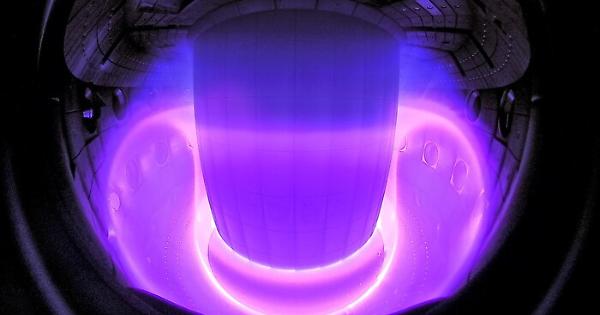
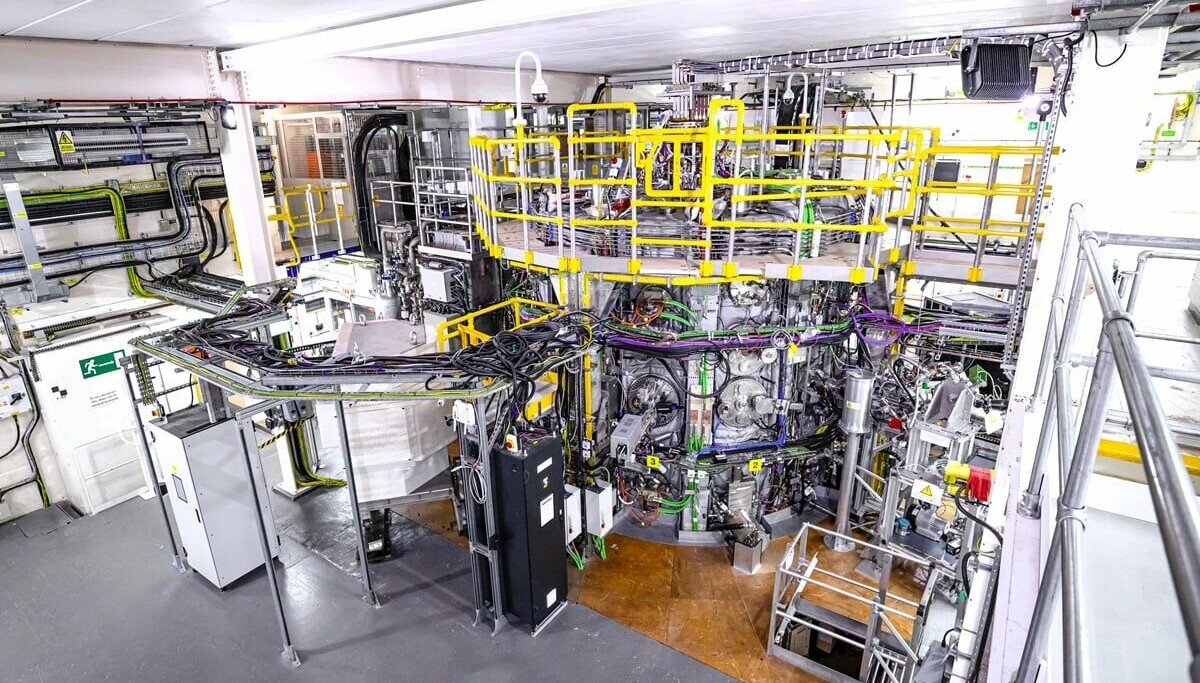
Scientists at the UK Atomic Energy Authority (UKAEA) say that they have overcome plasma instability issues standing in the way of commercial fusion power plants.The boffins overseeing the MAST (Mega Amp Spherical Tokamak) Upgrade installation at UKAEA's Culham Campus in Oxfordshire conducted a fifth series of experiments on it during 2025 and 2026 and produced more than 1,100 fusion plasmas.During these experiments, the team demonstrated the highest pressure ever achieved with the MAST Upgrade machine, without the super-hot plasma destabilizing, they say.
One of the challenges they set out to address is to figure out how to suppress instabilities known as Edge Localised Modes or ELMs. These are described as “sudden bursts at the plasma’s outer edge” that can cause a loss of plasma pressure and also lose up to a tenth of its stored energy in a single event.
Over time, these occurrences will damage the tokamak’s inner wall and exhaust components, and were therefore seen as a serious obstacle to commercial viability.To cure this, the team adopted two techniques already previously tested to avoid these damaging heat bursts; Quasi-Continuous Exhaust mode (QCE-mode) and Resonant Magnetic Perturbations (RMP).With QCE, the plasma edge experiences high-frequency, low-amplitude filaments that act to bleed off pressure before it can build to a destructive level. Likewise, RMPs use a magnetic field to induce small perturbations at the edge of the plasma that bleed off the pressure leading to ELMs.The team also accessed two additional stable operating regimes known as Quiescent H-mode (QH-mode) and I-mode (Intermediate-mode), improved plasma confinement techniques that deliver better energy confinement while mitigating issues associated with large ELMs.QH-mode is understood to tackle ELM using an edge electromagnetic instability called the Edge Harmonic Oscillation (EHO) to steadily remove excess heat, while I-mode is a confinement technique that features a steep thermal barrier at the edge that allows particles to escape, again preventing the buildup of pressure.