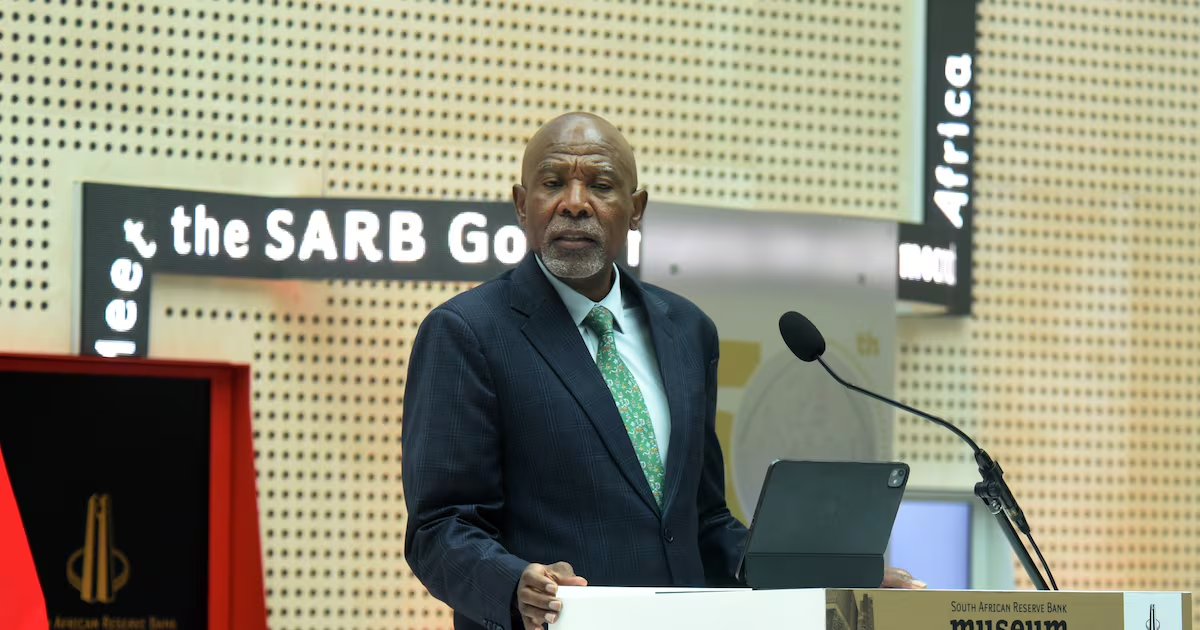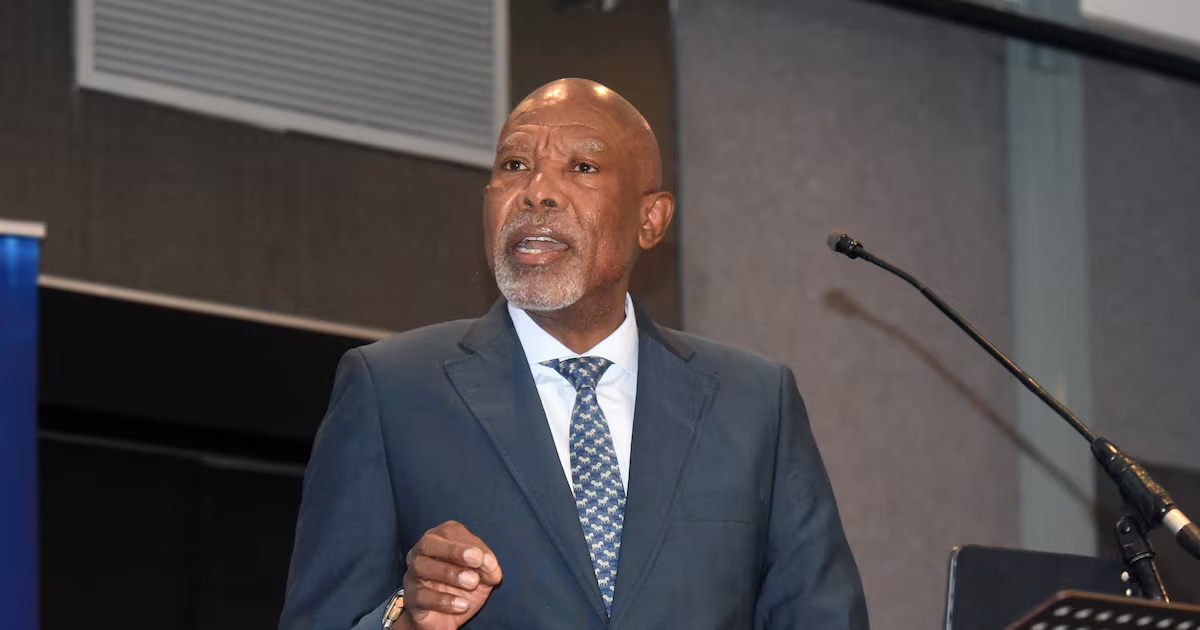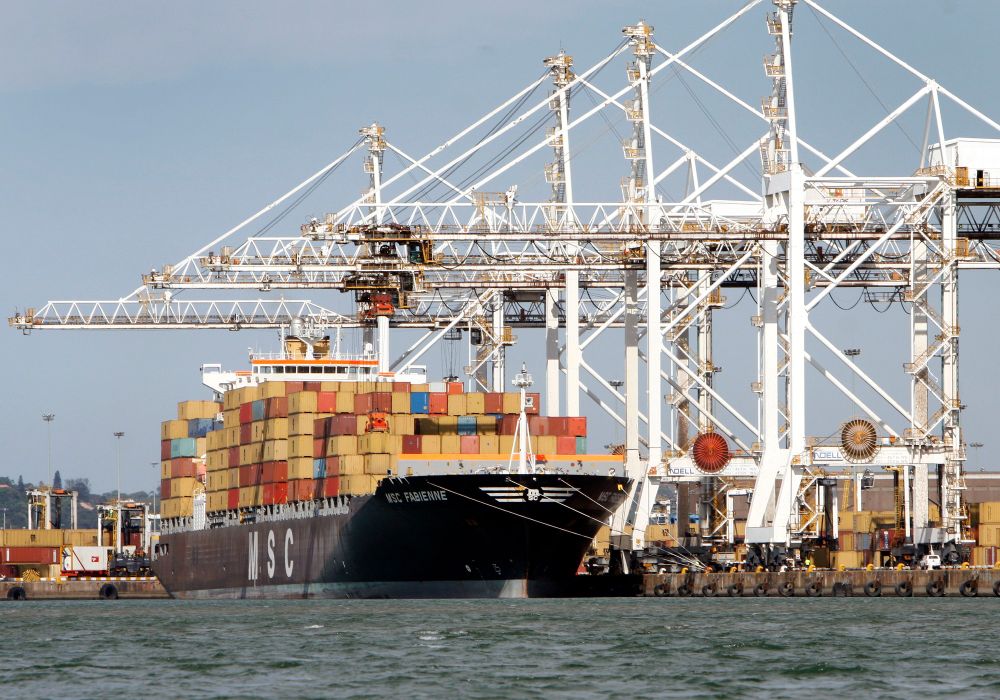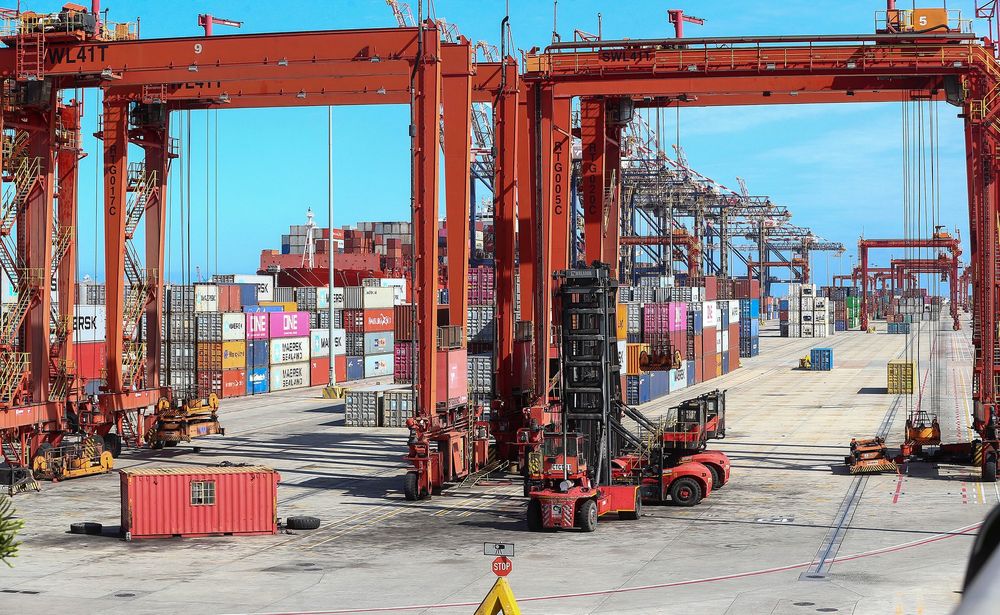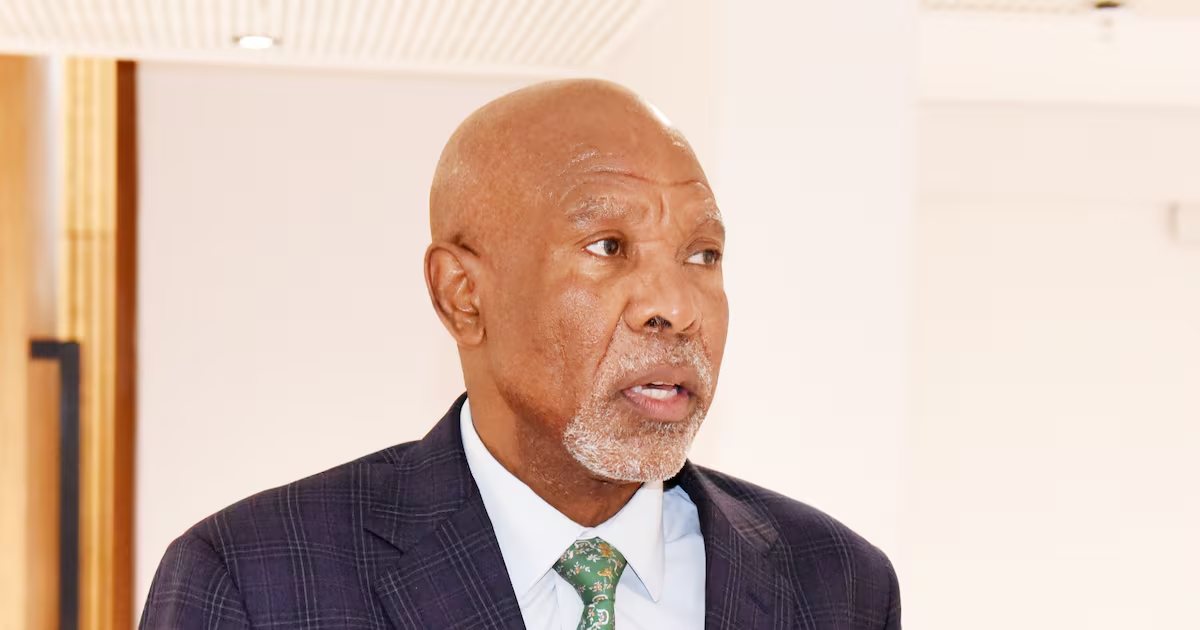
South Africa must take bold steps, including shaking up the status quo in order to push through the structural reforms that are crucial to jump-starting sluggish economic growth, Reserve Bank Governor Lesetja Kganyago says.In a wide-ranging interview with Business Day on Thursday, Kganyago expanded on a call he made during a public lecture at the University of South Africa earlier in the week for the country to take risks in order to spur growth.Citing Oxford economist Stefan Dercon’s book Gambling on Development, Kganyago told his audience during the lecture that strong economic growth means “trying things that are risky”“This is not always comfortable, especially for people who already have power and wealth. South Africans love to gamble, but when it comes to growth, it turns out we are risk-shy. We like protecting incumbents … We are reluctant about shaking things up to make them more efficient. We would be much better off if we could stop betting on sports and start betting on growth instead.”Asked by Business Day what taking those risks would entail, Kganyago said: “They are all on the structural front. Structural reform has got losers and winners, but overall the economy gains. And so the risk that you are going to end up having to take is to say, those who lose from this thing, they will contest it, right? But you’re going to have to manage that contestation. Any structural reform that you propose has got winners and losers.”He cited the recent controversy after President Cyril Ramaphosa endorsed the first phase of plans to separate the country’s electricity transmission operator from Eskom despite fears that this will leave the power utility — which is owed billions of rand by municipalities — in a far worse financial position.Ramaphosa’s decision came after months of intense lobbying by Eskom’s top brass to retain ownership, and after he received and studied a report by a National Treasury-led restructuring task team which he appointed in February to draft a blueprint for the unbundling.“There are big issues there — what’s going to be happening with the debt and all of that. You are going to have more players coming in. The economy overall benefits, but there are still losers,” Kganyago said of the Eskom developments.“You could say the same with ports and rails. When we did [a similar] thing on the ports we ended up with contestation in courts, it delayed things, but the decision was taken, and as far as I’m concerned, the decision is in the interest of the economy, so you are going to have that. That’s what I’m talking about.”Kganyago was referring to APM Terminals’s legal defeat in its high-stakes bid to set aside the awarding of Transnet’s multiyear contract to operate Durban Pier 2 terminal to Philippines-based rival firm International Container Terminal Services Incorporated, after the Durban high court ruled that the state logistics company did not flout tender rules in the process.The court decision was a major breakthrough for the government’s efforts to bring in the private sector to invest and operate key logistic assets which have been underperforming for several years.Kganyago said pushing through such structural reforms entails desisting from protecting the “insiders” — who tend to lose out when an industry is opened up — at the expense of the “outsiders”.“The outsiders are the unemployed, but we focus on protecting the employed. In any of the industries where you want to go and open up an industry, it’s always about the incumbents. And meanwhile, you have got this huge pool of unemployed people,” he told Business Day.In his public lecture earlier in the week, the governor listed years of state capture that devastated capacity in the national government and state enterprises among the other impediments to strong growth — GDP expansion in 2025 undershot the Treasury’s 1.4% target, at just 1.1% — saying this was now also evident in municipal failures.But he applauded policies, such as reining in public debt, which he said had won the country positive reviews from ratings agencies in recent months. In the interview with Business Day, Kganyago said South Africa was on track to avoid slipping back into the Financial Action Task Force (FATF) greylist through the work being done to illustrate its ability to combat money-laundering and terrorist financing. The country exited the list in October last year, having been put on it in early 2023 after significant weaknesses were identified in its system. The FATF commenced a mutual evaluation earlier this year, which will conclude in October 2027.“We’ve worked very hard to get off, and the same team is still in place … I think that we are putting [enough of a] good effort that we would avoid another grey listing,” Kganyago said.“But this is a process that runs, and like I have always reminded South Africans, getting onto the grey listing and getting off the grey listing … is within our hands.”He reiterated the difficulty of navigating monetary policy around the uncertainty created by the political back and forth in pursuit of a ceasefire to the US-Iran war which has disrupted global oil supply and created price volatility.After raising the benchmark policy rate by 25 basis points in May, citing emerging second round effects from the oil price shock, the SARB surprised many, including economists, by holding it at 7% in July, even as data showed a continued spike in consumer inflation.“We revised our inflation forecast for this year lower than it was in the May meeting, and almost like on the day that we announced the [July] decision, the [Iran] bombing started again, and the oil price went up, and it was like, oh, this this is the problem that we we are having. That is the uncertainty,” Kganyago said, likening it to the difficulty monetary policymakers had during the Covid-19 pandemic.“Then you are trying to figure out the second round effects, so you must see through the shock. This is the same shock that manifests itself a couple of times. That is the challenge that you face … This shock, every time we think it is behind us … it just looks like during Covid, there’s a new strain.”
Kganyago pushes for ‘risky’ structural reforms to spur economic growth
Reserve Bank governor urges shaking up the status quo to unlock sluggish growth
1,025 words~5 min read