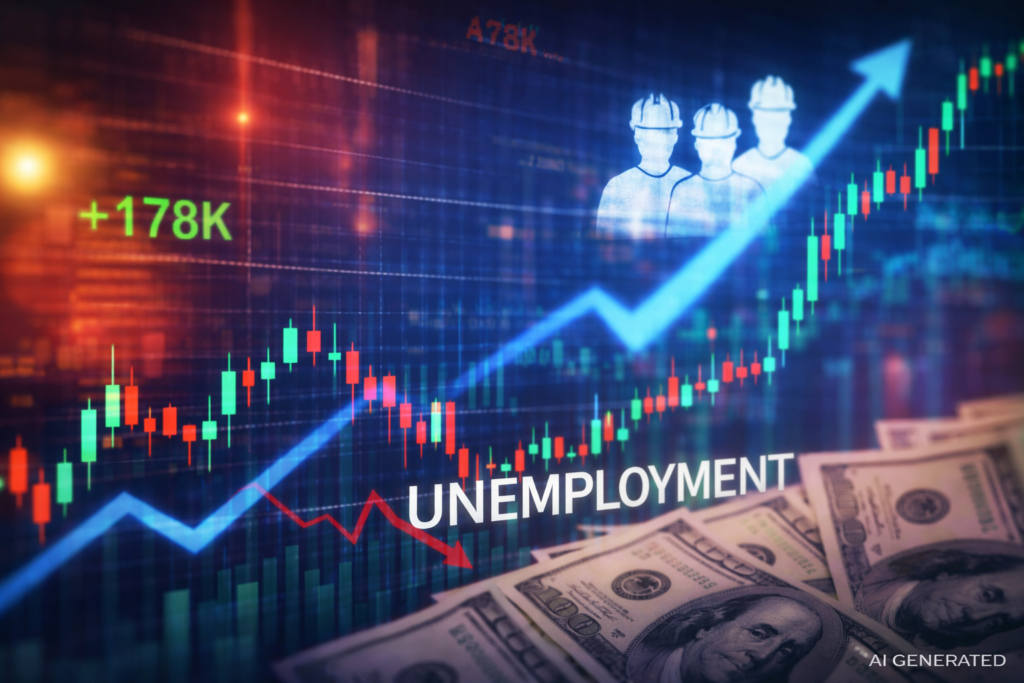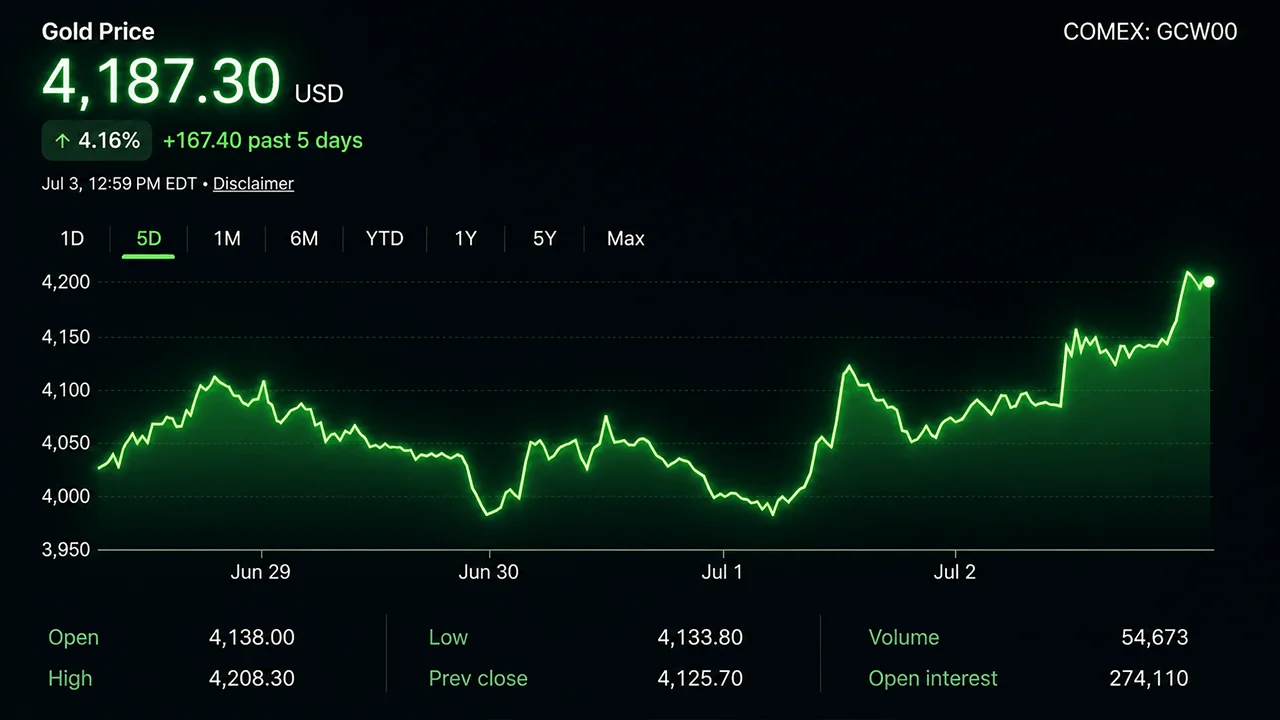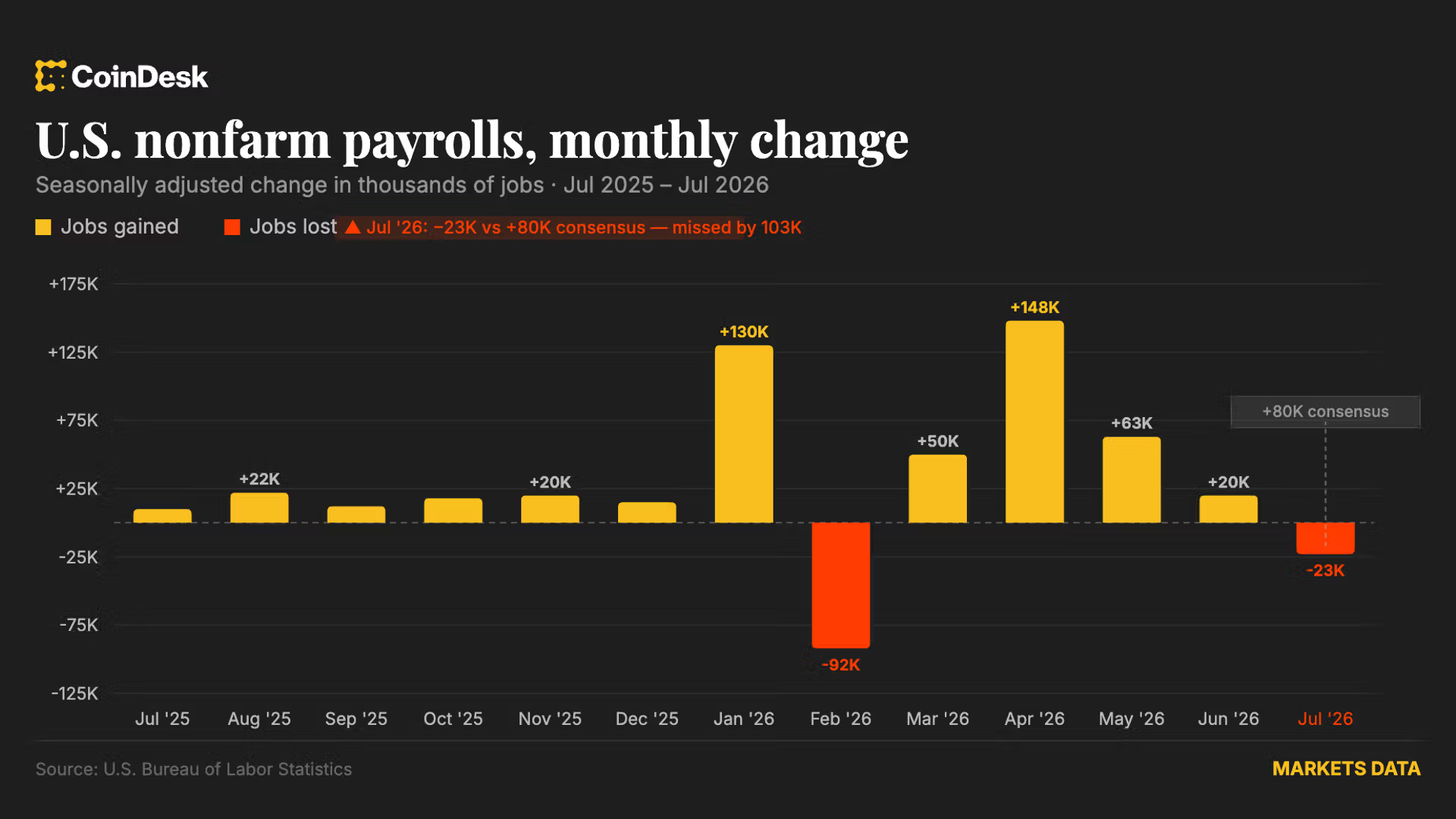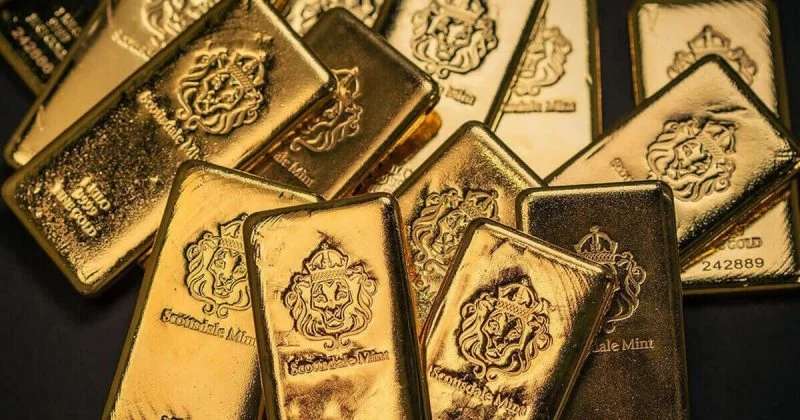
Gold futures blew past the $4,400 per ounce mark after the Bureau of Labor Statistics reported that the US economy lost 23,000 nonfarm payroll jobs in July. Wall Street had been expecting a gain of 80,000. The miss wasn’t just bad. It was historically bad, the kind of number that makes portfolio managers reach for the asset class humans have trusted for roughly 5,000 years.
To make matters worse, the June jobs figure was revised downward to a meager gain of just 20,000. Two consecutive months of effectively zero or negative job creation is the kind of pattern that shifts narratives from “soft landing” to “are we landing at all.”
The data behind the surge
The warning signs were already flashing before Friday’s report. The ADP private-sector payrolls number, released a day earlier, showed only 44,000 jobs added in July against expectations in the 68,000 to 75,000 range.
Gold had already been trading in a wide band throughout early August, oscillating between roughly $4,067 and $4,359 per ounce as markets digested mixed economic signals. The jobs report collapsed that range to the upside, with futures pushing through $4,400.