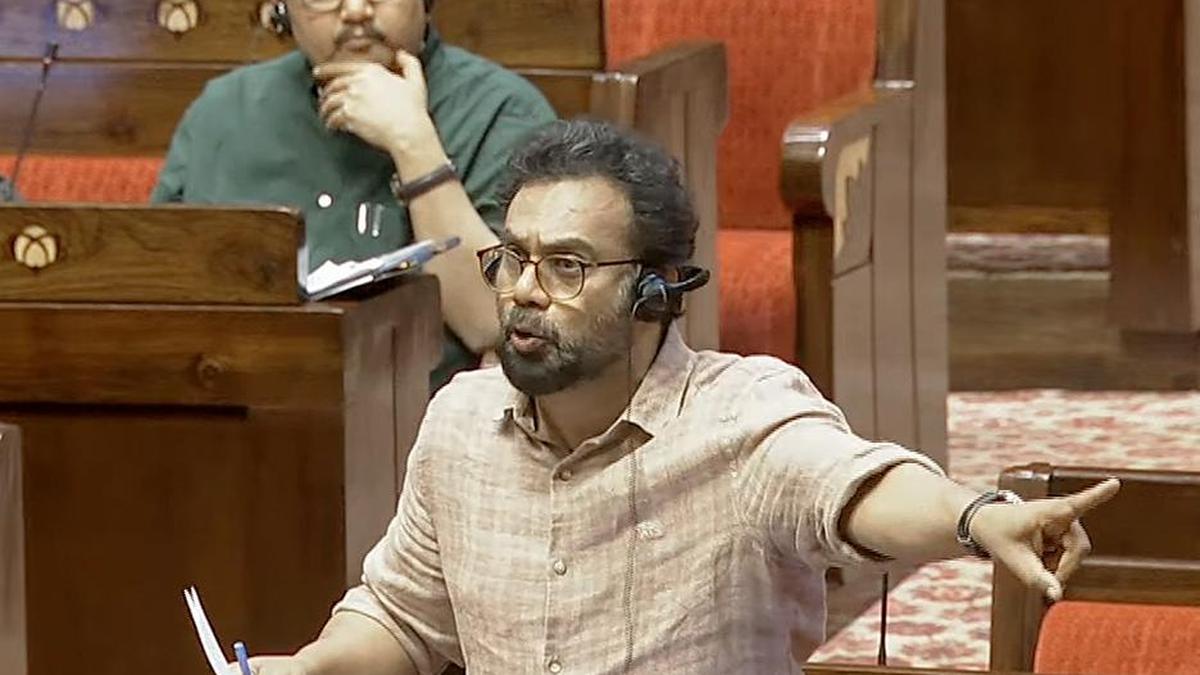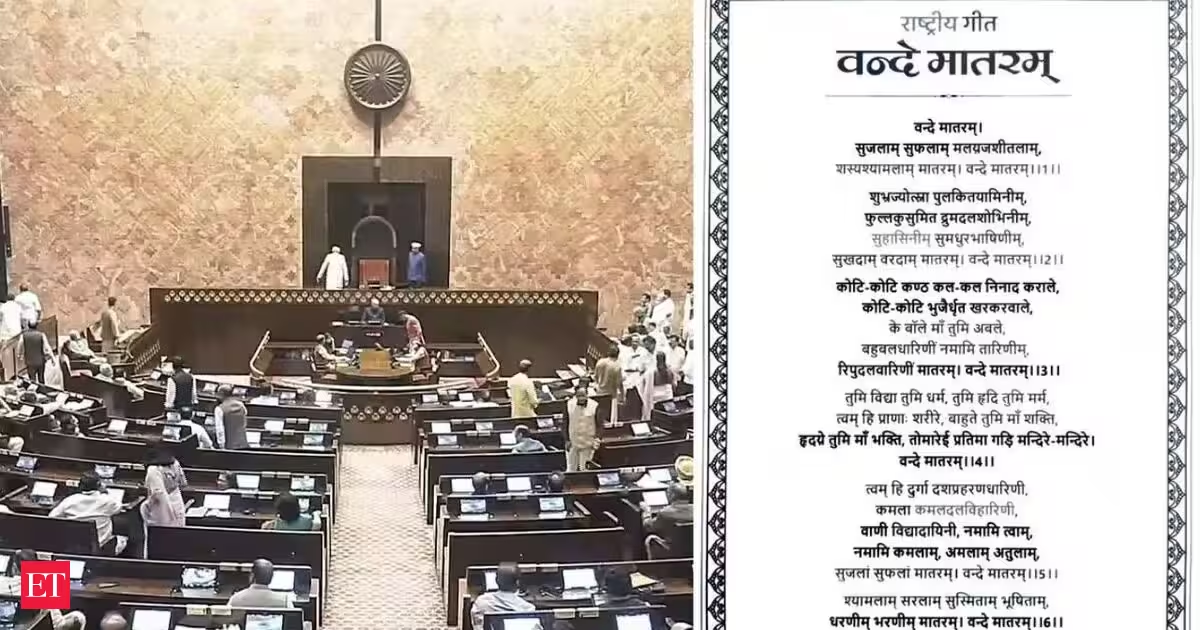
Parliament passed the Prevention of Insults to National Honour (Amendment) Bill, 2026, extending to Vande Mataram the same statutory protection that the National Anthem
| Photo Credit:
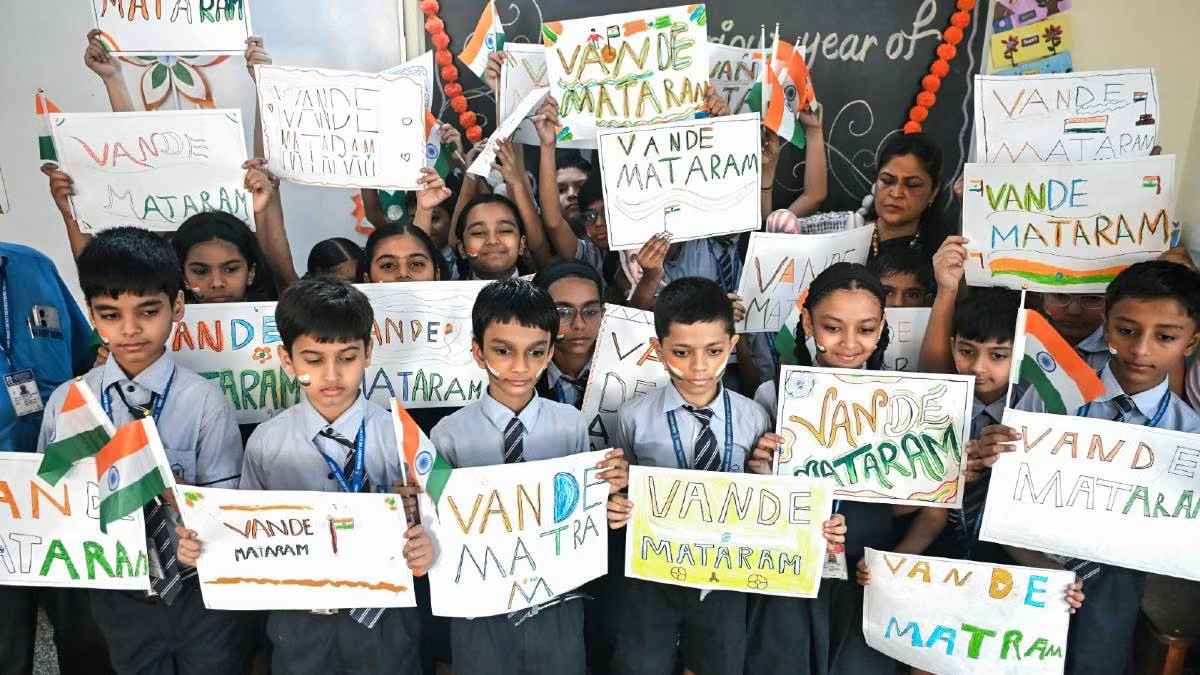
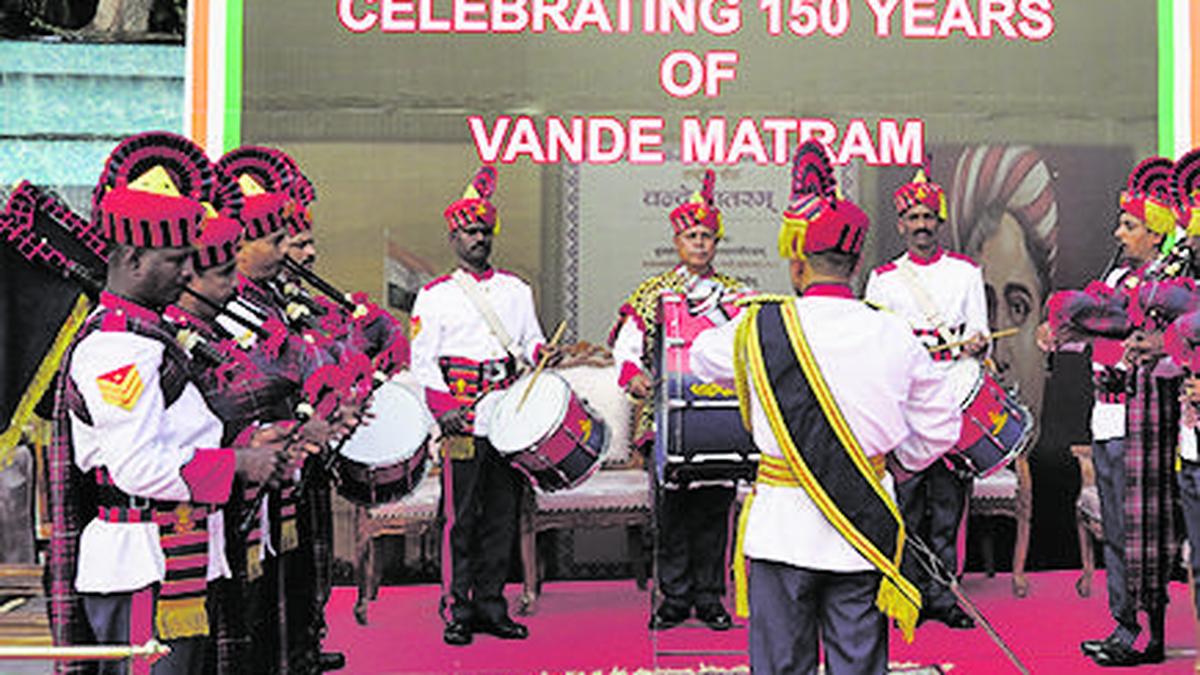
When the Defence Ministry sent out invites for Independence Day this year, guests found the full text of the Fundamental Duties of citizens under Article 51A of the Constitution and the complete lyrics of the national song -- Vande Mataram -- in both Hindi and English.The design choice is not merely aesthetic; it is an expression of the government’s effort to imbed constitutional duties and cultural nationalism as central elements of India’s public life. Fundamental Duties, inserted into the Constitution through the 42nd Amendment in 1976, have increasingly been invoked by the government as the moral counterpart to Fundamental Rights.At the same time, Vande Mataram, written by Bankim Chandra Chattopadhyay and first published in his 1882 novel Anand Math, has acquired renewed official prominence, reflecting the BJP’s long-standing emphasis on specific Hindu civilisational and cultural symbols associated with the freedom movement.Vande MataramThe government’s push has not been confined to symbolism. In the ongoing Monsoon Session, Parliament passed the Prevention of Insults to National Honour (Amendment) Bill, 2026, extending to Vande Mataram the same statutory protection that the National Anthem, ‘Jana Gana Mana’, enjoys under the 1971 law.The BJP has consistently sought to elevate Vande Mataram in public life through official functions, educational institutions and legislative measures. The song occupies a unique place in the nationalist movement, but it has also been the subject of historical debate because later stanzas of the original composition in Anand Math invoke Hindu goddesses. It was for this reason that the Constituent Assembly accorded national song status only to the opening portions, while adopting Jana Gana Mana as the National Anthem. However, in May, this year, the government endorsed the adoption of the full six-stanza version of Vande Mataram for official functions and government events.New InscriptionThe invitation card reflects this broader ideological trajectory. Significantly, the image inscribed on invitation card is not that of the Red Fort, a symbol of Mughal rule, but of the newly-constructed Prime Minister’s office called ‘Sewa Teerth’ that carries the Sanskrit idiom for public service ‘Nagarika devo bhava’.By placing constitutional duties alongside Vande Mataram, the I-Day invite encapsulates the twin themes that have increasingly defined the government’s ideological messaging: a call for civic responsibility rooted in the Constitution and a parallel emphasis on cultural nationalism.Published on August 7, 2026