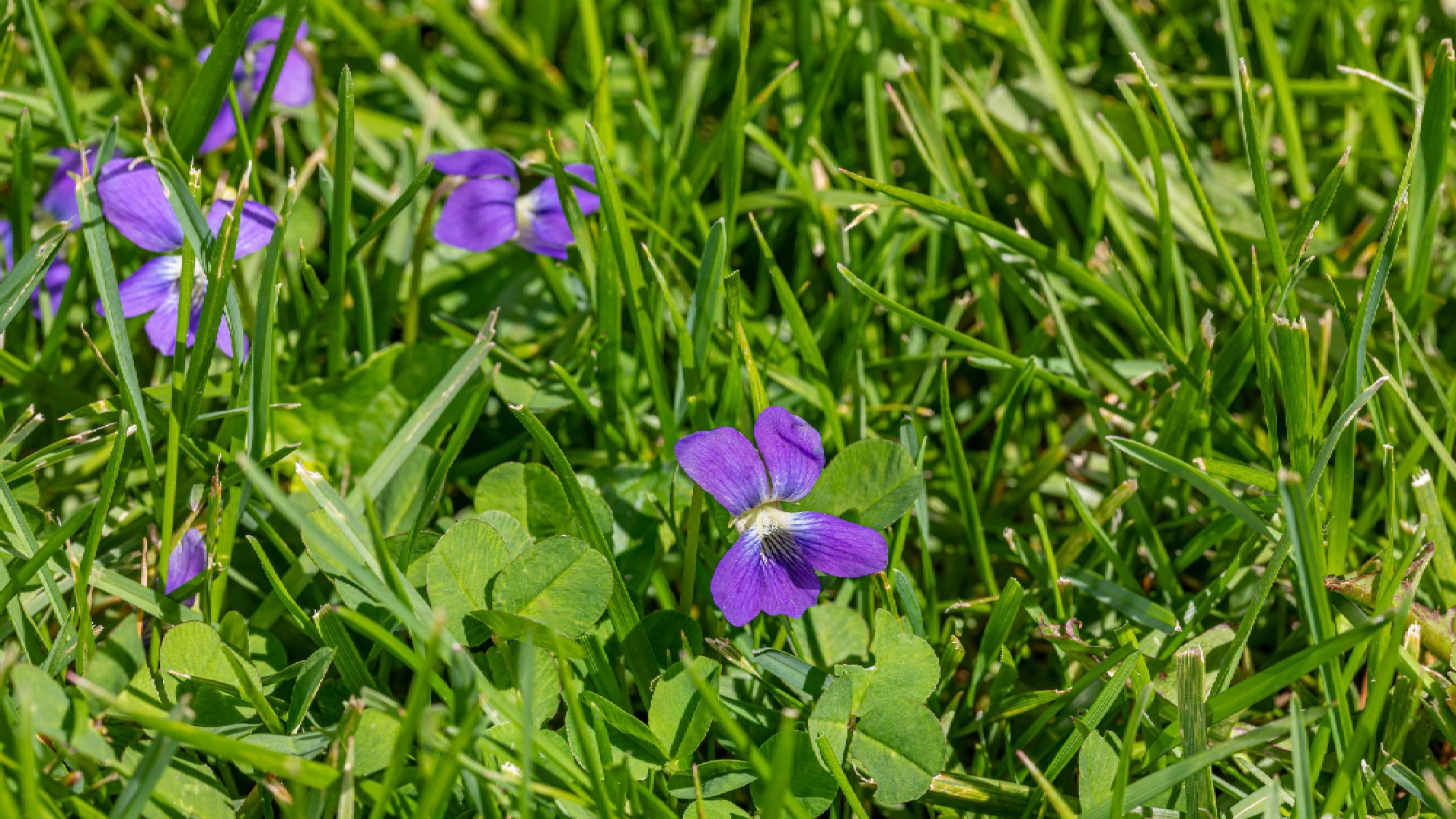
Wild violets are the wolf in sheep's clothing of lawn weeds. In spring, their small purple flowers look charming enough that many homeowners leave them alone. By midsummer, you realize they've taken over.The issue with wild violets is they're designed to trick you into failure. Their leaves have a waxy coating that repels standard herbicides. Underground, they've developed a network of tubers that survive pulling, mowing, and casual attempts at removal. By the time you realize it's a problem, they're already winning. Here's how to take your lawn back.Why wild violets are so hard to killThose purple flowers are lovely, which is exactly why people ignore wild violets until it's too late. The real threat is underground. Wild violets develop rhizomes: tough, fleshy underground stems that store energy and keep the plant alive even when you think you've eliminated it.Above ground, the leaves have a protective waxy layer that causes liquid herbicides to slide right off without penetrating.This combination makes them nearly impossible to kill with casual effort. They also spread aggressively. Wild violets produce seed pods both above and below ground, meaning they're distributing seeds whether you see it happening or not.If you've got wild violets in your yard, assume they're already further along than they appear.
Wild violets spread faster than lawns can handle — here’s how to stop them
Think wild violets are harmless? Their waxy leaves and underground roots make them tough to kill. Here's how to stop them from taking over your lawn.
633 words~3 min read