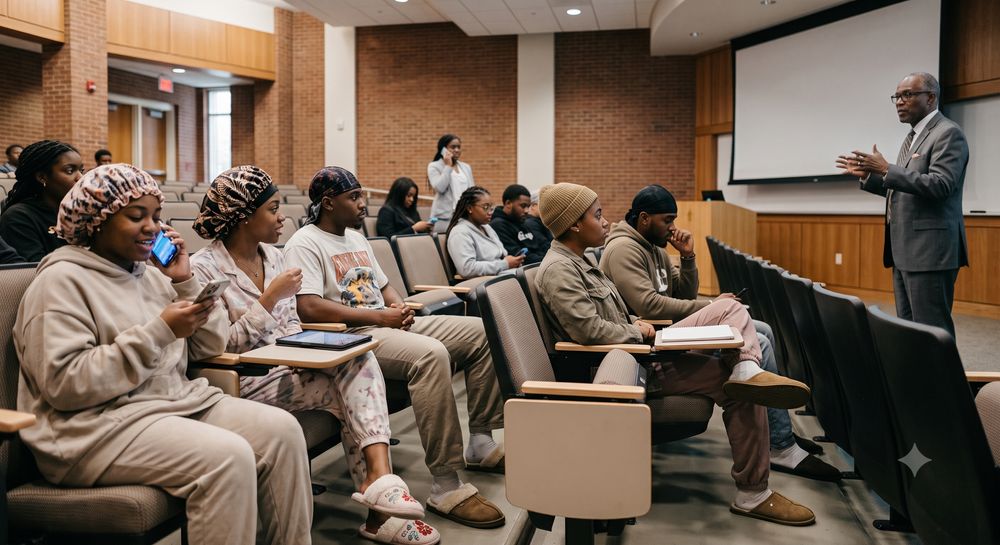
A recent social media exchange with journalist Nikole Hannah-Jones about Tuskegee University's decision to prohibit bonnets, du-rags and other head coverings in classrooms and the cafeteria reminded me how quickly conversations about institutional authority become conversations about individual behavior. The larger question is not about bonnets. It is about institutional power (or put more rightly, <power>).
Tuskegee’s policy has reignited a debate, familiar to Historically Black Colleges and Universities, over professionalism, respectability politics and Black identity. Those conversations matter. But as an HBCU graduate who later attended, worked at and conducted research within predominantly white institutions, I found myself reading the controversy differently. My training in organizational communication and higher education taught me that institutions communicate through more than mission statements. They communicate through policy. The rules institutions choose to enforce reveal what they value. There is a difference between setting a standard and making a rule. That distinction has been largely absent from this debate.
Campus Cuts Hit Even Wealthy Institutions
Detentions of International Scholars at Airports Raise Alarm