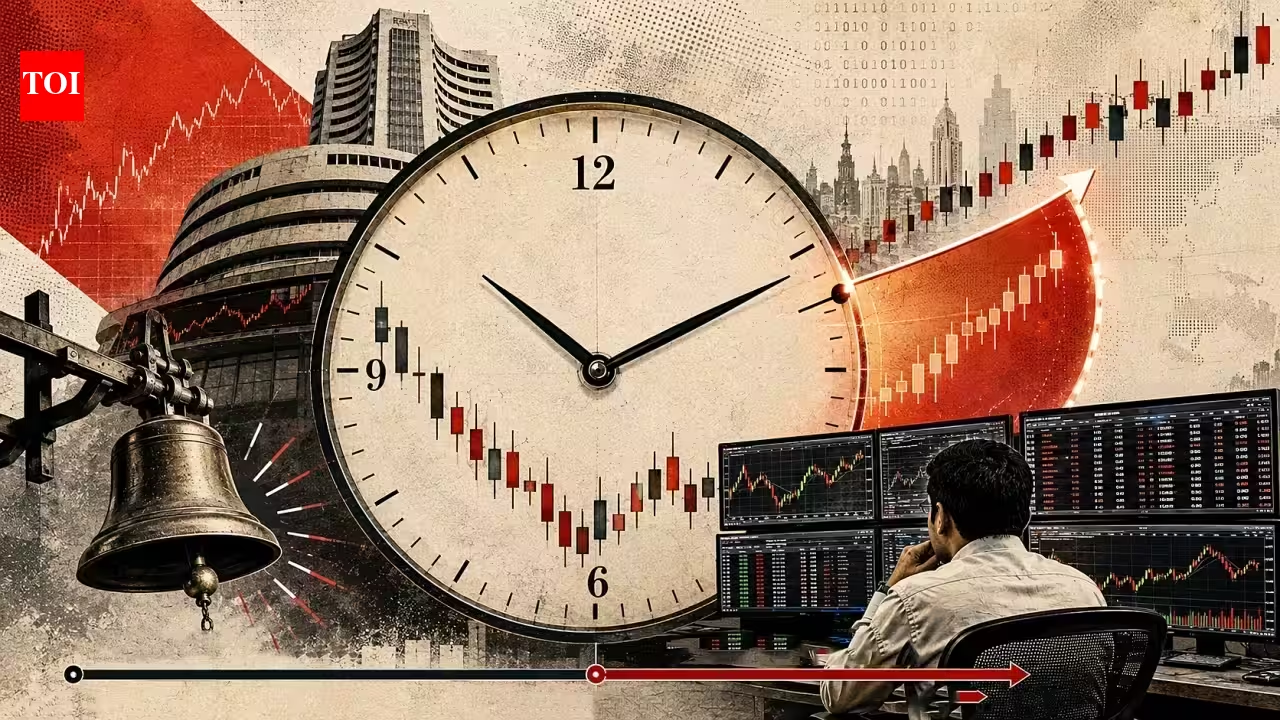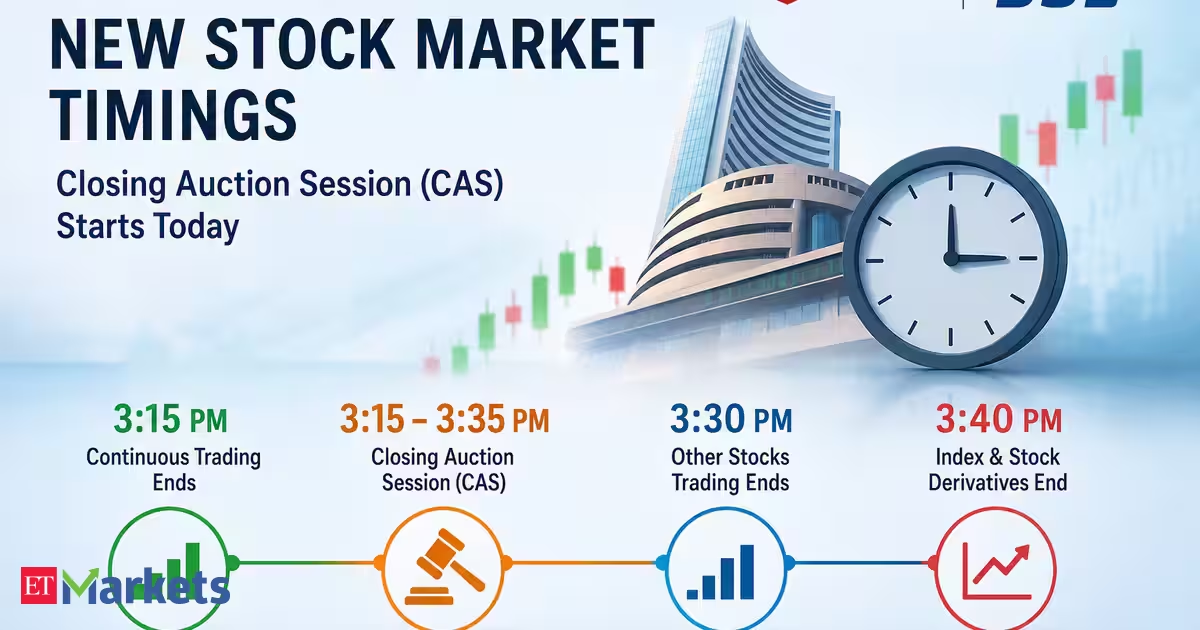
The newly introduced closing auction session (CAS) has triggered panic among investors this week, with traders saying strategies that worked well for years are now faltering. However, market regulator Sebi remains firm that the system is here to stay.Senior Sebi officials met with top brokerages, clarifying that the new system is just facing teething issues in its early days and that the regulator remains confident that it will improve as participation rises.The officials in meetings held on Tuesday and Wednesday urged brokerages to accelerate technology upgrades and boost order flow so the auction could operate as intended. However, traders continue to remain anxious."Strategies that worked consistently for years have been buried alive," said Aamodh Kuthethur, a retail algorithmic options trader for nearly a decade. "My trading system is broken overnight," he added. Several traders took to social media to express their concerns, saying they felt "helpless" and "hopeless"."The biggest problem under the CAS is that traders are unable to understand what the closing prices will be because there is a lot of randomness in the system," said Piyush Chaudhry, founder of Mumbai-based Wave Analytics.What is CAS?Stock exchanges introduced the new CAS system from August 3, changing the way closing prices are calculated for stocks included in the futures and options (F&O) segment. On the launch day, Nifty surged nearly 200 points in the final two minutes of trade as traders adjusted to the new closing auction mechanism for large-cap stocks.Under CAS, continuous trading in stocks that also have F&O contracts ends at 3:15 pm. However, this does not mean these stocks are closed for the day 15 minutes before the broader market shuts.From 3:15 pm onwards, these stocks move into the CAS, a 20-minute auction process that runs until 3:35 pm to determine their official closing prices. Meanwhile, stocks that are not part of the F&O segment continue to trade as usual until 3:30 pm.During the 20-minute auction window, buy and sell orders for eligible stocks are collected and matched at a single equilibrium price. This mechanism is aimed at improving price discovery and reducing the impact of last-minute trades on closing prices.Also read | CAS Chaos: Dalal Street's biggest stock trading reform in years endures a rocky first weekInitial teething issues or flaws?While panic prevails on Dalal Street, analysts pointed out that these are initial teething issues that will gradually fade away. SEBI officials during their meetings with market players said that the new system is just facing teething issues in its early days and that the regulator remains confident it will improve as participation rises.Vinod Nair, Head of Research at Geojit Investments, said the gap between the 3:30 pm and 3:40 pm closing prices of Nifty stocks and the index, along with the divergence with the Sensex, suggested that the new system was not functioning as intended. "This has triggered forced square-offs of positions, particularly among retail investors, ahead of the 15 minute blind derivatives window closing session," he said.Nair said these appeared to be initial teething issues and that exchanges and the market regulator need to address the discrepancies. He added that the impact was currently limited to the F&O segment of trading stocks and main indices."Since it has only been a few days, it is difficult to make a judgement call on the new methodology as the market takes time to adapt," Reuters quoted Raj Deepak Singh, vice president of derivatives and quantitative research at ICICI Direct, as saying.Weak participation intensifies CAS volatilityMuch of the sharp volatility seen in the Indian stock market following the introduction of CAS may have been driven by weak participation as well. “Allowing some time for liquidity to develop before shifting to closing auction may have facilitated a smoother transition,” said Mayank Sachan, chief executive officer of Zenskar Research. The proprietary trading firm has reduced its expiry-day strategies tied to index options, he said.Also read | Distortions are inevitable: Nithin Kamath explains why new closing auction is causing wild moves in Indian stocksThe lack of participation has left liquidity thinner than expected, Goldman Sachs said in a note to clients. As a result, modest buy and sell orders were able to move the equilibrium price by much more than traders were used to seeing. The official closing price is used to settle stock and index derivatives, making those swings significant.(With inputs from agencies)(Disclaimer: Recommendations, suggestions, views and opinions given by the experts are their own. These do not represent the views of The Economic Times)
Old strategies buried alive: How CAS hit Dalal Street traders
The new closing auction session (CAS) has rattled Dalal Street, with traders saying long-standing strategies are no longer working. SEBI, however, remains confident the system will improve as participation rises. Weak liquidity and volatile closing prices have intensified concerns, forcing traders and brokerages to adapt to the new market mechanism.
TL;DRAI
CAS launched August 3, replacing continuous closing with a 20-minute auction for Indian F&O stocks, breaking traders' algorithms overnight. Thin liquidity created outsized swings and forced square-offs—a regulatory shift that outpaced market capacity for stable derivatives settlement.
744 words~3 min read