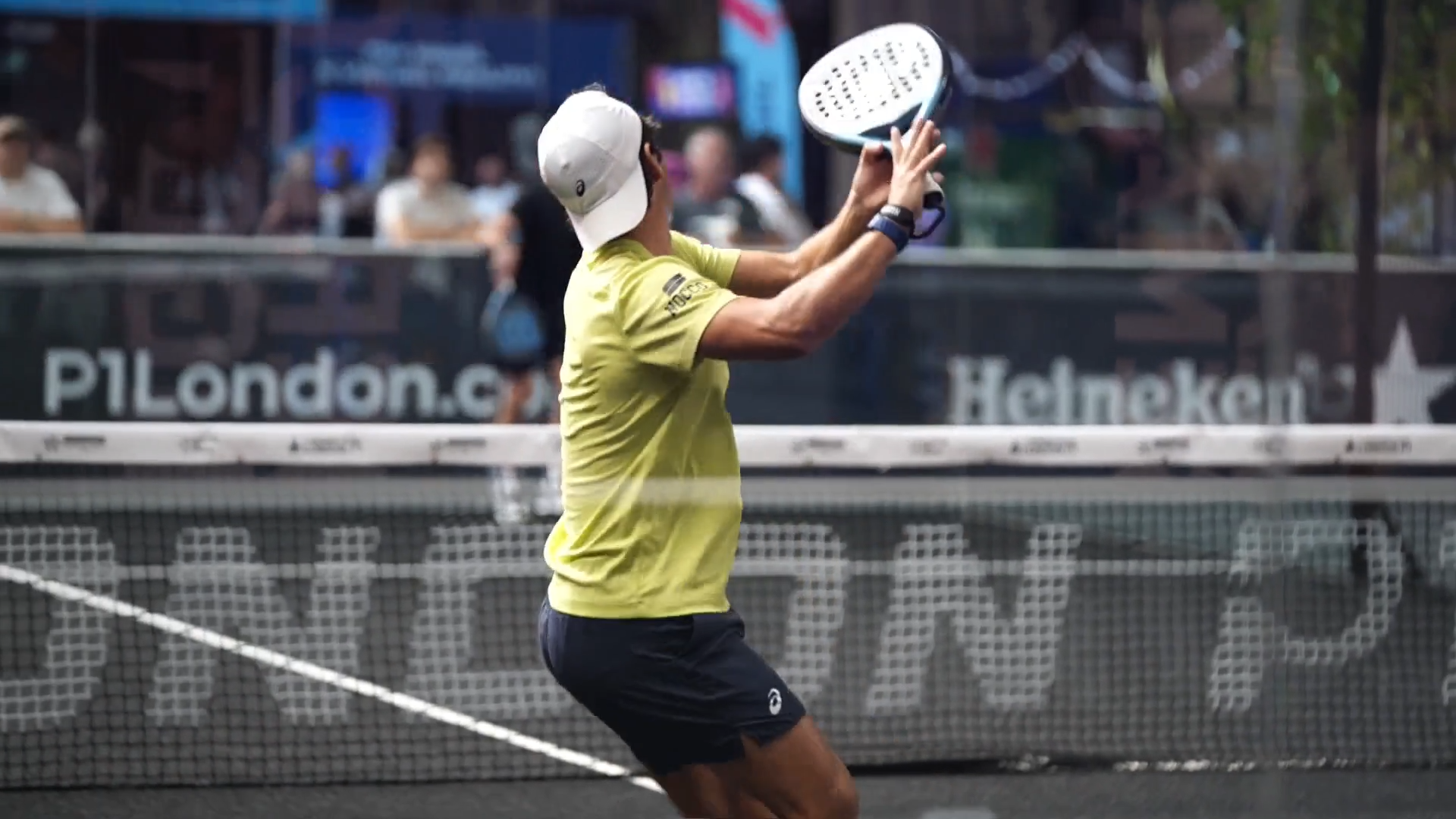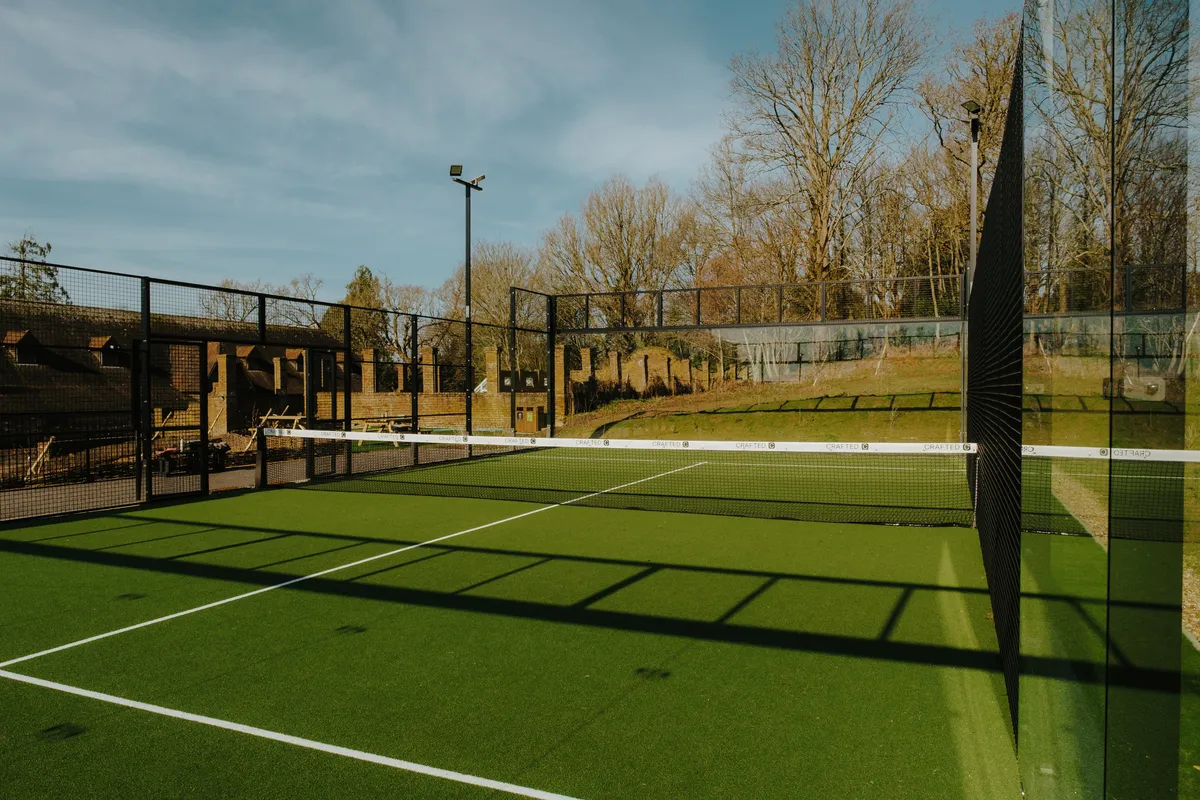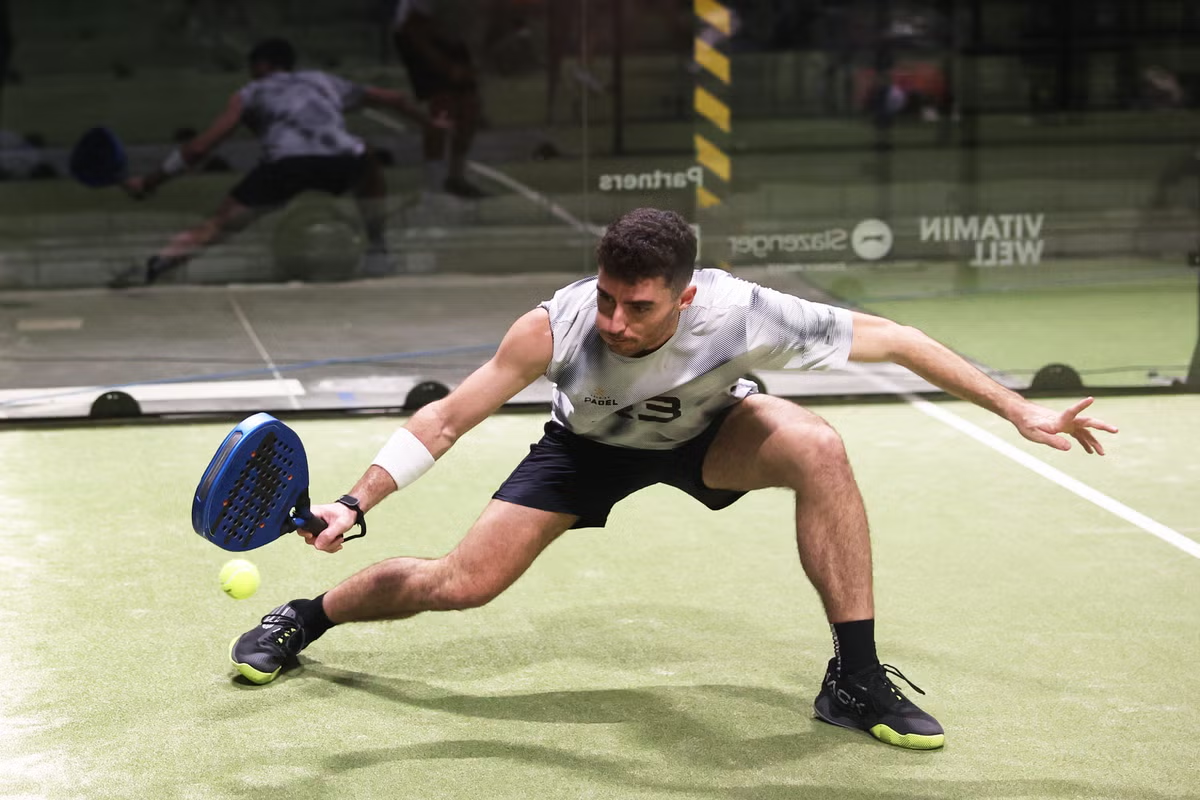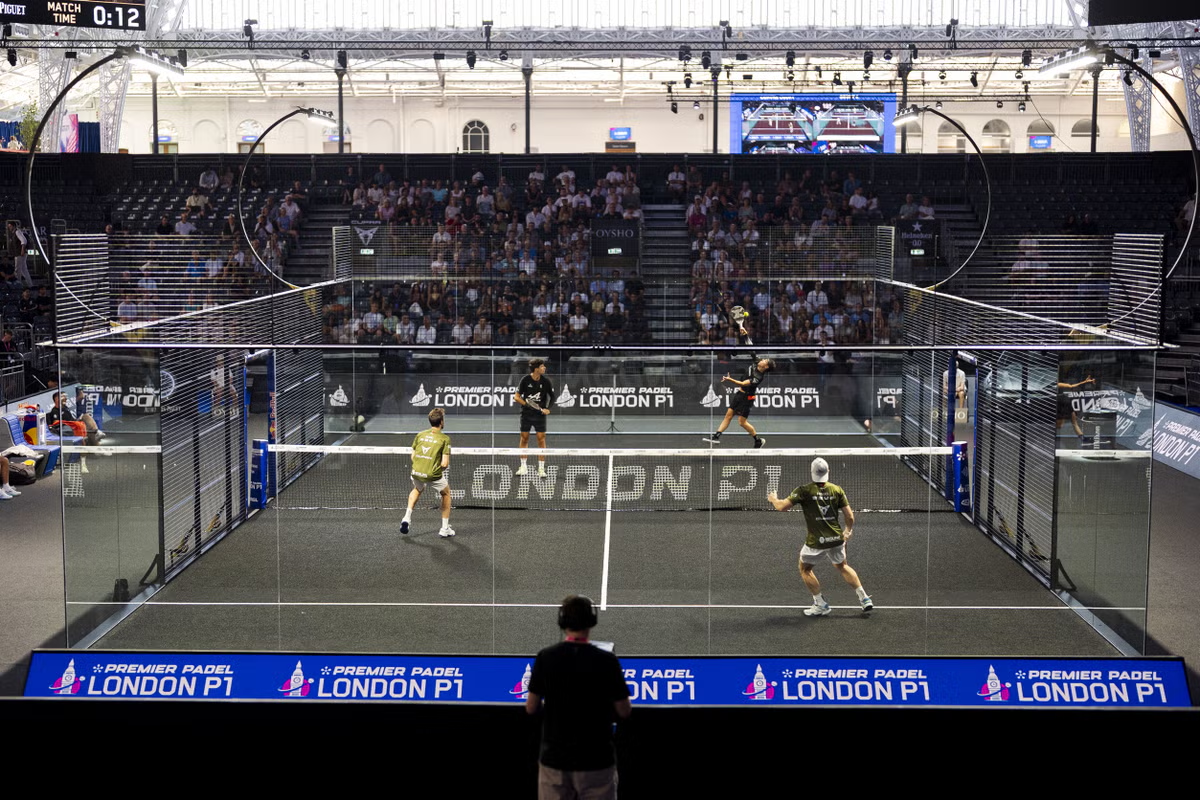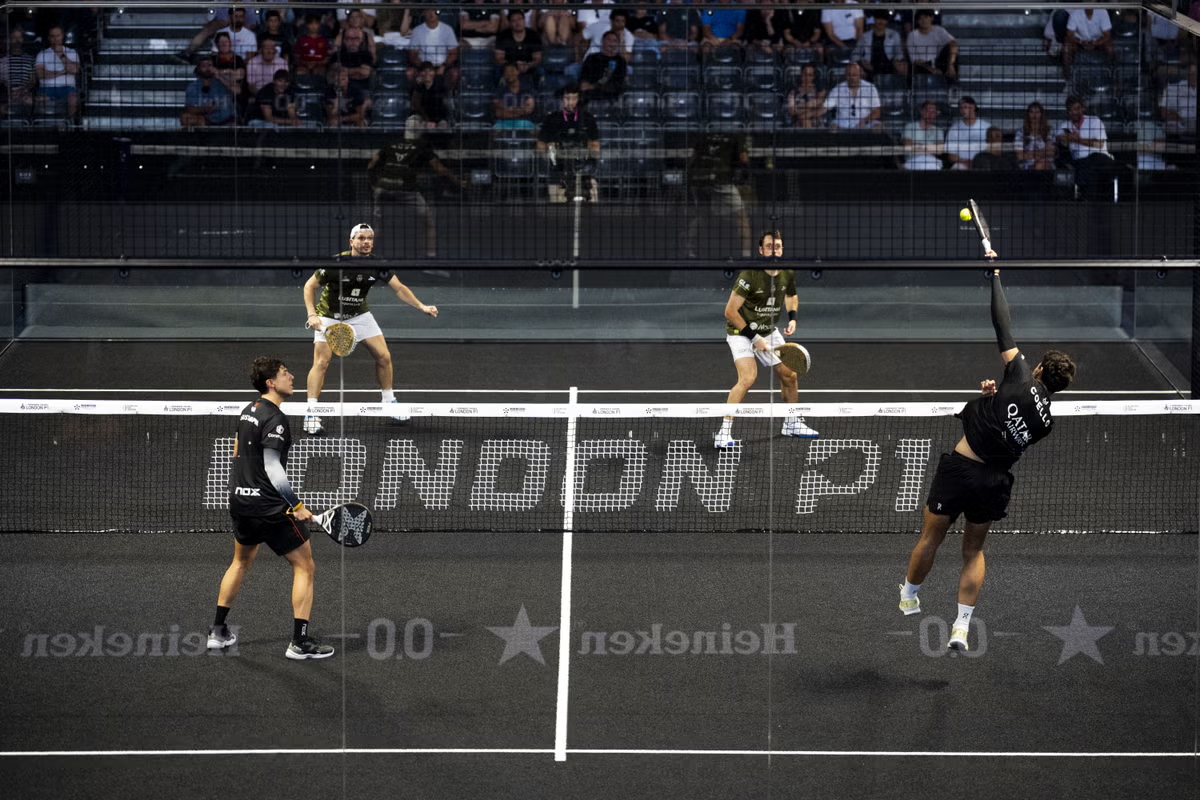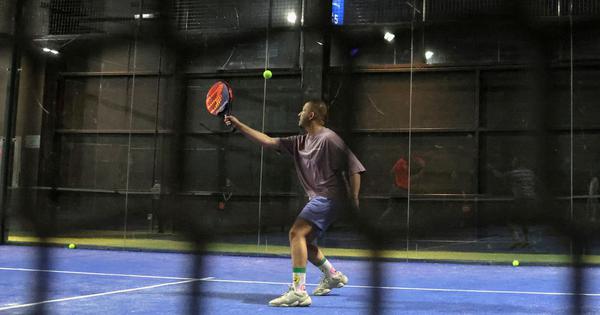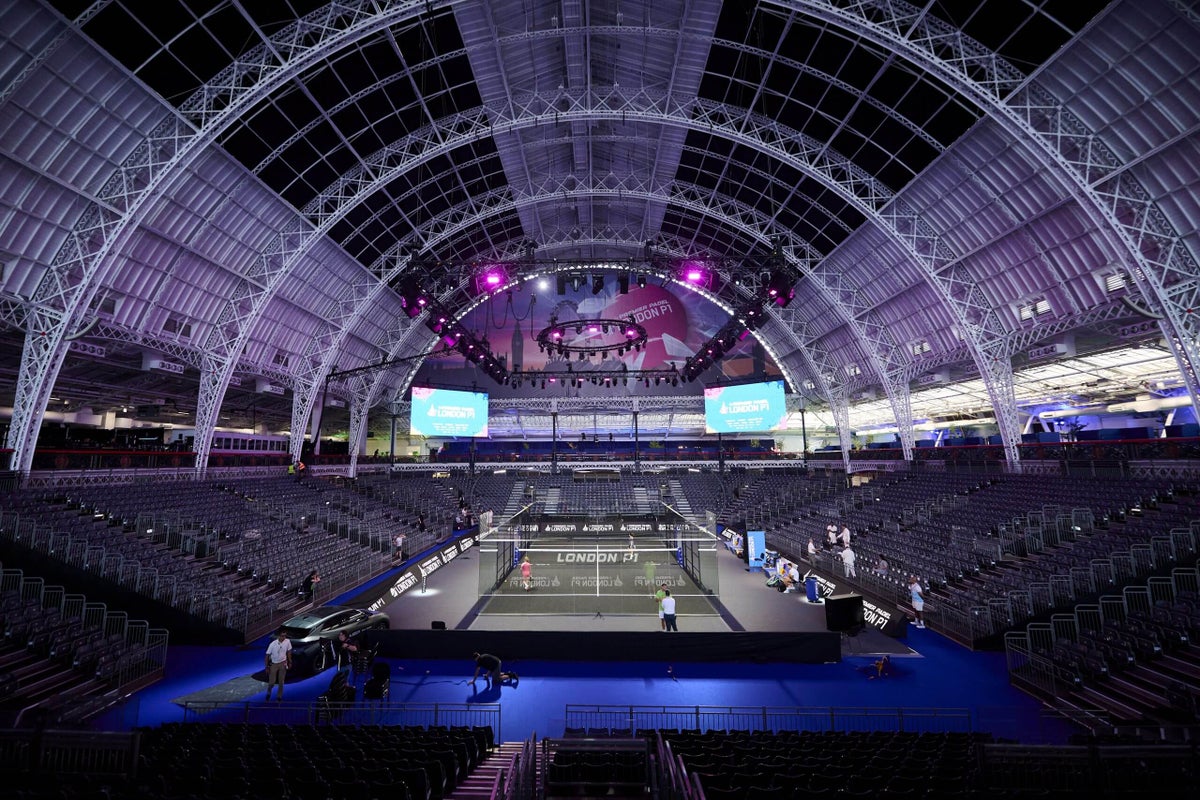
One scene from Premier Padel at Olympia in west London this week tells the story of the state of professional padel in the UK.The leading British women’s pairing, Aimee Gibson and Catherine Rose — on the fringes of the top 100 and given wildcards to enter their first event at the top level of the professional circuit — have taken the highly experienced pairing of France’s Alix Collombon and Russia’s Ksenia Sharifova to a second-set tiebreak. Lose it, and they’re out. Win it, and they’re into a decisive third set, with both momentum and a home crowd on their side.It’s the biggest five minutes of their professional lives.In the stands, a small group of friends are desperately waving placards with the type of pun-tastic slogans you expect to see at a local 10k run, almost expecting a wave of appreciation in return. Gibson and Rose, completely locked in, simply don’t notice them. This isn’t fun and games. This is top-level professional sport.This prompts a couple of questions. First, at what point does an emerging, fast-growing sport break through to become an actual, established, mainstream sport? And second, can padel’s sharp rise in participation translate into success as a spectator sport?These two questions aren’t a regular concern in Britain, which has long been dominated by sports essentially invented by Britons from centuries gone by: football, rugby, cricket, tennis. But the growth of the distinctly Hispanic sport of padel has been completely unprecedented. The number of courts in Britain has risen from 68 in 2019 to over 1,800 today. In the same timeframe, the Lawn Tennis Association — which also oversees padel — estimates that the number of people who have played in the last year has gone from 15,000 to over a million. Spending your Saturday morning playing a game of padel has become almost a running joke, a meme, a cult.Gibson (right) and Rose are on the fringes of the top 100 (Premier Padel/Silvestre Szpylma)Doubles strategyFor the uninitiated, padel is essentially the premise of tennis combined with the walls of squash. First-timers accustomed to those sports adjust smoothly, although the former tend to play with too much follow-through, and the latter are a bit too wristy.That’s because power is not the default quality in padel. Serves are taken underarm. In most professional matches, there won’t be a single ace. Similarly, there is relatively little value in smashing the ball — unless you’re capable of smashing it out of the opposite side of the court entirely — because it means the ball generally bounces up high, and allows your opponents an easy shot back over the net.Therefore, padel, always played as doubles, is more about spin, angles and patience. Good positioning is the most important quality, and decision-making is more valuable than technical brilliance. Generally, there are almost two battles within each point: first about getting position at the net, usually with a well-placed lob to force your opponents back, giving yourself time to advance. From there it’s about maintaining pressure and finishing the point, which usually takes longer than you expect. The most padel-specific shot is the bandeja, where a player responds to a lob with a slow, sliced overhead towards the glass, which allows them time to push up and maintain their net position.In many ways, the rise in participation is similar to that of pickleball in the United States. But as a sport, it’s almost the opposite. Pickleball is basically a simplified tennis and often ends up with players crowded at the net. Padel, while initially easy to pick up, becomes a complex running battle of angles, almost live-action trigonometry.Power playAre the angles becoming less relevant at the top level? As the sport has increasingly professionalised, top-level padel players have become physically stronger, and more capable of spectacular smashes off the back glass and out of the court; the equivalent of a home run.It’s debatable, though, whether this is a positive. There is a growing concern that elite men’s players are simply too capable of winning points in this manner, which completely changes the basic premise of padel. A deep lob was always regarded as a good shot. Nowadays, it might not be. This is a particular issue during outdoor matches in hot weather, when the ball flies through the air quicker, and accelerates off a hot glass pane. These days, rallies are generally settled within a few shots, whereas once they were a patient game of chess.“For me, it’s very important that ‘the game’ exists,” says Malaga-born Miguel Yanguas, eighth in the men’s rankings. “What I mean is: when we’re playing on slow courts, people see a better show. In the last few weeks (in a hot European summer) we’ve had very fast courts. The rallies are very short. For me, that’s not padel. I respect that the game is changing, the players are better smashers, but in my opinion, the best padel is one that has more shots to win a game.“If you only have smashes…it’s like in tennis, only having a great serve. My game has changed a lot over the years. Before I was also aggressive, but I was defensively much better than now. When you add something, you forget something.”It’s not unusual to hear padel obsessives say they prefer watching the women’s game — which, to use an analogy from a more traditionally popular sport in London, is Test cricket rather than T20. There are some powerful smashers — and the women’s game is becoming more attack-minded too — but there’s more risk of a smash falling short and becoming an opportunity for the opposition to counter-attack.As such, the women’s game is more about a disguised change of direction, a clever slice into the corner of the glass or an angled shot into the fence, which absorbs the speed of the incoming ball and causes it to drop short. More than anything else, it’s more similar to the sport recreational players have fallen in love with, and should merit equal billing with the men’s game.“Women play very tactically, the ball is much slower, so you can see how they play,” says Yanguas. “If you see (leading men’s players Agustin) Tapia or (Ale) Galan smashing from everywhere, it’s so fast that people don’t identify themselves with the men’s game. It’s more spectacular, but if you watch women, it can influence your own game. They’re very solid on the tactics, because the power is not the same, so they need other weapons.”
Padel is booming in the UK, but will its recreational players become professional fans?
Over a million people played in the UK this past year. Getting them to pay to watch the pros is the next challenge
3,147 words~14 min read