Story audio is generated using AI
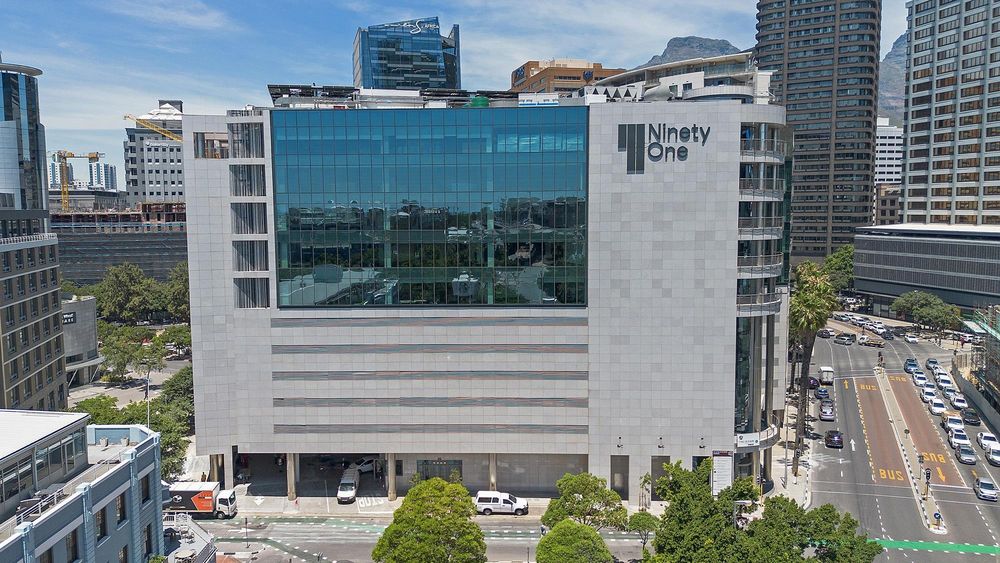
Ninety One, South Africa’s largest asset manager, expects the country’s economic growth to disappoint for the rest of the year but not impede the growth in the corporate market, which has decoupled from economic growth.Stephen Naidoo, portfolio manager at Ninety One, said while GDP growth is soft and inflation risk is building, South African corporate credit has rarely looked this resilient. “Institutional investors are hunting for yield. Banks are competing hard for quality corporate paper. And supply is shrinking fast, with net issuance sharply negative on the back of weaker growth and a wave of redemptions. Eskom’s ES26 bonds are a good example: R38bn of that debt simply wasn’t refinanced in the public market,” Naidoo said.“Add in the sovereign upgrades from Moody’s and Fitch, and improved credit quality at the top of the ratings band, and what you’re really looking at is technical strength sitting on top of a soft macro backdrop.“Given that gap between weak fundamentals and strong technicals, we think quality has to come first. In our portfolios, we’ve moved even further up the quality spectrum, backing companies with genuine pricing power, resilient cash generation, strong ratings, or explicit support behind them.”Data from the South African Reserve Bank’s most recent quarterly bulletin shows corporate credit grew from 5.1% in February 2025 to 13.2% in February 2026.The financial sector accounted for a higher proportion of the increased corporate borrowing, growing by 23% in the 12 months while credit to nonfinancial corporates increased 4.4% over the same period.The central bank describes loans to nonfinancial corporates as typically associated with direct investment into the productive economy. These include loans to sectors such as construction, mining and agriculture, with the funds supporting working capital. Most of this type of borrowing happens during the construction and commissioning phases of projects.Naidoo said the company manages exposure through three levers: quality, term to maturity, and liquidity. “Quality comes first, unambiguously. Term and liquidity only start to make sense once you’re already comfortable with the credit itself. Getting that sequencing right is the whole game,” Naidoo said.“On sectors, we like banks. We’ve seen ratings upgrades across the sector, including Fitch moving certain banks to AAA, alongside consistently oversubscribed subordinated debt, tier 2 and AT1 issuance. “Banks have also been building out their FLAC buffers, a legislated requirement under South Africa’s bank resolution framework that gives the Reserve Bank extra capital to absorb losses if a bank runs into serious trouble without needing a taxpayer bailout. Systemically important banks are phasing these buffers in through to 2030.”Ninety One, whose assets under management are approaching the R4-trillion mark, has not applied a blanket rule around government guarantees.“Fiscal pressure shows up clearly in weaker standalone SOE financials, something we’ve seen play out in several municipalities recently. That has pushed our book naturally towards more government-guaranteed exposure. We’re constantly asking whether we’re being paid enough for standalone risk and increasingly the answer is no. We remain constructive on the higher-quality entities, given the critical role they play in the economy and the services they provide to South Africans,” Naidoo said. “Pulled together, our positioning favours quality across the board: larger positions in high-conviction, high-quality names and less appetite to chase yield with smaller, riskier ones. We’re constructive on banks, insurers, government-guaranteed SOEs and real estate.”Business Day