Story audio is generated using AI
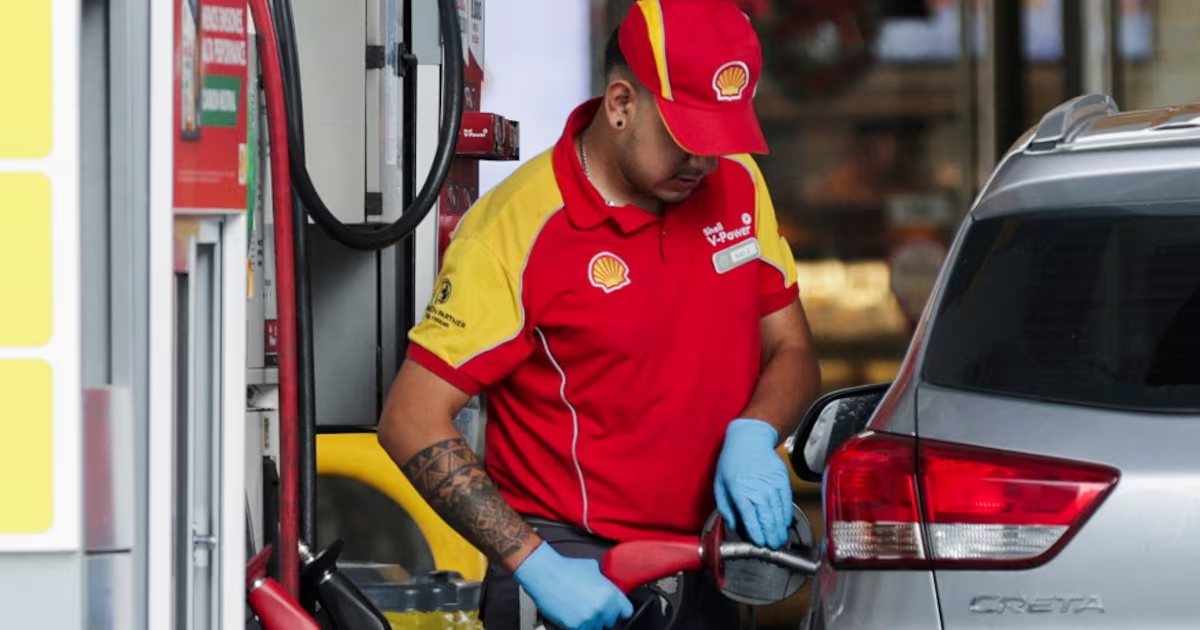
Conditions in South Africa’s private sector improved marginally in July, supported by easing inflationary pressures and a return to output growth after two months of contraction, S&P Global said on Wednesday.The recovery, however, remains fragile, constrained by weak demand and persistent supply chain disruptions, the survey of purchasing managers representing about 400 private sector companies shows.The S&P Global purchasing managers’ index (PMI) — a weighted average of new orders, output, employment, suppliers’ delivery times and stocks of purchases — was 50.3 in July compared with June. Readings above 50 signal an improvement in business conditions from the previous month, while those below 50 show a deterioration.The latest reading pointed to a marginal improvement in the health of the private sector at the start of the second half of 2026, S&P Global said. However, while the index was supported by a fresh uplift in output, softer employment growth and renewed stock drawdowns brought it slightly lower.Business activity increased for the first time in three months in July, with companies citing moderating cost pressures and efficiency improvements, though weak demand remained a drag.“South African businesses enjoyed more breathing room in July, following the cost squeeze over the second quarter, as a drop in fuel prices helped to lower the rate of input price inflation and reduce second-round wage effects,” S&P Global Market Intelligence principal economist David Owen said.“This supported a modest revival in business activity, though sales continued to be hampered by client caution and a difficult trading environment.”After a series of steep fuel prices since April, July brought relief for households and businesses, with the retail price of unleaded 93 petrol dropping R2.01 a litre and that for 95 grade decreasing R1.96, while the wholesale price of diesel fell as much as R3.59.But in August diesel will cost up to R1.38 more after the latest monthly price adjustments announced by the department of mineral & petroleum resources on Monday. South Africa is a net importer of oil and petroleum products and sets prices based on global prices and the rand exchange rate.In the S&P July survey, firms registered a contraction in new orders, marking the third consecutive month of decreasing sales, but export demand provided a modest silver lining, rising for the second consecutive month.Supply chain pressures persisted, with vendor delivery times lengthening for the seventh consecutive month. Import shipments faced continued delays from disruptions linked to the Middle East conflict, compounded by slower processing at domestic ports. Slowdown in hiring Due to shrinking demand and challenging supply conditions, South African companies cut their purchasing activity for the second time in three months, and there was also a slowdown in hiring activity, with employment growth decelerating to a six-month low. Overall input price inflation slowed to its weakest level in four months and below its long-run trend, as purchase price increases moderated and wage growth decelerated from historically strong levels. While firms continued to report higher costs linked to import prices and transport fees, relief on fuel prices helped to calm the price pressures.Oil and commodity markets remain volatile, suggesting the risk of a renewed spike in price pressures is not negligible, Owen said. Overall, economic conditions are still fragile, with firms facing structural headwinds including supply chain disruptions and power constraints. On Monday, Absa’s PMI, which focuses on manufacturers, showed factory activity was at its lowest in seven months in July, with confidence still subdued and export demand weak, with continued inventory drawdowns suggesting the sector remains cautious about the sustainability of a recovery in domestic demand and easing cost pressures.