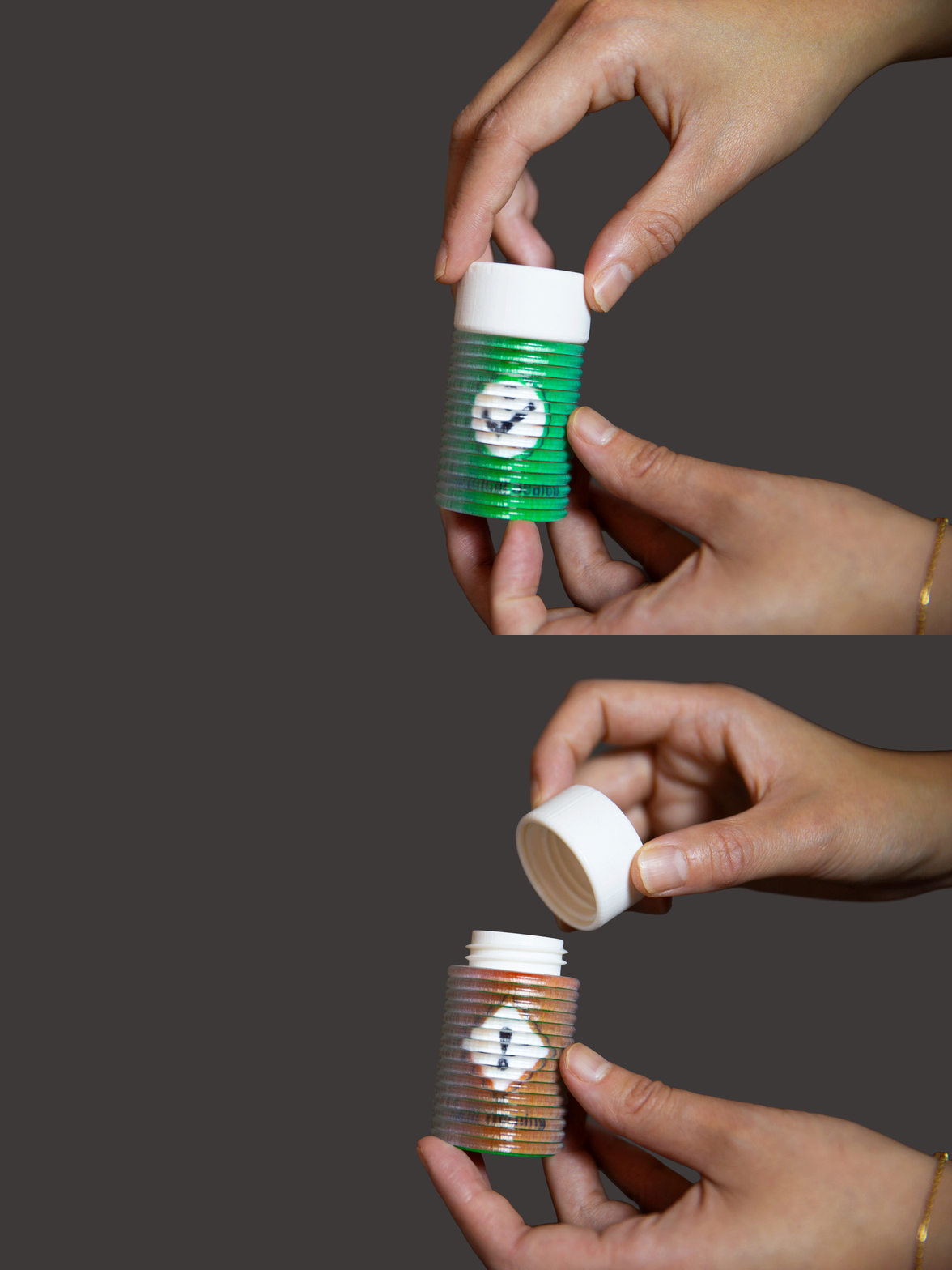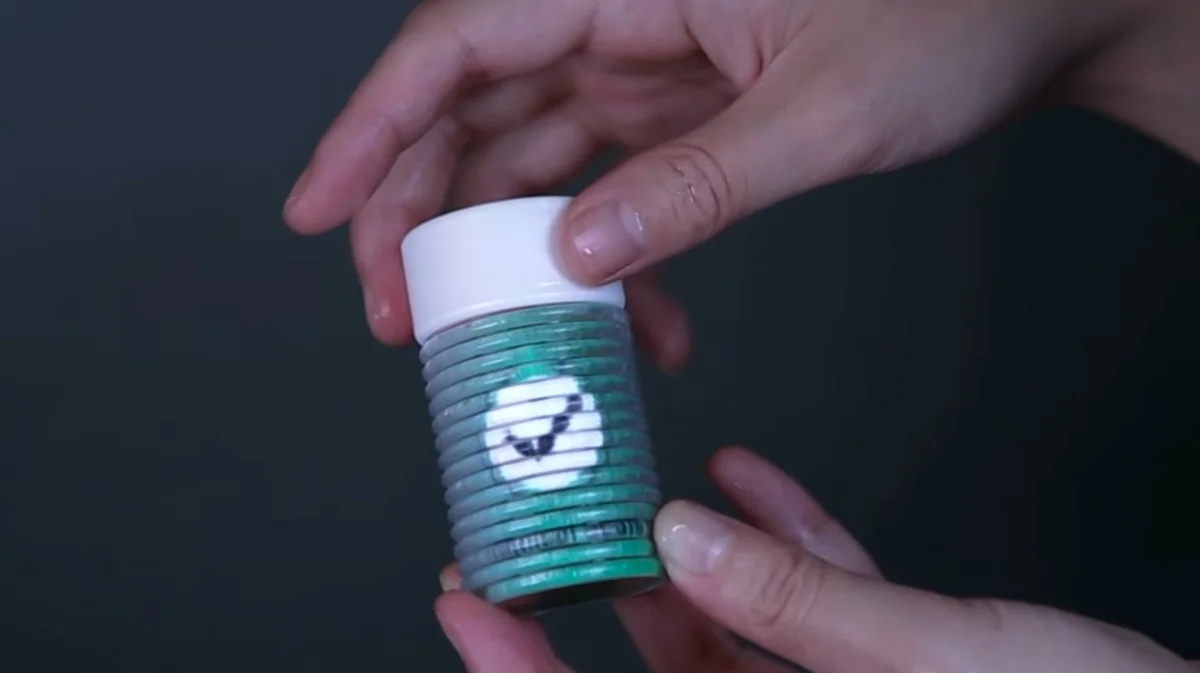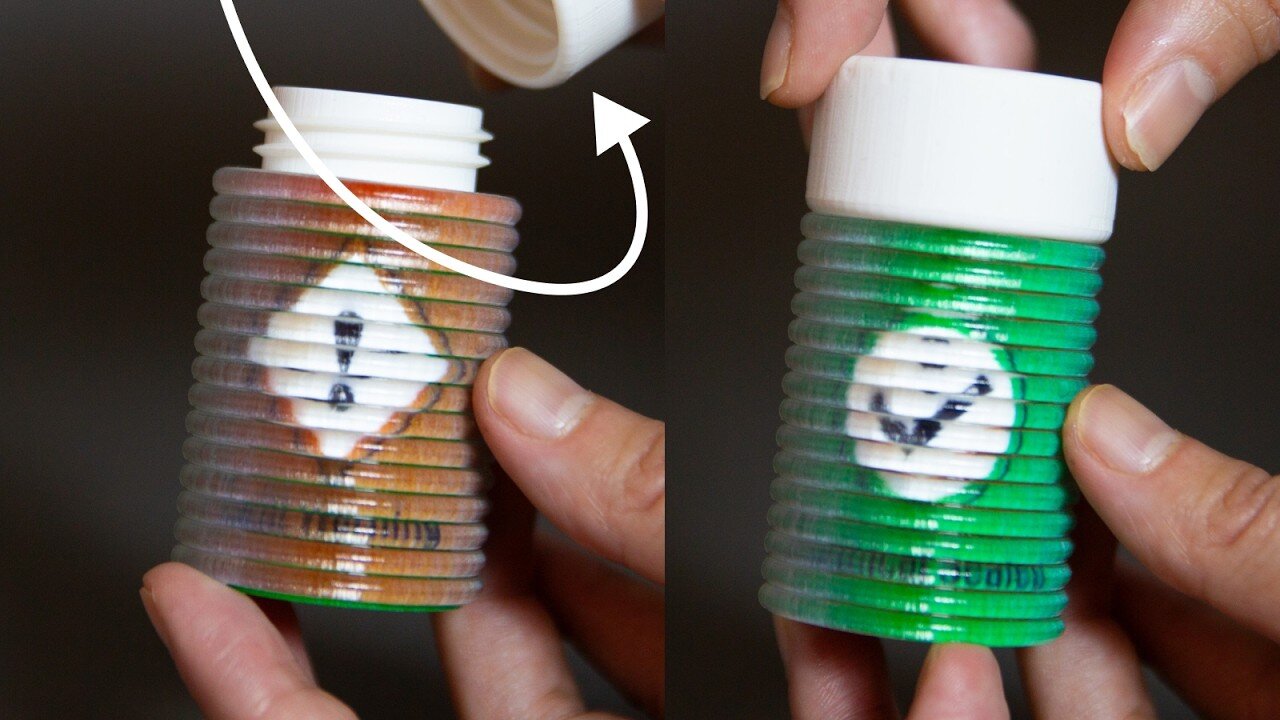
Imagine a bottle of hazardous chemicals sitting on a laboratory shelf that changes its appearance to alert scientists that its lid is not properly secured, potentially preventing a dangerous spill.
A new 3D printing system created by MIT researchers enables users to produce interactive objects like this chemical bottle that change their appearance when they are pressed, slid or turned, without the use of any internal electronics.
Their system simplifies the process of designing and fabricating 3D objects with mechanically switchable surface appearances, enabling individuals without technical expertise to quickly generate dynamic everyday objects.
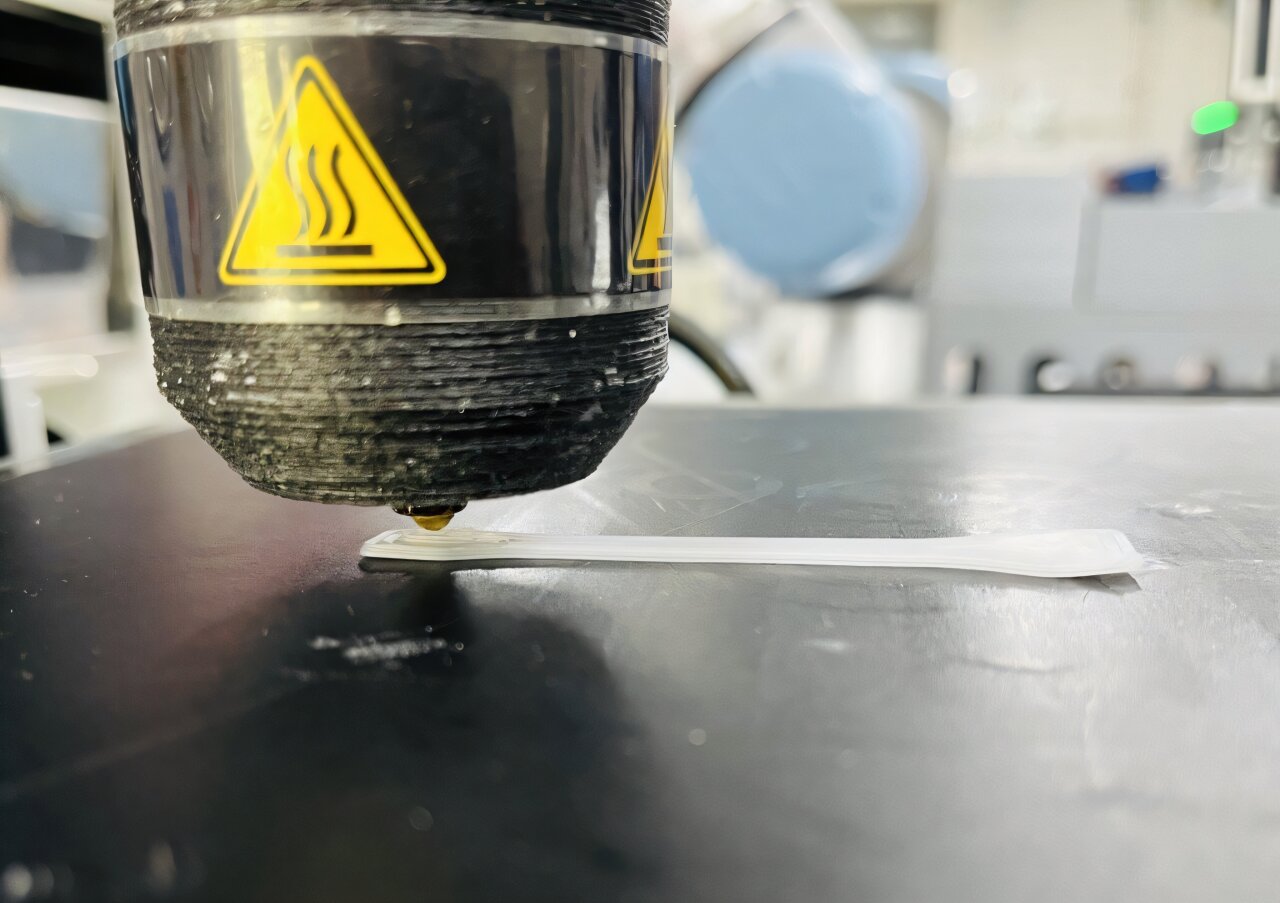
The design and fabrication system combines specially arranged optical layers with built-in mechanical parts so a single object can display different images or patterns. The resulting objects change appearance based on user interactions like screwing on a lid or flipping a switch, and they can be manufactured in one pass on a multimaterial 3D printer.
The system can be used to fabricate a range of interactive objects that don't require fragile electronic circuits, such as adaptable warning signs that could withstand foul weather or dynamic packaging that alerts users if fasteners came loose during shipping.