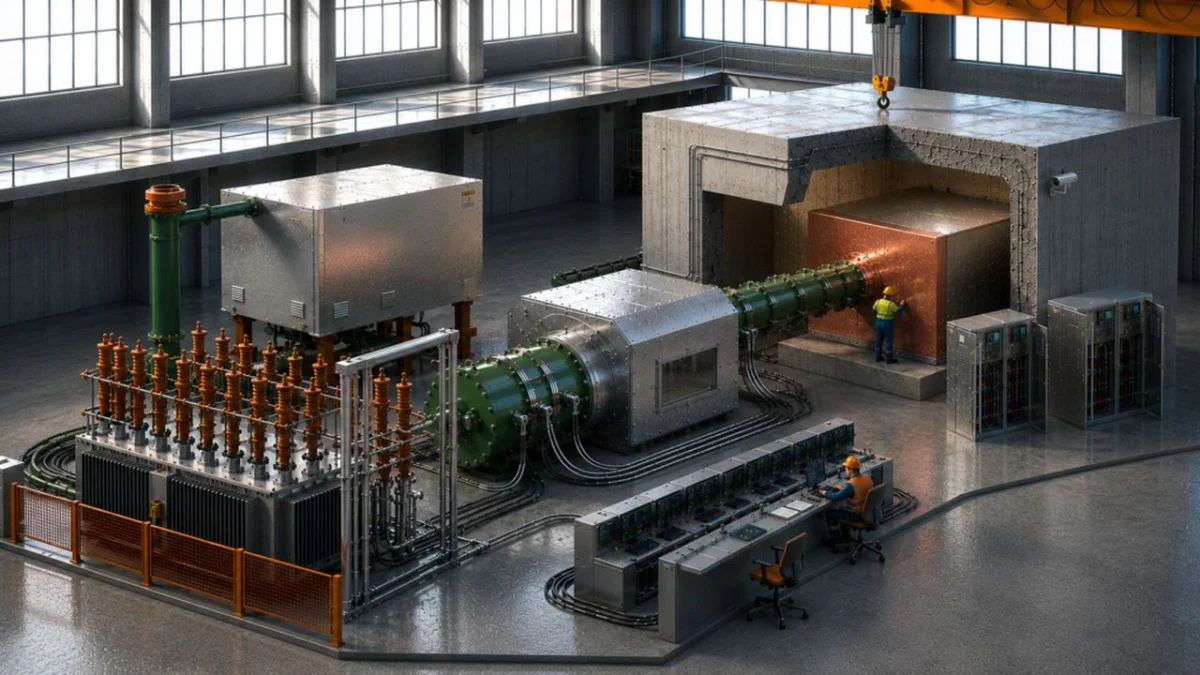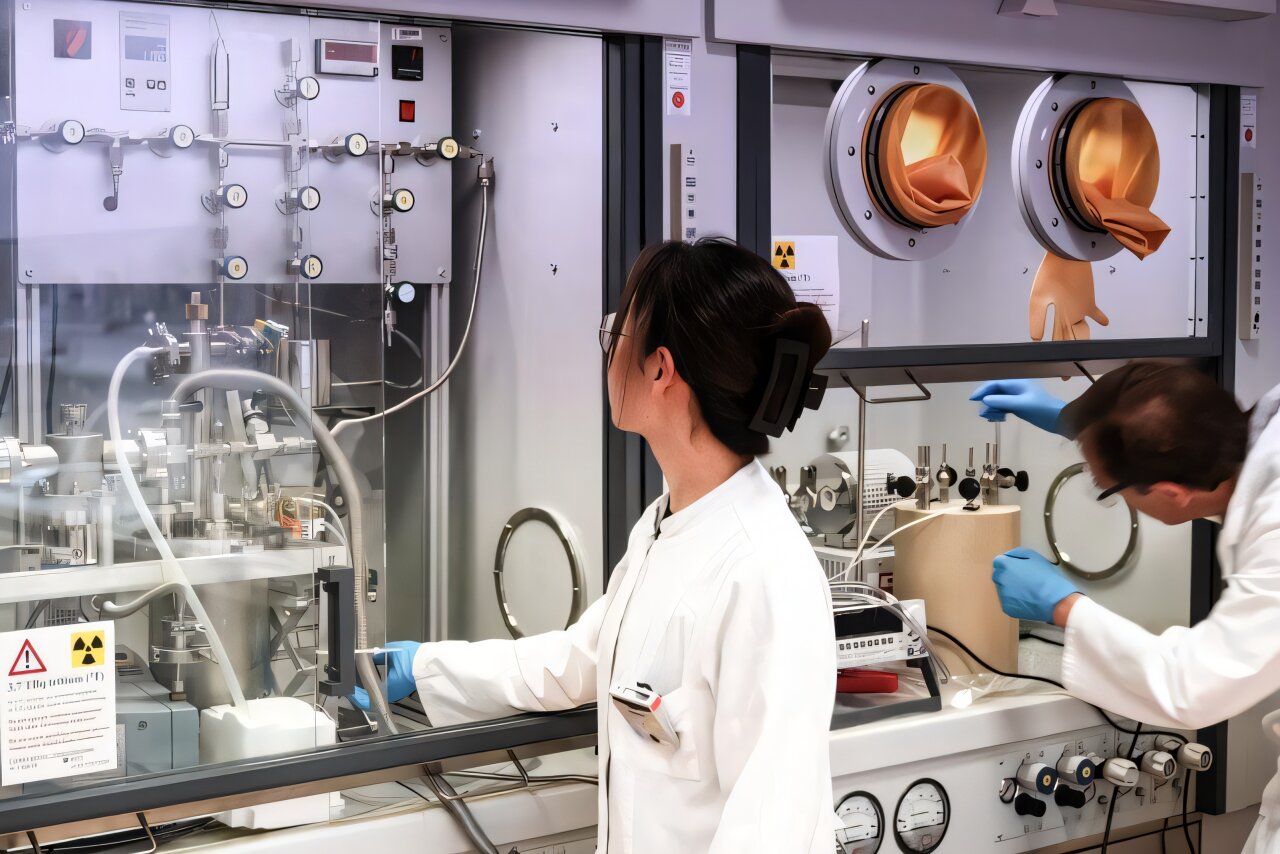
Experiments involving radioactive materials can be conducted in the radiochemical laboratory of the “Reactive Transport” department at the Research Site Leipzig. Pictured here is a setup for experiments with the hydrogen isotope tritium. Credit: Cornelius Fischer
Fusion power plants of the future will not only require extremely hot plasmas and strong magnetic fields but also a fuel cycle in which the hydrogen isotopes deuterium and tritium can be recovered, separated and reused. Together with partners, a team from HZDR has now demonstrated a highly efficient method for separating hydrogen isotopes using a silver-containing zeolite.
The experiments with radioactive tritium were conducted in the radiochemical laboratory at HZDR's Research Site Leipzig. The results represent an important advance in isotope separation and lay the foundation for the efficient recovery and processing of tritium in future fusion fuel cycles.
The paper is published in the journal Nature Communications.
In fusion reactors, deuterium and tritium are fused to release large amounts of energy. But the fuel is not completely consumed. A significant fraction remains, together with ordinary hydrogen, also known as protium, which can be the product of side reactions with reactor materials or released by outgassing. The result is a mixture of the three hydrogen isotopes that must be separated so that the fuel can be reused in the correct composition.