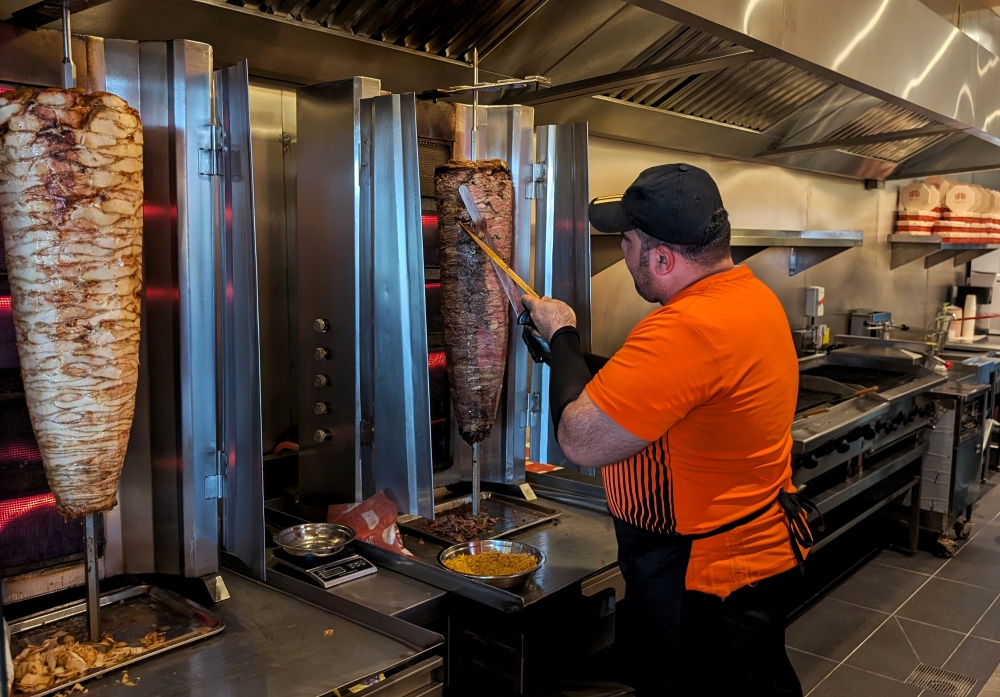
SINGAPORE: Three weeks into his hawker apprenticeship, Shaly Farid put down his knife and walked out of Bedok Food Centre.He had been told to fry 150kg of chicken that day. Another staff member at Nur Indah Kitchen was absent, while its stream of customers was not letting up.In the chaos of cooking and serving, his chronic anxiety problem — heightened by his past incarceration in a single-inmate cell — got to him.“I came here to train, Hajjah,” he told his mentor, 66-year-old hawker Roziah Adon. “I didn’t come here to work.”
Then he left, and Roziah stood stunned. “This is the first trainee I’ve had … that’s got this problem,” said the hawker, who has mentored more than 10 apprentices over the years.
Roziah was shocked by Shaly’s sudden exit.
Shaly eventually returned to training, but the challenges of learning the trade and reintegration into society remained. He was an ex-offender who needed to hold down a job, while Roziah was a veteran hawker who had no successor.Could she entrust a stranger with recipes and techniques honed over decades, with no guarantee he will take the craft forwards? Would he even appreciate learning the secret of her sambal, which she had never shared with anyone before?They are one of three pairs in The Hawker Apprentice, a series that looks at what it takes to be a hawker as well as to rebuild a life after prison, with more than just moments of anxiety to navigate.“EX-CONVICT, HE’S ALSO A HUMAN”Shaly was 17 the first time he was incarcerated. Now 50, he has spent about half his life in prison. His convictions included rioting, causing grievous hurt with a dangerous weapon and drug consumption.WATCH PART 1: “I’ve never done anything legitimate” — Ex-convicts face the wok (45:00)