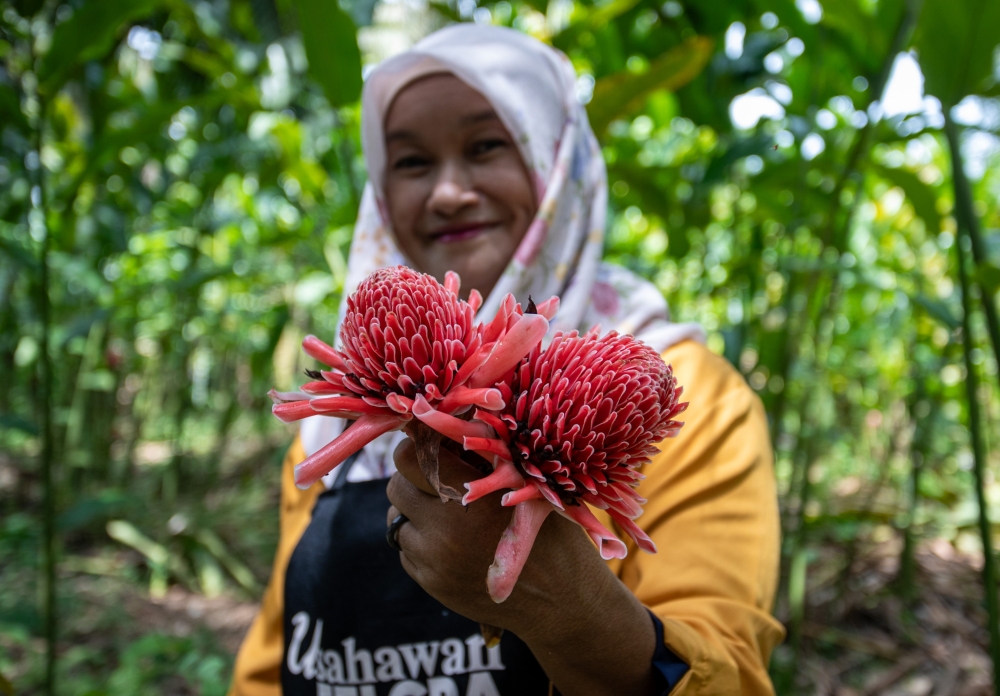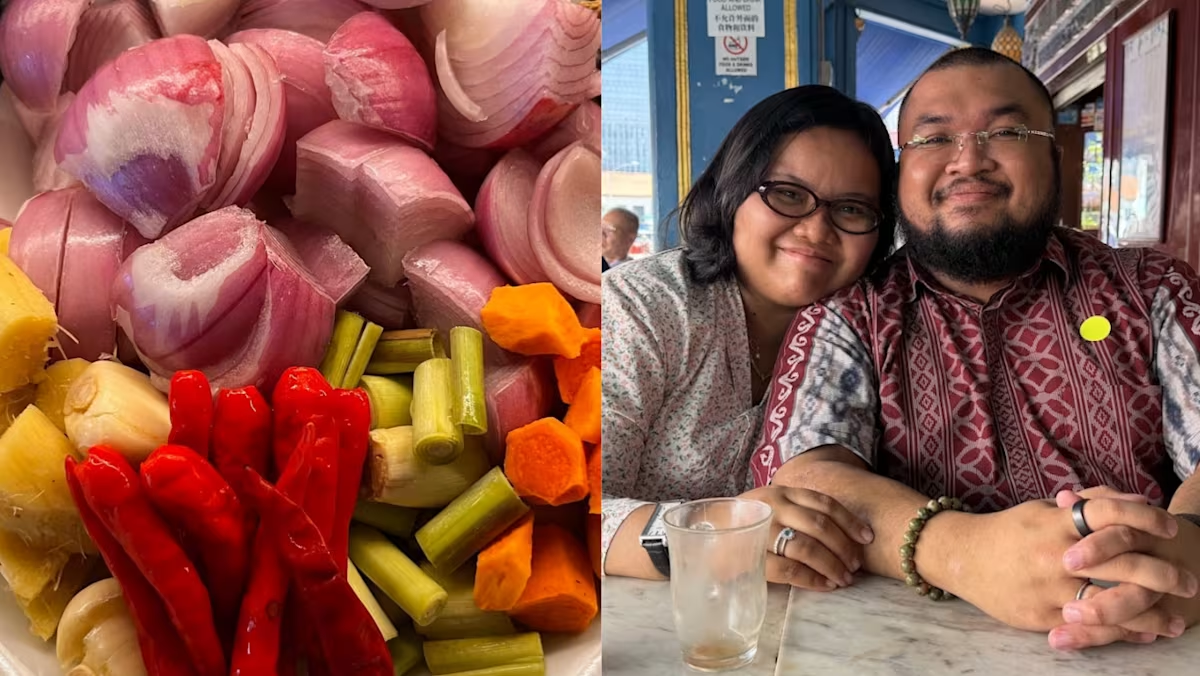
At Sendok Rakyat’s nasi ulam workshop, participants gather around a mix of spices and herbs, often including kemangi (sliced lemon basil), Thai basil, mint, coriander, kaffir lime leaf, daun kaduk (wild betel leaf) and bunga kantan (torch ginger flower). They chop ingredients such as cucumbers and onions, mix the herbs and take in the bright assortment of colours and aromatic scents from the herb mix.But the workshop does not stop at making the traditional Southeast Asian herbal rice dish, which combines cooked rice with a medley of finely sliced fresh herbs and vegetables.Participants also learn the stories behind the ingredients and why they are used in the dish. As they chop and mix in small, intimate circles, they are encouraged to share their own experiences: What do these ingredients mean to them? Have they ever had the chance to touch or taste these herbs? Is the scent familiar? Have they tried cooking similar dishes at home? Or are these the kinds of dishes their mothers or grandmothers once prepared?These are the kinds of questions that the married couple behind Sendok Rakyat – Anugerah Murni Sabta, 28, and Aqid Aiman Azmi, 33 – weave into their programmes.Sendok Rakyat, which translates to “the people’s ladle”, is a platform that uses food as a way for people to understand their heritage and communities better. It runs food programmes at various community spaces including Wisma Geylang Serai, Chong Pang Market and Proud Spaces, and collaborates with organisations such as Singapore HeritageFest, the National Heritage Board and ArtsWok. While it has a particular focus on Malay food, these activities also explore how different food traditions have intertwined in Singapore over time, from laksa and mee soto to mee goreng and rojak."Food is a way into conversations about identity, belonging and what that means in Singapore today," Aqid said. “It's so important, emotional and meaningful – and we want to share that value with others, too."
Raised differently, united by food: The couple making Singapore food heritage part of everyday life
Anugerah Murni Sabta and Aqid Aiman Azmi run Sendok Rakyat through workshops, walks and gatherings. They encourage participants to experience food heritage through shared stories and everyday cooking.
1,731 words~8 min read