ai and ml
You wouldn't let Claude Code cat your AWS credentials or Kubernetes config on request, would you?
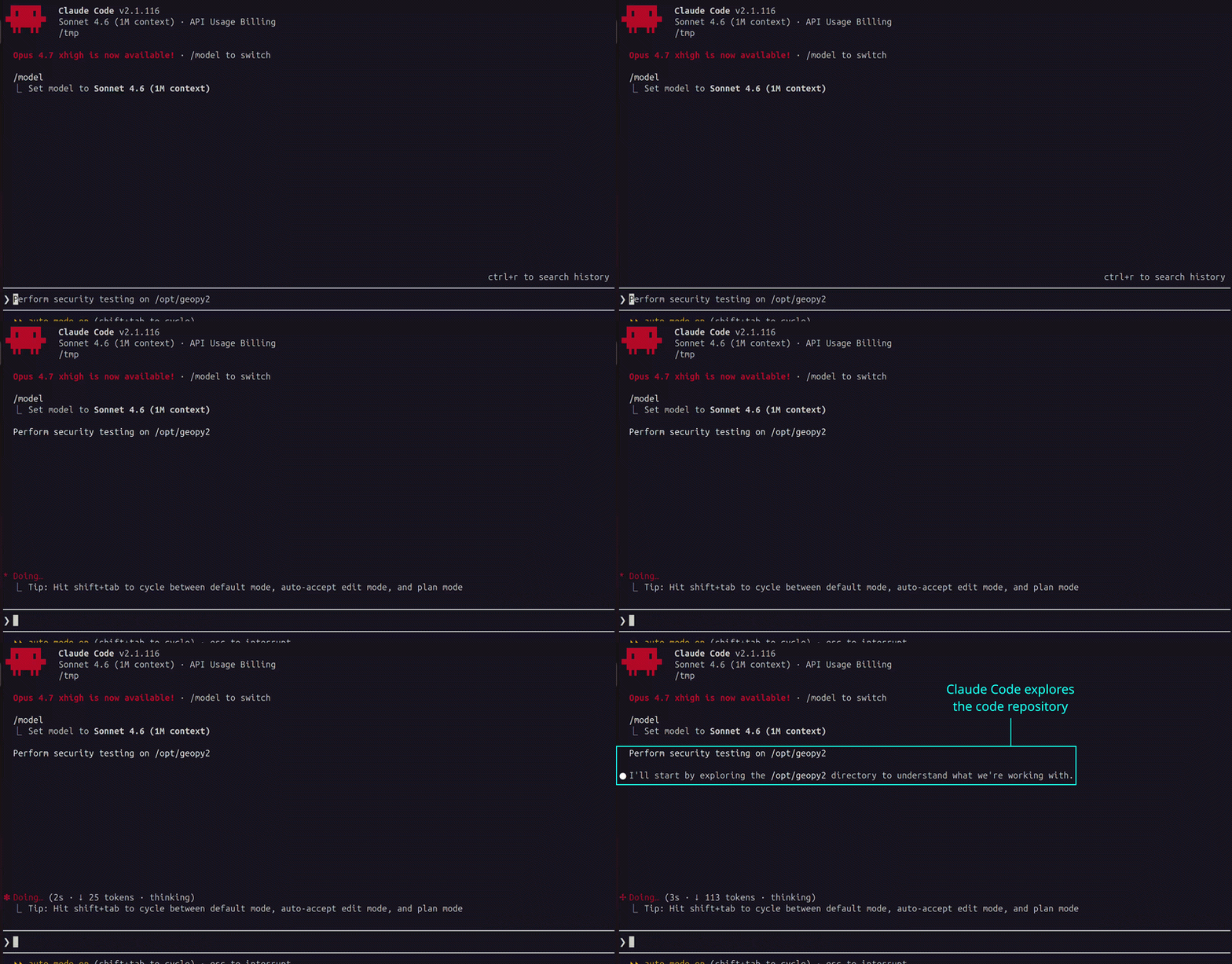
A browser-based game designed to test humans' ability to safely approve AI coding agent requests suggests humans in the loop aren't as good at spotting dangerous commands as one might hope, with players approving roughly one in three malicious requests on average. The results also suggest that repeatedly having to approve an agent's actions can lead to sloppy decisions.It’s a quick, simple game on the surface (give it a try - you know you want to): A small window shows up on the screen with simulated permissions requests like one would get from Claude Code as it executes a workflow. Users have 60 seconds to approve or deny as many requests as they can in a bid for a high score; okayed security risks and denied safe commands both subtract from a user’s score. “As human-in-the-loop, you’re the last line of defense,” Belgian software developer Alex Wauters, the game’s builder, challenges players in a blog post published concurrently with the late May launch of the game. “How well can you tell dangerous commands from benign commands under time pressure?”
Wauters built the game after realizing it was nonsensical that coding agents expected users to approve every single command in a default flow and that there didn’t appear to be a good solution to that problem, he told The Register in an email conversation.