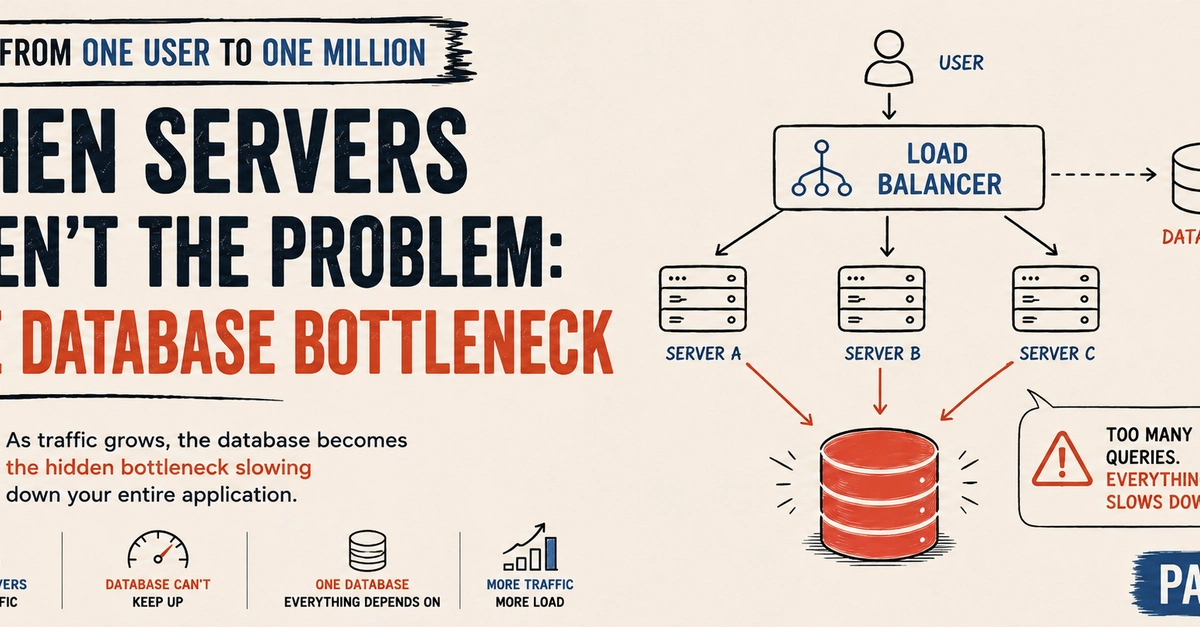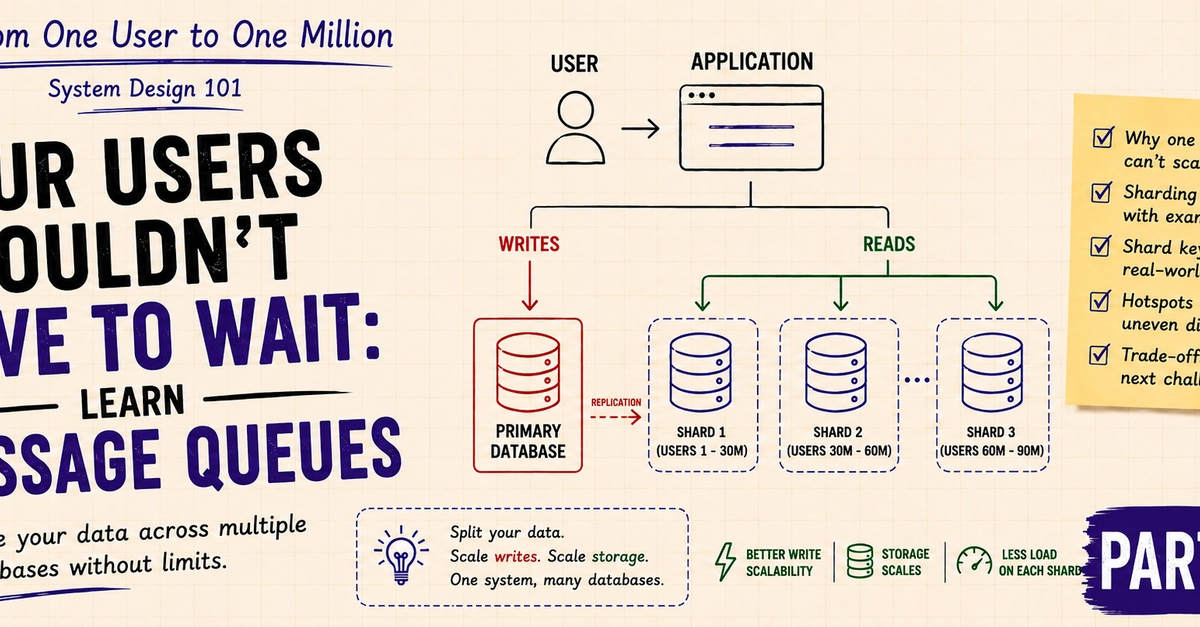
Manas Chaudhari, Tech Lead for WhatsApp's messaging infrastructure at Meta, building distributed systems that serve billions of users daily.gettyMost teams that struggle to scale are not fighting a technical problem. They built the wrong complexity at the wrong time.The pattern is familiar. Before a single line of code is written, someone proposes microservices, message queues and multi-region redundancy because "we need to scale." But the team has never actually faced a scaling problem. After years of building high-performance infrastructure, I've seen this repeatedly: Organizations engineer for the future they hope to have while taking on operational complexity they do not yet need. Distributed architecture is often the right answer. The question is whether you have the problem it was designed to solve.Premature complexity is a trap.Scalability is an outcome, not a goal you design for directly. It is what happens when a team can move fast enough to find their actual bottlenecks and fix them before they become crises. Systems that fail at scale rarely fail because they lacked complex architecture from the start. They fail because teams take on distributed complexity long before they need it, then spend so much time managing the architecture that they lose the ability to ship the features that would have created the growth they were planning for. Two engineers who own their system and can deploy confidently will out-iterate four engineers keeping a prematurely distributed architecture barely operational.Observe first and build second.Before adding any infrastructure layer, instrument what you already have. You cannot diagnose a system you cannot see. Most teams skip this step entirely and reach for the next service instead.New Relic's January 2026 report found that high-impact IT outages cost an average of $1.7 million per hour across industries. Organizations with full-stack observability cut that cost in half. But observability's real value is diagnostic, not reactive. It is what tells you where the problem actually lives before you spend months solving the wrong one.The real bottleneck is almost always a layer down from where teams first look. When performance degrades, attention goes to the application tier. But the problem tends to hide deeper: missing indexes on high-traffic columns, slow queries and exhausted connection pools. I have watched teams spend six months building a caching layer for a database problem they had not yet diagnosed. The cache helped at the margins, but the root query issues remained. They eventually rewrote the queries anyway.Profile before you provision. The most common performance problems I've encountered are rarely caused by insufficient infrastructure. They are usually the result of inefficient application behavior: N+1 query patterns, missing indexes, chatty inter-service calls and synchronous work that should run asynchronously. Define what healthy performance looks like before launch, and instrument the business logic—not just the infrastructure—to understand where bottlenecks actually emerge.Observability is what tells you when the problem itself has changed. When it has, you have the data to make the next architectural call on solid ground.When you do distribute, do it deliberately.Once observability confirms you have outgrown simpler solutions, going distributed may be the right call. But every network boundary and shared dependency introduces new trade-offs: latency, partial failure modes, distributed transaction challenges and additional operational complexity. These costs often appear manageable in isolation, with each architectural decision solving a legitimate problem. The challenge is that complexity compounds over time, creating systems that require more coordination, more expertise and more operational discipline to scale reliably.The Uptime Institute Annual Outage Analysis 2025 found that IT and network complexity accounts for 23% of all high-impact outages. The root cause was not hardware failures or software bugs, but systems too complex to operate under pressure.Build the simplest system that handles today's real problem, with seams that allow it to evolve. Stateless application logic is a good default. When any instance can serve any request without local session state or file dependencies, the system scales horizontally with no coordination overhead. The 10-times growth you are designing for may arrive differently than you expect, or not at all.The teams that I see succeeding today are the ones that picked boring solutions, kept them observable and went distributed only after they had mastered what they already had. Ultimately, distributed architecture is not the finish line. It is a tool for a specific problem, and the leaders who treat it that way deploy it on their own terms. Forbes Technology Council is an invitation-only community for world-class CIOs, CTOs and technology executives. Do I qualify?
Scalability: What Leaders Miss When Building Systems That Last
Scalability is what happens when a team can move fast enough to find their actual bottlenecks and fix them before they become crises.
740 words~3 min read