Originally published on lavkesh.com
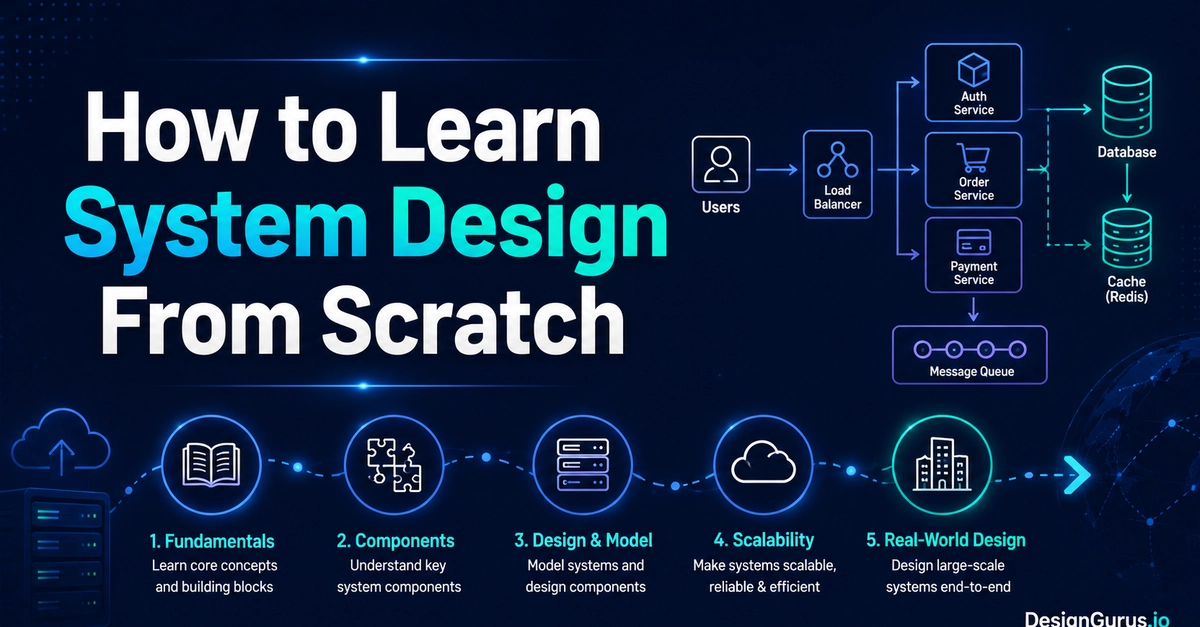
I've seen many engineers learn to code by building small projects, but real systems don't work that way. Once you're managing data from millions of users, responding to traffic spikes, ensuring your databases don't lose data during hardware failures, and coordinating across distributed servers, small-project thinking falls apart. System design is the art of thinking at scale, asking how to handle a thousand requests per second instead of ten, what happens when a database server dies, and how to keep data consistent across multiple locations.
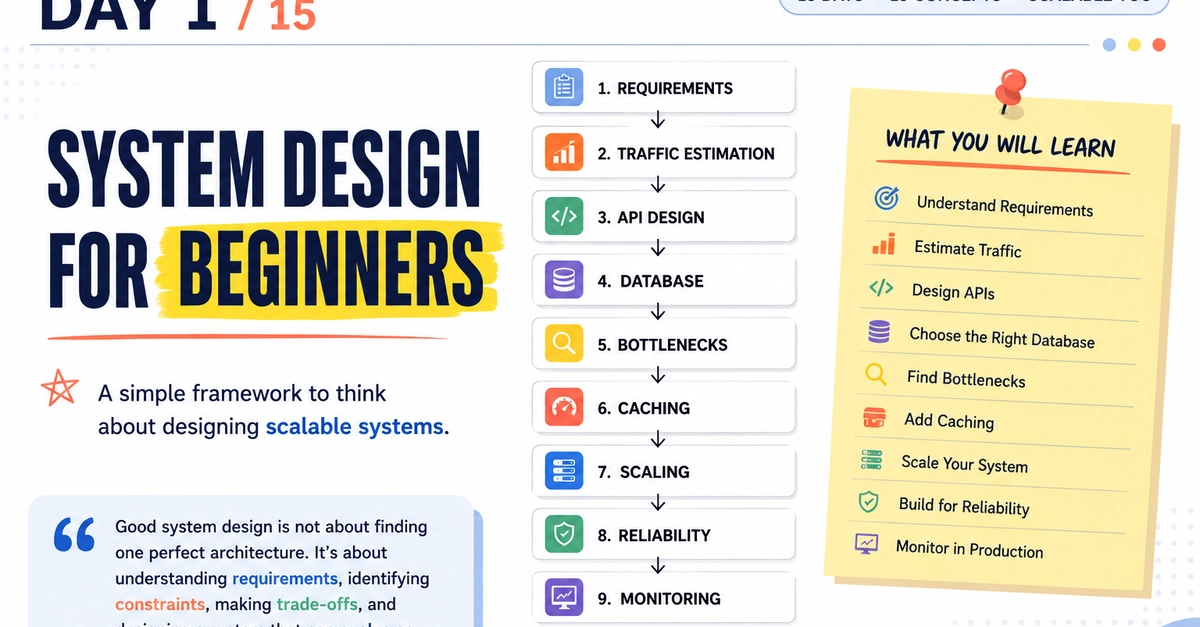
These questions matter because they determine whether your system survives success or collapses under load. Understanding the key pieces of system design is crucial, starting with what you actually need, which includes functional and non-functional requirements. A financial system needs different guarantees than a social media feed, and getting these wrong means redesigning everything later.
Architecture chooses your constraints, and there's no one-size-fits-all solution. Monolithic architectures are simple, but they become cumbersome when you have dozens of engineers or need independent scaling. Microservices introduce distributed systems complexity, but enable parallel development and granular scaling. Client-server, peer-to-peer, and layered architectures each solve different problems, and choosing the right one depends on your specific needs.