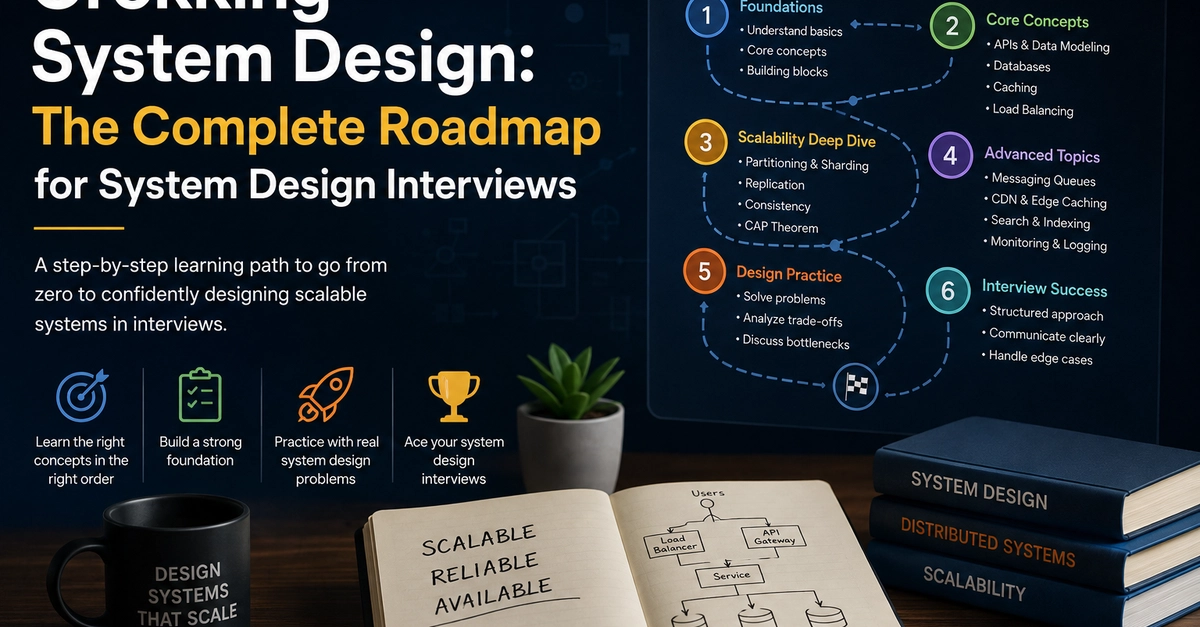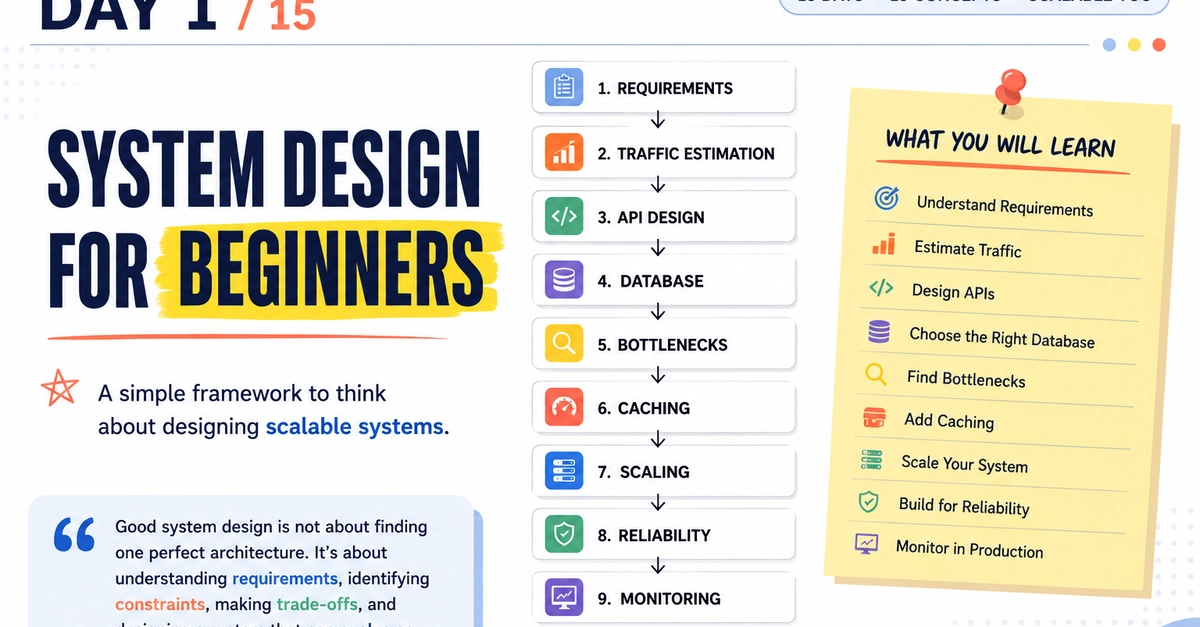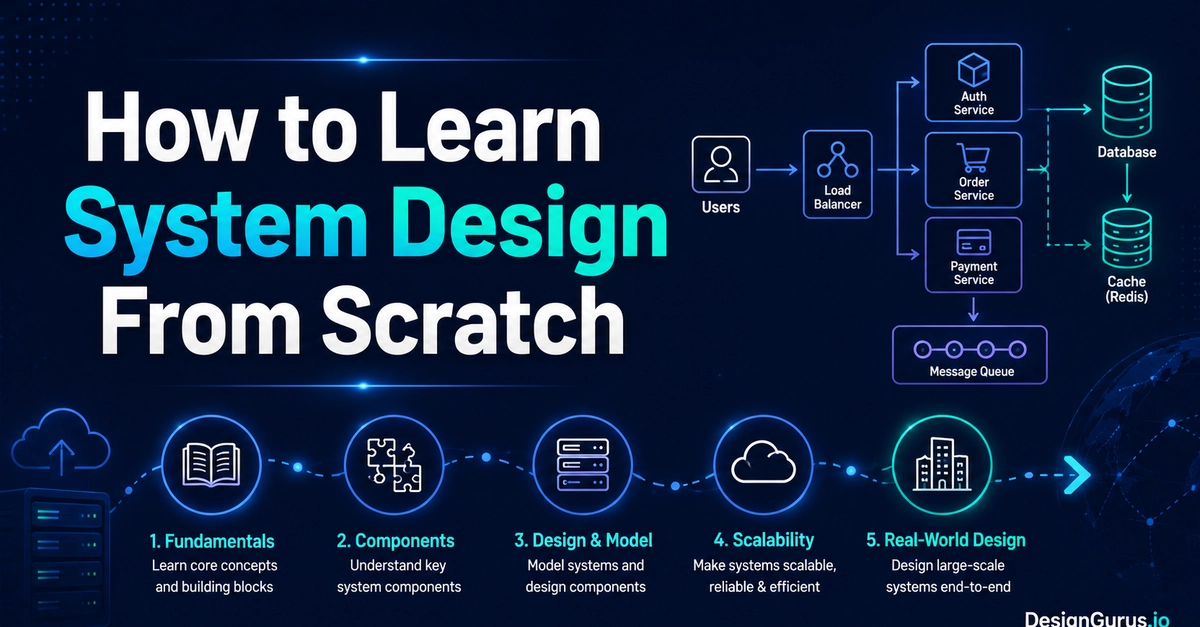
If you have ever opened a system design article, seen a diagram with twelve boxes, three databases, a message queue, and the words "eventually consistent," and quietly closed the tab, this post is for you.
There is a myth that you need years of experience running large systems before you can learn system design. You don't. Plenty of engineers learn it before they have ever deployed anything bigger than a side project. What you actually need is the right starting point and a way to build intuition without access to production-scale traffic. That is exactly what this guide gives you.
"But I've never built anything at scale"
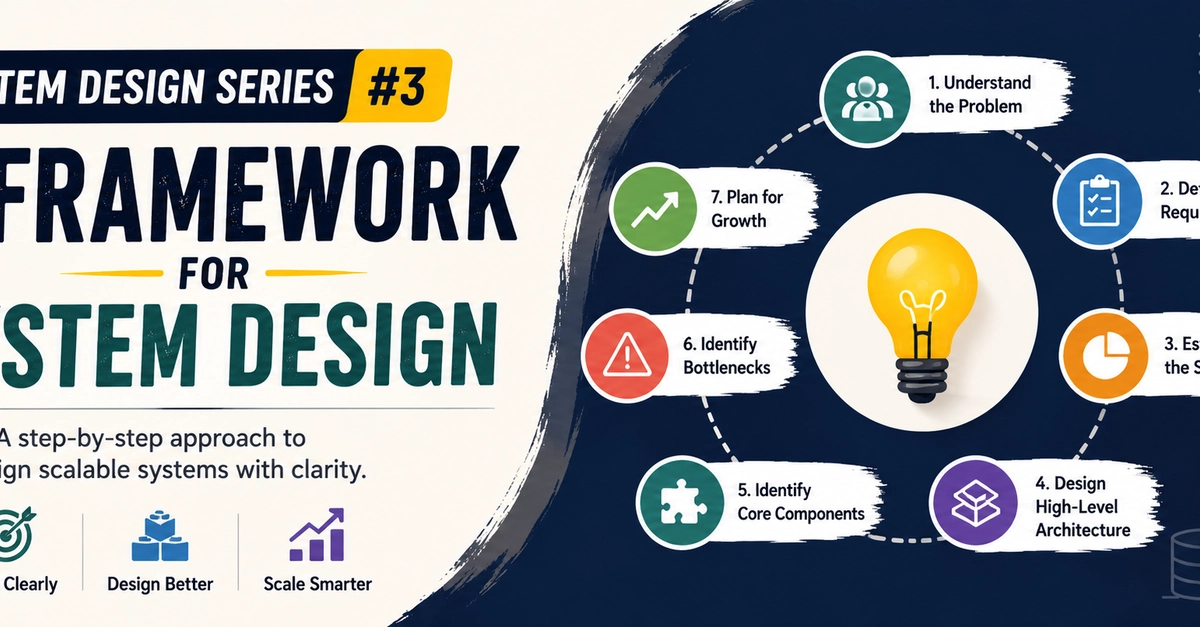
Good news: neither had most people the first time they learned this. System design is not a memory test about how Uber works. It is a thinking skill: given a vague problem and some constraints, make a sequence of reasonable trade-offs and explain them clearly.
That skill does not require having operated a system serving millions of users. It requires understanding what the moving parts do and practicing the reasoning. The experience helps later, but it is not the price of entry. So drop the idea that you are "not ready." You are ready to start today.